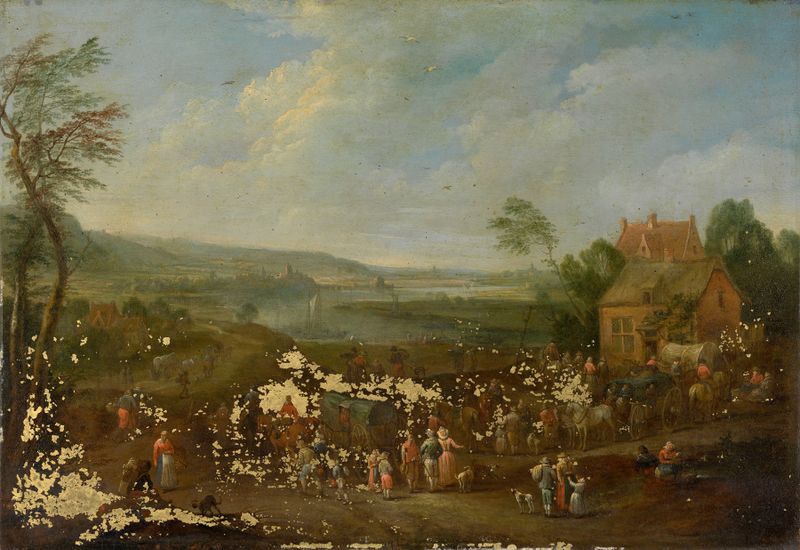
A river landscape with travellers in the foreground — History & Facts
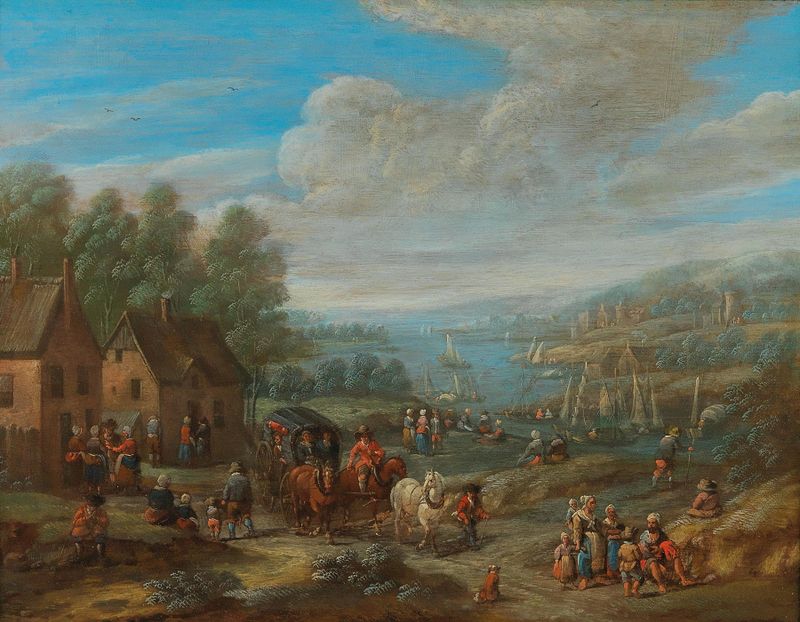
In its stillness, it holds the essence of transience, capturing a moment that flutters like a whisper in the breeze. Look to the bottom left; there, travelers pause, their figures a soft contrast against the flowing river that winds through the canvas. The earthy browns and greens blend harmoniously to create a natural frame, while the shimmering water reflects the sky’s delicate hues, inviting the viewer's eye to wander. Notice how the sunlight dances upon the ripples, illuminating the fragile edges where land meets water, suggesting a fleeting connection, a moment caught in time. Yet, within this idyllic scene lies an undercurrent of fragility.
The travelers, though seemingly at ease, appear like fleeting thoughts on the surface of a deep, unyielding river. The gentle bend of the water echoes the impermanence of life, while the distant trees stand as silent witnesses to the passage of time. The contrast between the calm landscape and the hint of movement within the figures evokes a sense of tension—an awareness that all moments are ephemeral. Karel Breydel painted this work during a period when the Dutch landscape tradition was evolving, somewhere around the 17th century.
Emerging amidst the rise of genre painting, Breydel explored the interplay between nature and human experience, reflecting a world shaped by both the serene and the transient. In this era, artists were increasingly drawn to the natural world, using it as a means to communicate deeper reflections on existence.