
Skirmishers on the outskirts of towns II — History & Facts
In Skirmishers on the Outskirts of Towns II, the tumultuous intersection of conflict and beauty is laid bare, inviting the viewer to explore the delicate balance between violence and transformation. Look to the center of the canvas, where figures are caught in a tense moment of confrontation. The brushstrokes pulse with an urgency that mirrors the chaos of the skirmish. Notice how the muted earth tones of the soldiers' uniforms contrast sharply with the glowing highlights of the town’s distant architecture, suggesting both the allure of civilization and the brutality of war.
The light spills unevenly across the scene, emphasizing the emotional disarray and the fragility of peace amidst turmoil. Beneath the surface, the work speaks to the duality of existence. Each soldier’s stance conveys both aggression and vulnerability, hinting at the internal struggles hidden within their armor. The fragmented background symbolizes the disintegration of societal norms, while the deliberate chaos of movement suggests that conflict is a catalyst for change, forcing individuals and communities to confront their deepest fears and desires.
Transformation, it seems, is both a brutal and beautiful process. This piece emerged during a time when Karel Breydel was navigating the complexities of an evolving artistic landscape in the early 20th century. Living amidst the shifting tides of modernism and the aftermath of World War I, Breydel sought to capture the emotional weight of his era, reflecting on humanity's resilience and the inevitable transformations that arise from strife.
More Artworks by Karel Breydel
Browse all →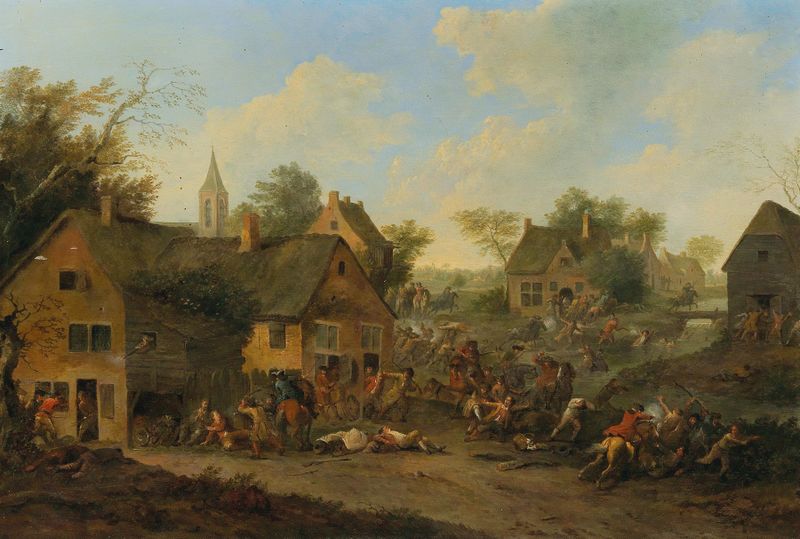
Skirmishers on the outskirts of towns
Karel Breydel
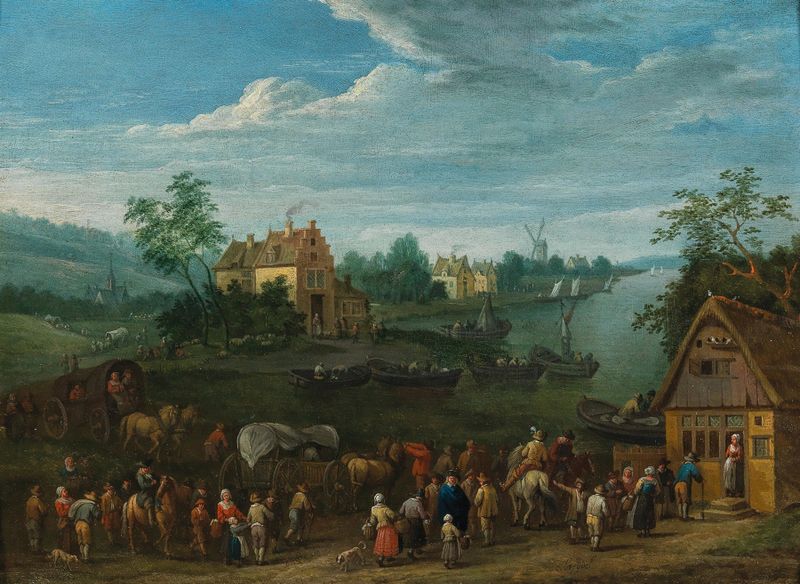
A river landscape with travellers in the foreground
Karel Breydel
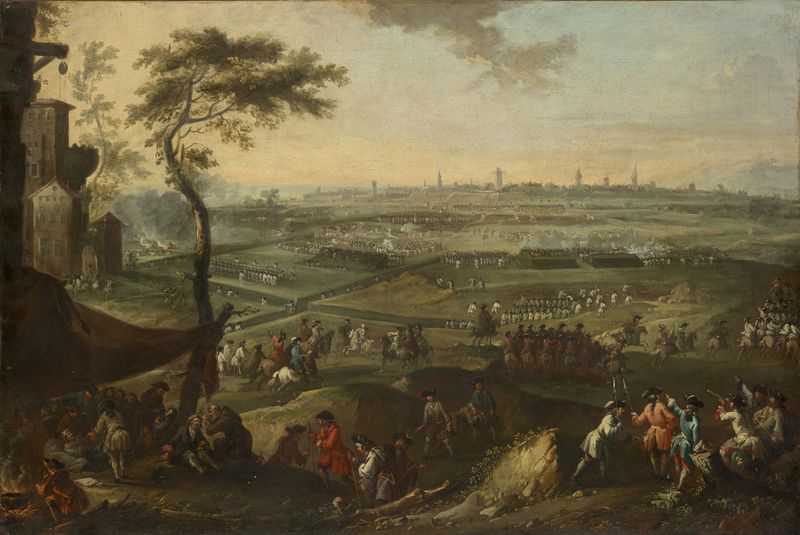
Siege of a Town
Karel Breydel
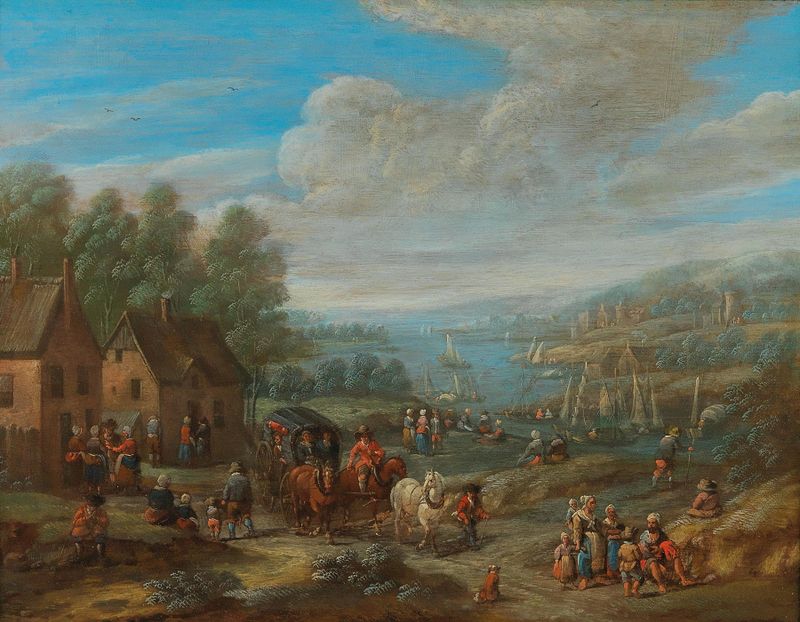
A river landscape with a village and travellers
Karel Breydel

Landscape with Figures
Karel Breydel
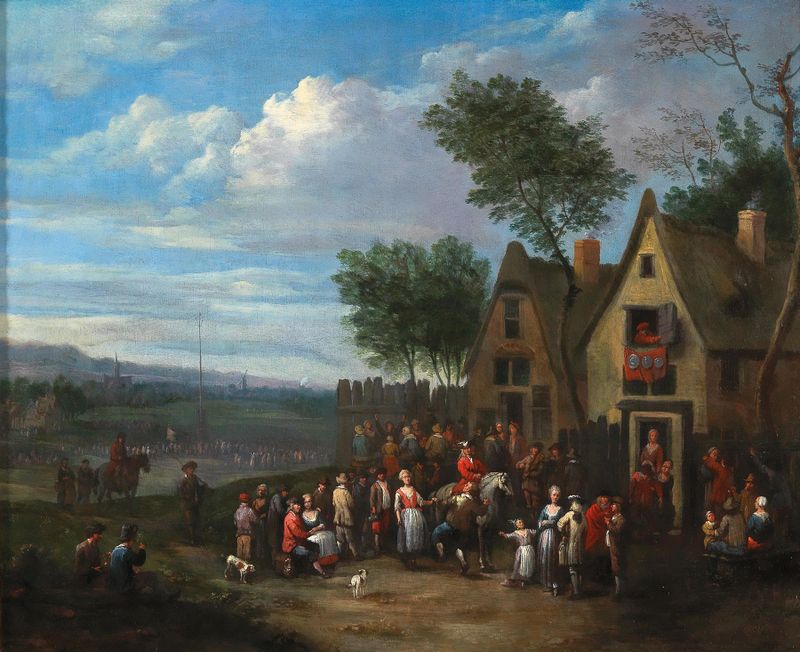
A landscape with peasants
Karel Breydel
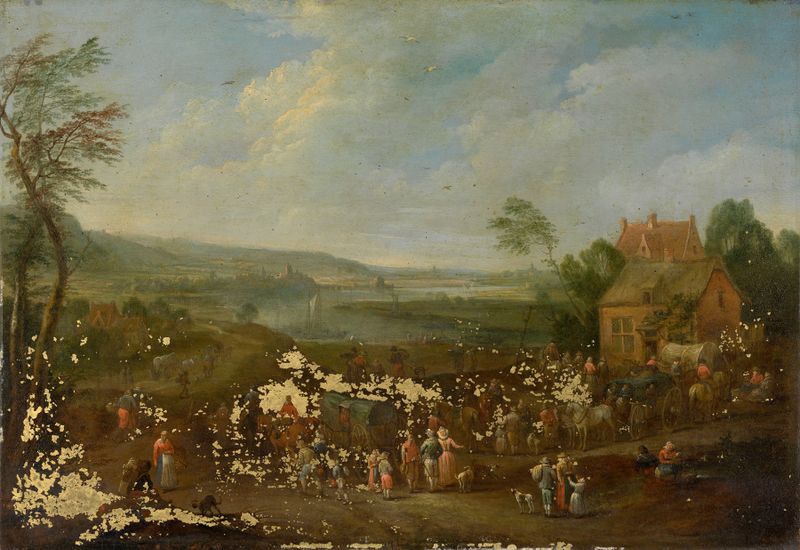
Landscape with Figures
Karel Breydel
More Historical Art
Browse all →
The Night Watch Militia Company of District II under the Command of Captain Frans Banninck Cocq
Rembrandt van Rijn

Lincoln Memorial
Henry Bacon

The Third of May 1808
Francisco de Goya

Isaac and Rebecca, Known as ‘The Jewish Bride’
Rembrandt van Rijn

The Charge of the Mamelukes (1814)
Francisco de Goya

De vier ruiters van de apocalyps
Albrecht Dürer