
Siege of a Town — History & Facts
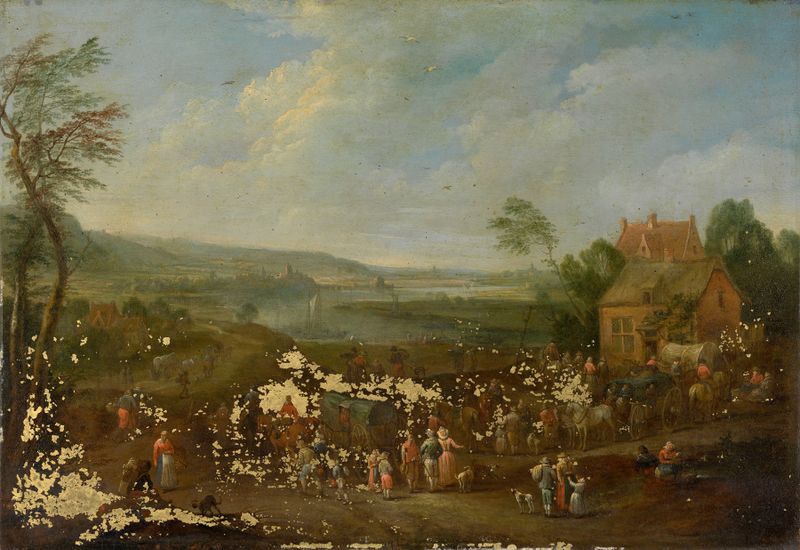
When did color learn to lie? In the hands of Karel Breydel, hues become the actors in a drama of history, memory, and perception. Time unfurls in the rich, vivid pigments of Siege of a Town, revealing not only the chaos of conflict but also the layered truths behind it. Look to the center of the canvas where a vibrant array of reds and yellows pulsate like an open wound. The flames of battle leap, illuminating the figures locked in turmoil.
To the left, shadowy soldiers wield weapons with desperation, their expressions caught between valor and fear. Notice how the light dances across the armor, lending it an almost ethereal quality, while the earthy tones of the background ground the scene in an undeniable reality. Breydel’s brushwork possesses a frenetic energy that reflects the chaos of siege, pulling the viewer into the very heart of this historical moment. Beneath the surface, the painting pulses with deeper resonances.
Each figure is not just a soldier but a representation of the struggle against the passage of time—the constant push and pull between destruction and preservation. The juxtaposition of fiery chaos and muted despair hints at the broader conflict: the clash between human ambition and the inevitability of decline. In this visual narrative, color acts as both a weapon and a shield, drawing viewers in while also obscuring the true cost of war. In Brugge during the late 17th century, Breydel found himself amidst the burgeoning Flemish Baroque movement, a time marked by vibrant artistic exploration and civic pride.
The socio-political climate was tense, reflecting ongoing conflicts in the region. This piece emerged as a statement of both local history and a collective memory, capturing the essence of a tumultuous era while reflecting the artist's own engagement with the legacy of his homeland.
More Artworks by Karel Breydel
Browse all →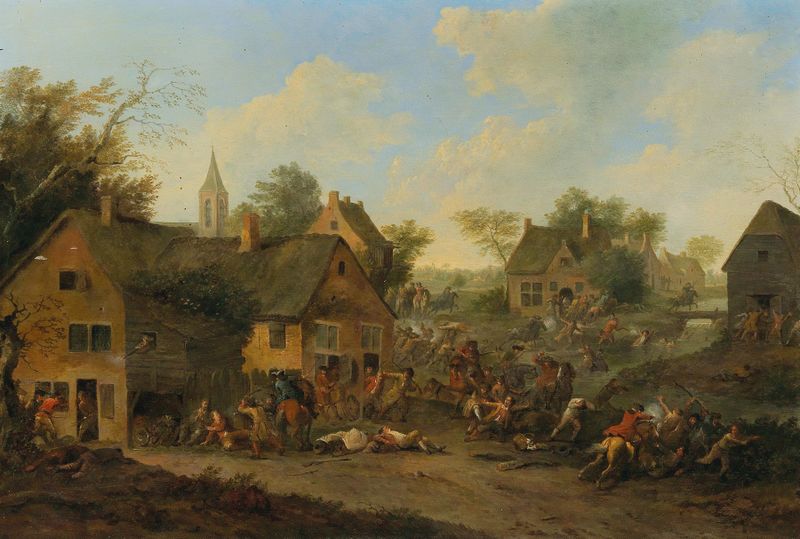
Skirmishers on the outskirts of towns
Karel Breydel
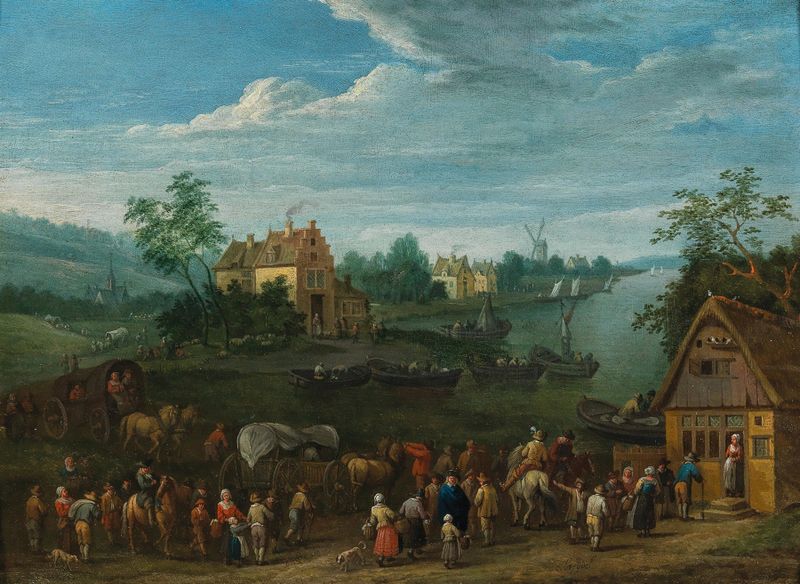
A river landscape with travellers in the foreground
Karel Breydel

Skirmishers on the outskirts of towns II
Karel Breydel
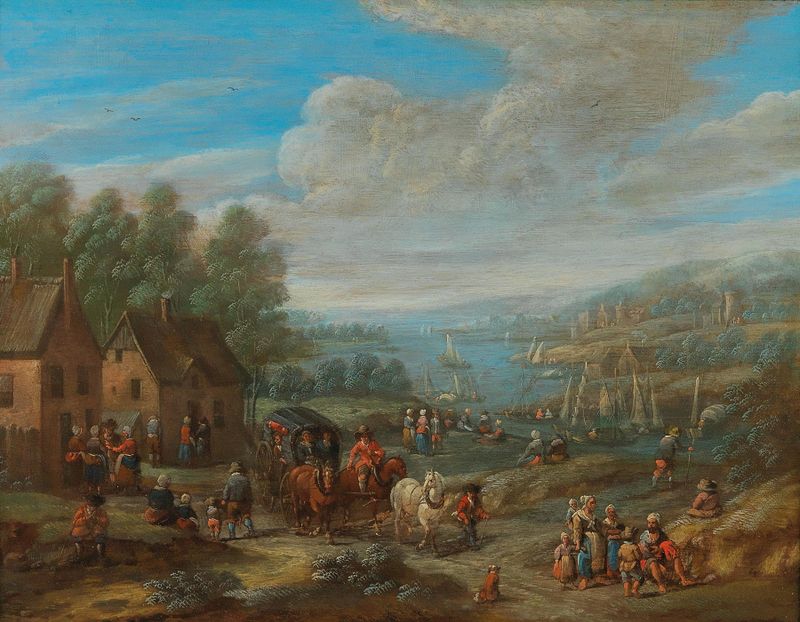
A river landscape with a village and travellers
Karel Breydel

Landscape with Figures
Karel Breydel
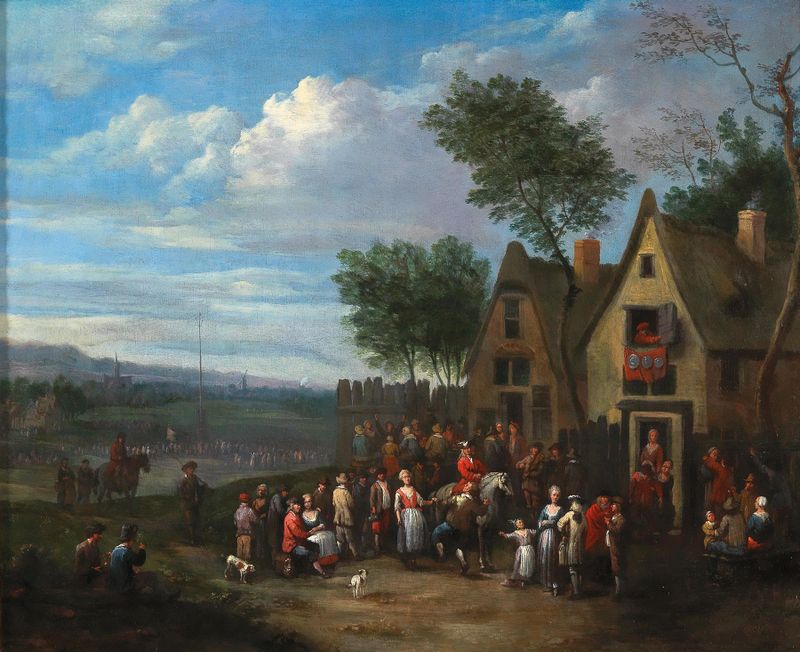
A landscape with peasants
Karel Breydel
Landscape with Figures
Karel Breydel
More Historical Art
Browse all →
The Night Watch Militia Company of District II under the Command of Captain Frans Banninck Cocq
Rembrandt van Rijn

Lincoln Memorial
Henry Bacon

The Third of May 1808
Francisco de Goya

Isaac and Rebecca, Known as ‘The Jewish Bride’
Rembrandt van Rijn

The Charge of the Mamelukes (1814)
Francisco de Goya

De vier ruiters van de apocalyps
Albrecht Dürer