
Landscape with Figures — History & Facts
Could beauty survive in a century of chaos? Look closely at the horizon, where the gentle undulations of the landscape meet the sprawling sky, painted with soft strokes that meld blues and whites into a seamless tableau. To the left, figures dot the scene, their muted garb harmonizing with the earthy palette of browns and greens around them. Notice how the light dappled upon the tree canopy creates a play of shadow and illumination, urging you to explore the delicate balance between the figures and their surroundings. Amidst the serene beauty, a subtle tension emerges.
The figures, seemingly at peace, could also symbolize the precariousness of existence in a tumultuous world. Their placement within the landscape suggests a dialogue with the environment, hinting at humanity's delicate connection to nature. The contrasting elements of light and shadow serve as a reminder of life's dualities—hope and despair, presence and absence—as if the tranquility of the moment is both a refuge and a facade. Karel Breydel created this work during a period marked by political upheaval and social change in Europe.
The late 17th century saw the rise of landscape painting as a genre, allowing artists to reflect on the natural world amidst the chaos surrounding them. Operating in Flanders, Breydel was part of a movement that sought to capture the beauty of the land, even as the world outside became increasingly unstable and uncertain.
More Artworks by Karel Breydel
Browse all →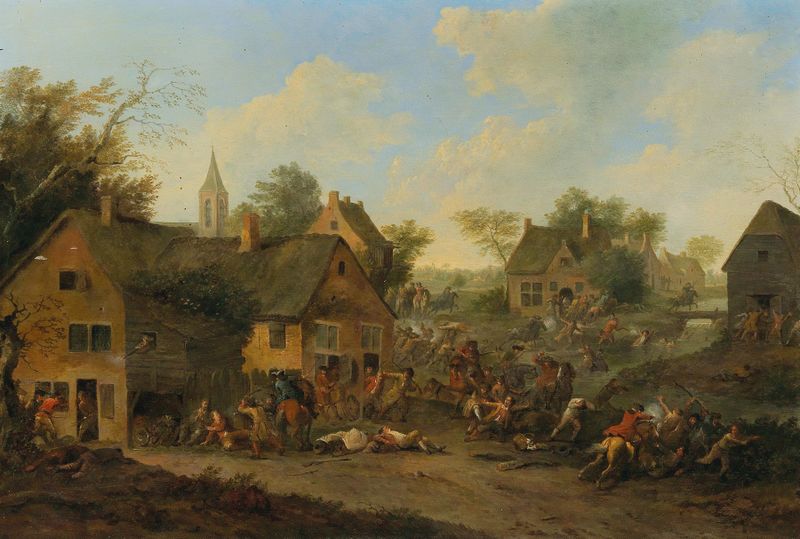
Skirmishers on the outskirts of towns
Karel Breydel
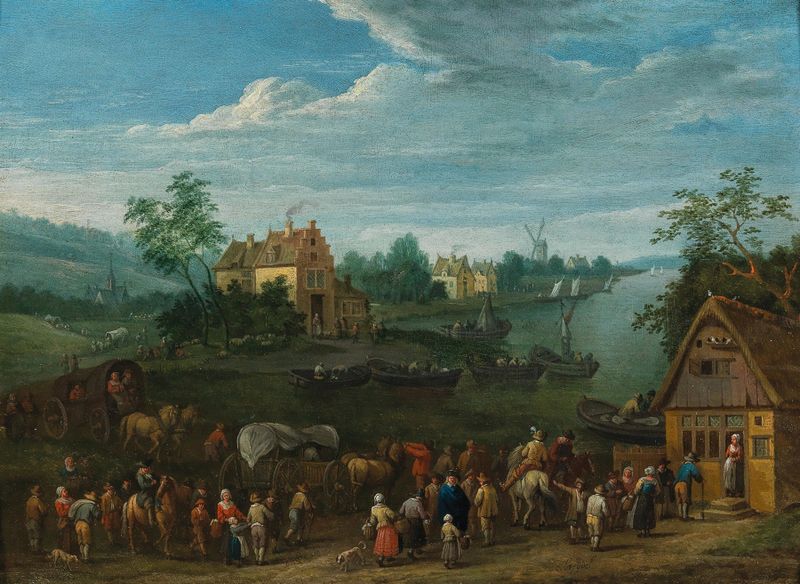
A river landscape with travellers in the foreground
Karel Breydel
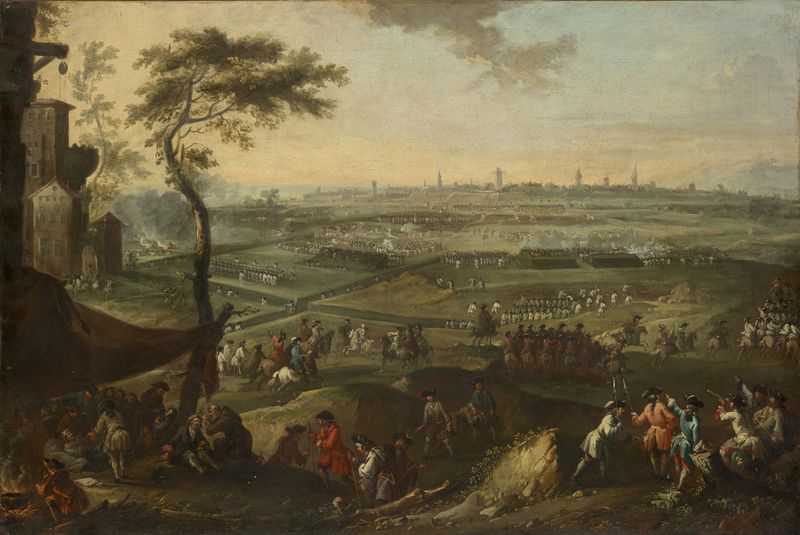
Siege of a Town
Karel Breydel

Skirmishers on the outskirts of towns II
Karel Breydel
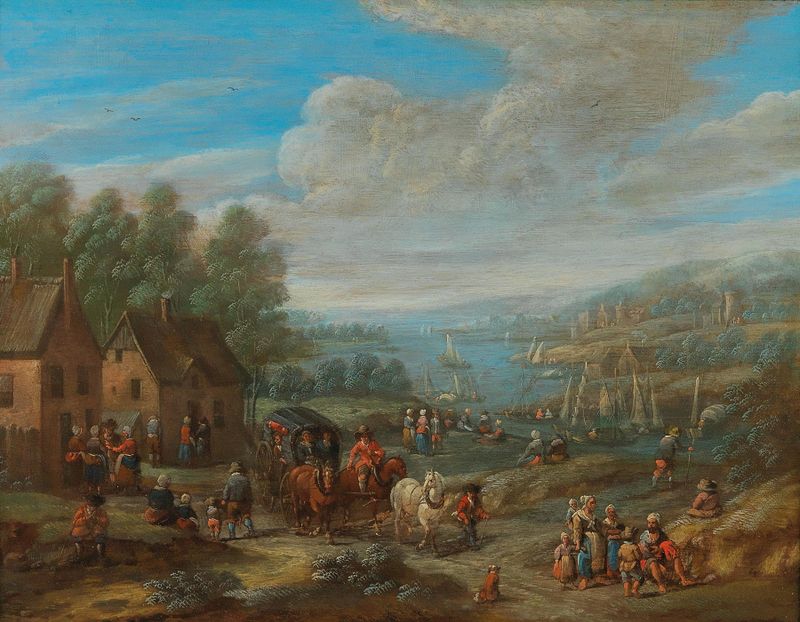
A river landscape with a village and travellers
Karel Breydel
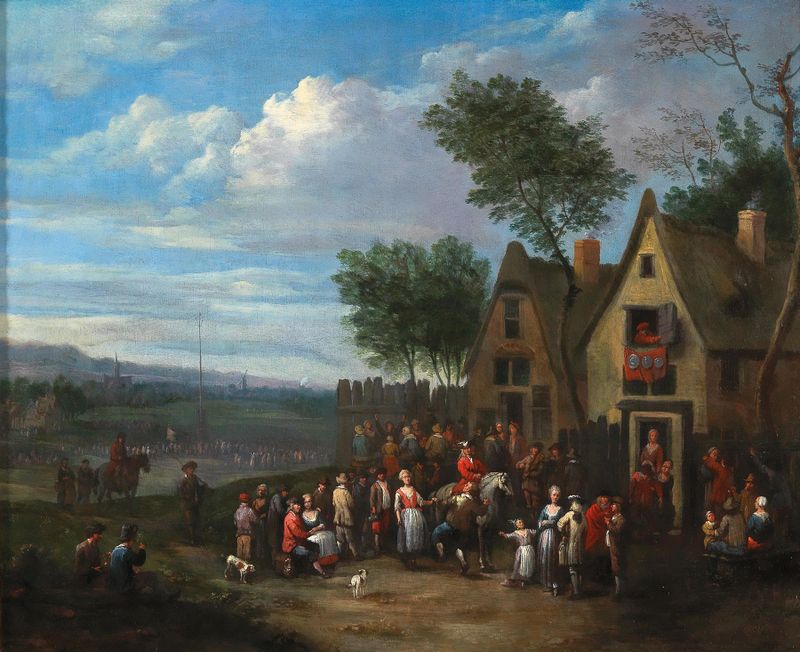
A landscape with peasants
Karel Breydel
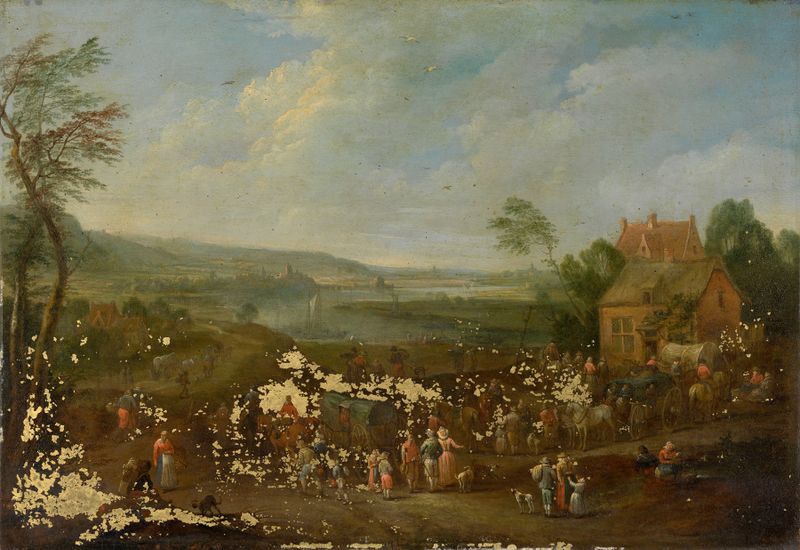
Landscape with Figures
Karel Breydel





