
A Larder — History & Facts
A riot of abundance greets the eye, but it is the sly presence of a small monkey—caught mid-gesture as it reaches for a bucket—that gives this larder its pulse. The painter has staged a silent drama in which the bounty of the table, with its lobster glowing red and fruits tumbling from their baskets, is watched over by animals both living and dead. Light glances off the feathers of a peacock, the sheen of a swan, the fur of a hare, drawing the viewer deeper into a world where every surface is alive with texture and temptation.
The parrot perched above, the game birds suspended from hooks, and the riot of produce create a sense of opulence, but also of precariousness—this is a feast that could vanish in an instant. Painted in 1642, this work by Adriaen van Utrecht belongs to a moment in Flemish art when the larder or pantry scene was a showcase for technical bravura and a meditation on plenty. Such pictures were not mere inventories; they were status symbols for the wealthy, reminders of the reach of trade, and subtle warnings about excess. The artist’s meticulous attention to the shimmer of grapes, the roughness of root vegetables, and the iridescence of feathers is not just a display of skill, but a coded language about nature’s gifts and their fleetingness.
In the world of seventeenth-century Antwerp, where fortunes were made on the exchange of goods, a painting like this was both a celebration and a caution. Look again at the monkey’s hand, poised to steal: in this larder, appetites are never far from mischief.
More Artworks by Adriaen van Utrecht
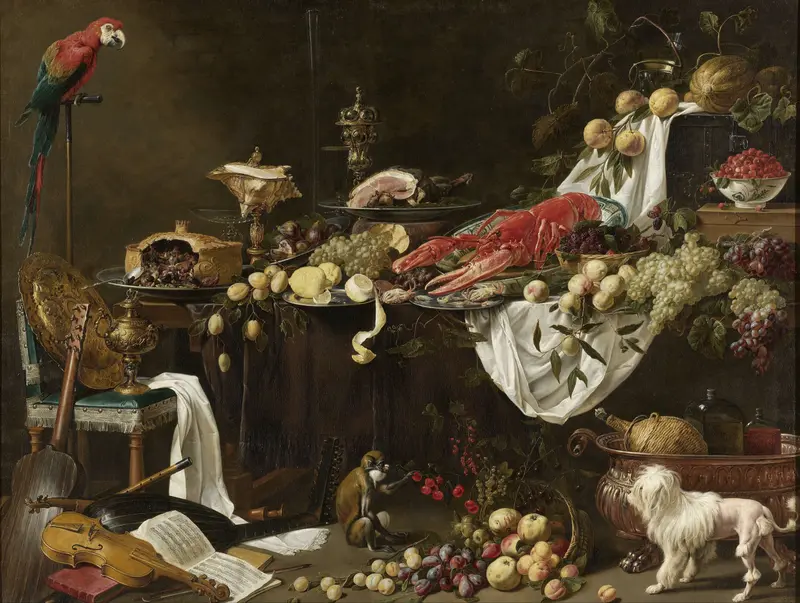
Banquet Still Life
Adriaen van Utrecht
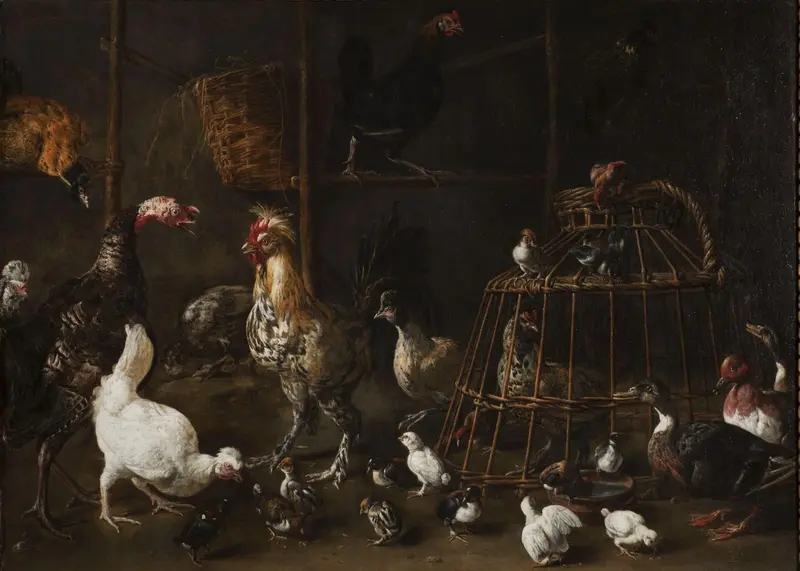
A barn interior with a turkey
Adriaen van Utrecht
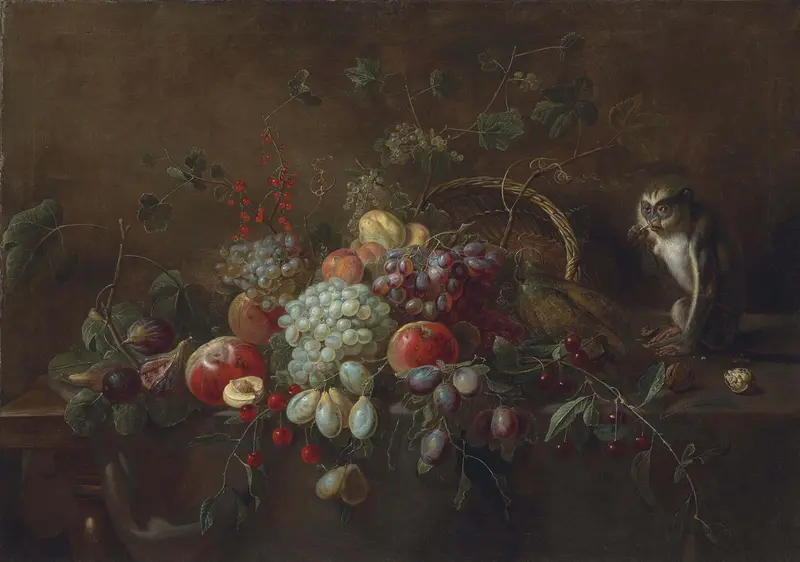
Grapes, apples, plums, figs and other fruit on a partly draped wooden table, a monkey eating walnuts by an upturned woven basket
Adriaen van Utrecht
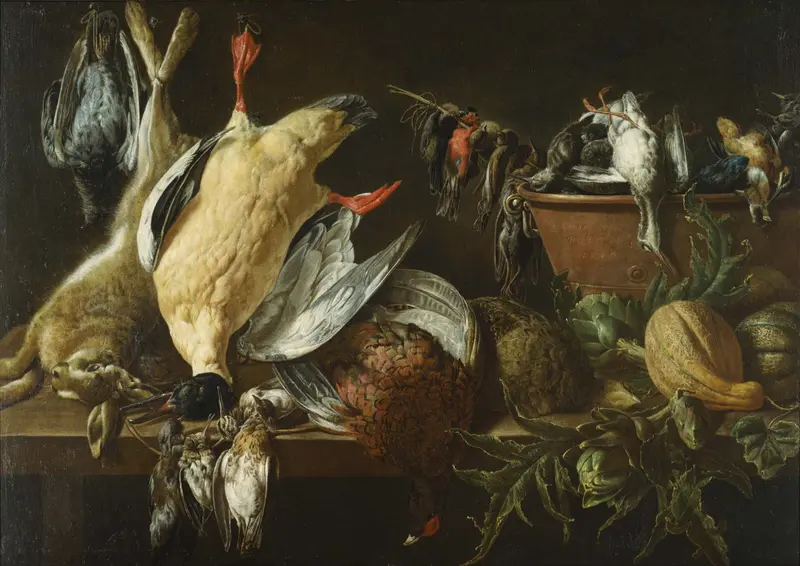
Still Life with Games and Vegetables
Adriaen van Utrecht
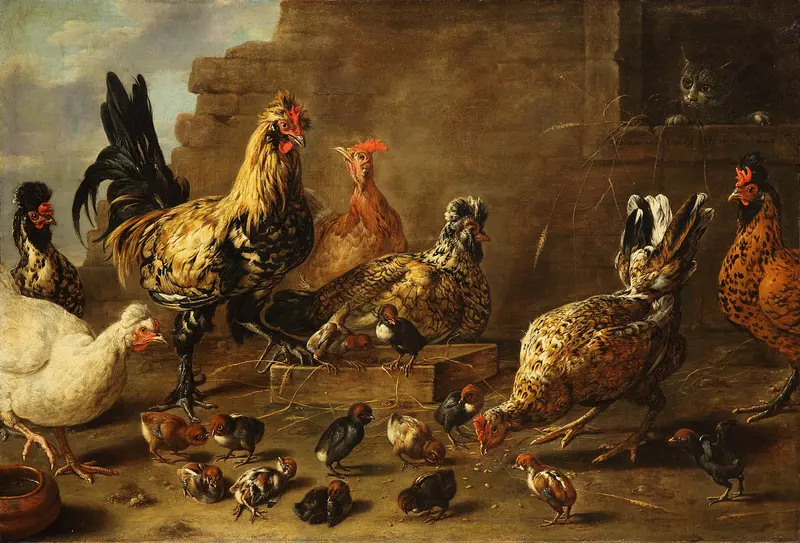
The chicken yard
Adriaen van Utrecht
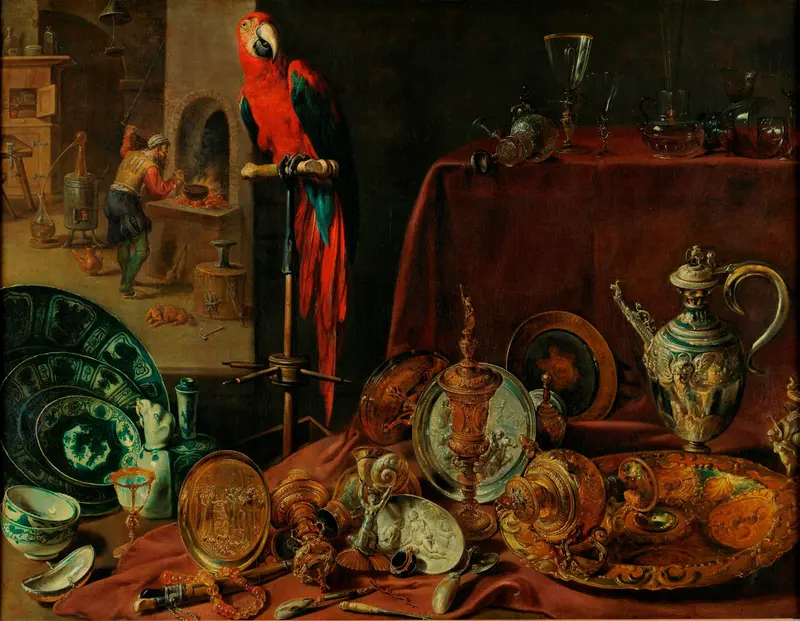
Still life with parrot, an allegory of fire
Adriaen van Utrecht
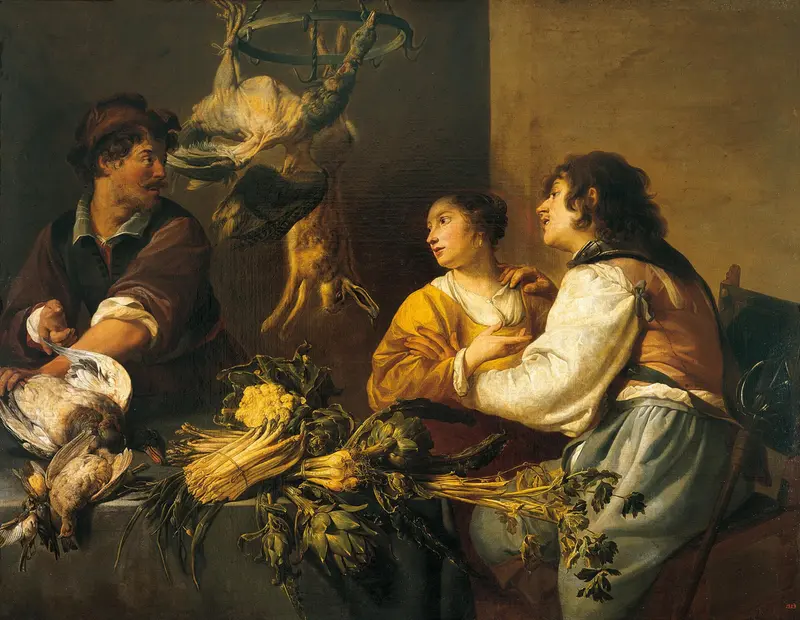
Kitchen
Adriaen van Utrecht
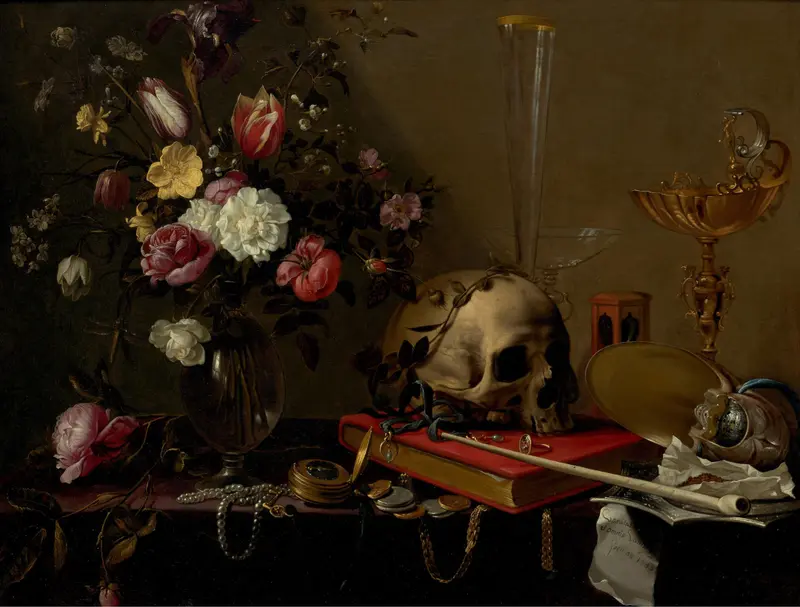
Vanitas - Still Life with Bouquet and Skull
Adriaen van Utrecht
A Kitchen Still Life with Figures
Adriaen van Utrecht
Large kitchen still life with a young woman
Adriaen van Utrecht





