
Grapes, apples, plums, figs and other fruit on a partly draped wooden table, a monkey eating walnuts by an upturned woven basket — History & Facts
A monkey, caught mid-bite with a walnut in its hand, watches us from the shadows at the edge of a table overflowing with fruit. The eye is first drawn to the gleaming clusters of grapes and the burst of red currants, but it is the animal’s alert, almost human gaze that unsettles the abundance. The tablecloth slips, the basket is overturned, and the arrangement teeters between order and mischief—every detail painted with a clarity that invites close inspection.
The light, falling from the left, turns grapes into translucent globes and gives the figs and apples a waxy, tangible presence, while the monkey’s fur is rendered with a delicacy that sets it apart from the glossy fruit. The scene is a careful balance: the bounty of nature, the temptation of taste, and the unpredictable presence of appetite. Painted in 1642 by Adriaen van Utrecht, this work belongs to the flourishing tradition of Flemish still life, where painters celebrated both the pleasures and the fleetingness of earthly delights. Such compositions were prized by wealthy merchants and collectors in the seventeenth century, eager to display not only their prosperity but their appreciation for the painter’s skill in rendering textures and reflections.
The inclusion of the monkey—a creature often associated with mischief or folly—adds a playful, moralizing note, reminding viewers that abundance can be disrupted in an instant. Sold at Christie’s in London, this painting is a testament to the era’s fascination with the senses, the exotic, and the delicate line between enjoyment and excess. The longer you look, the more the monkey’s sidelong glance seems to ask: who, in the end, is the real intruder at this feast?
More Artworks by Adriaen van Utrecht
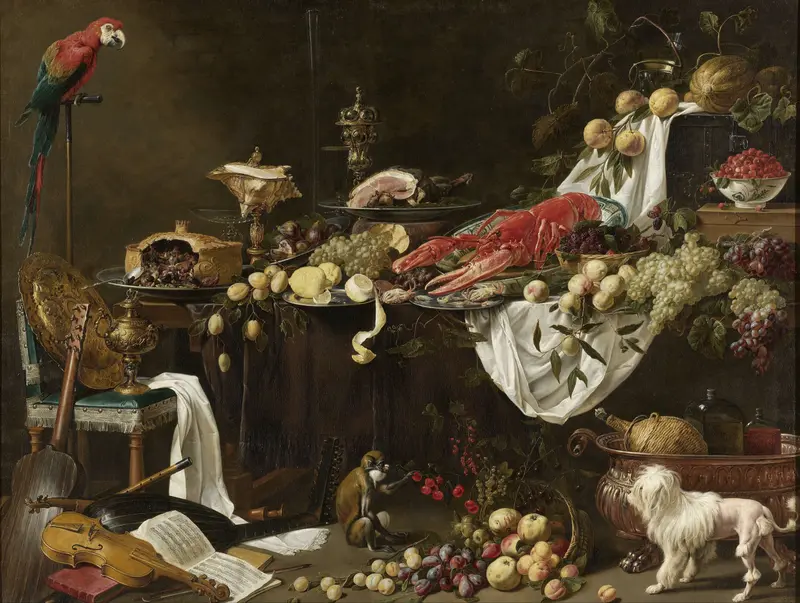
Banquet Still Life
Adriaen van Utrecht
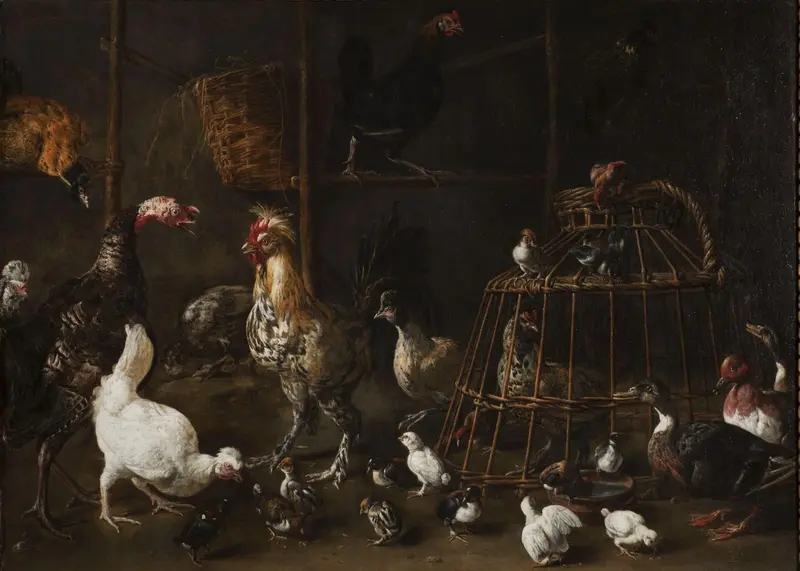
A barn interior with a turkey
Adriaen van Utrecht
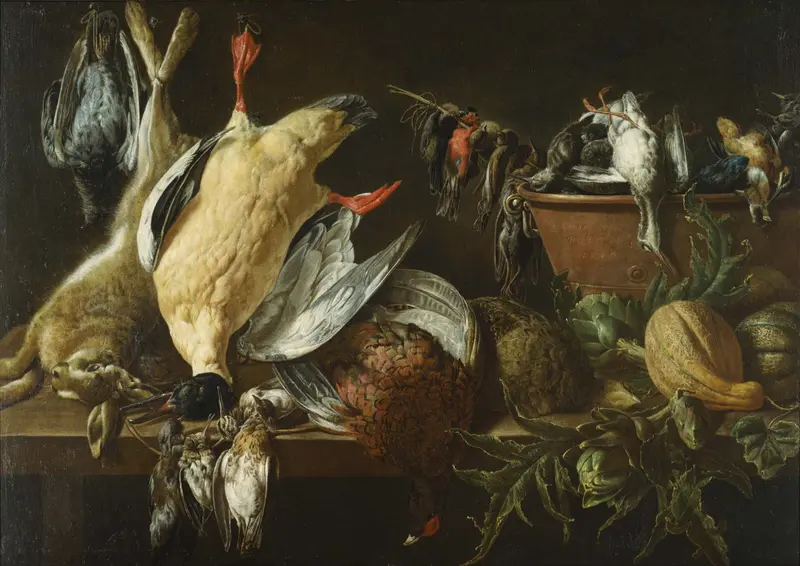
Still Life with Games and Vegetables
Adriaen van Utrecht
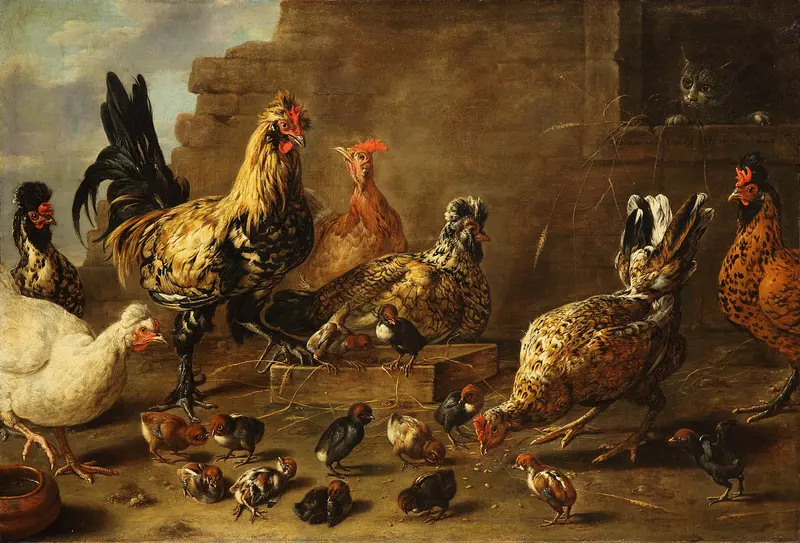
The chicken yard
Adriaen van Utrecht
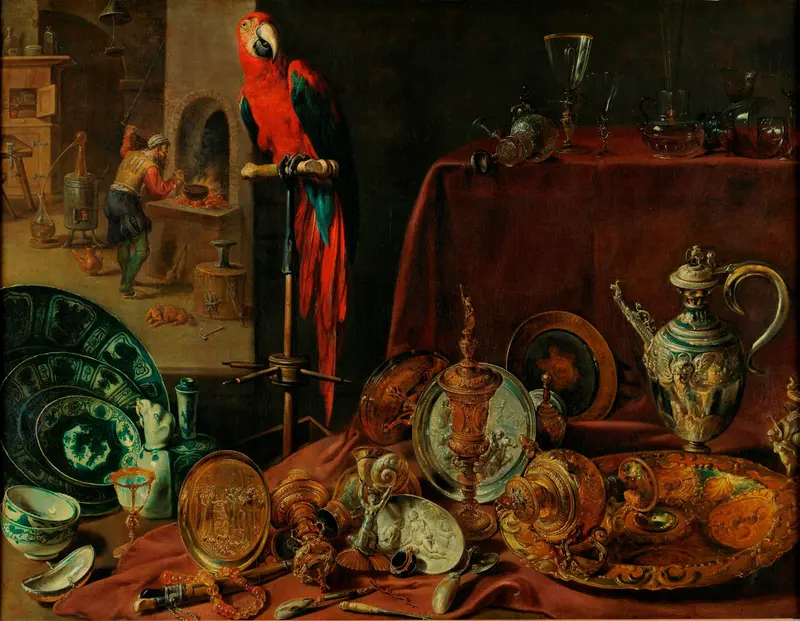
Still life with parrot, an allegory of fire
Adriaen van Utrecht
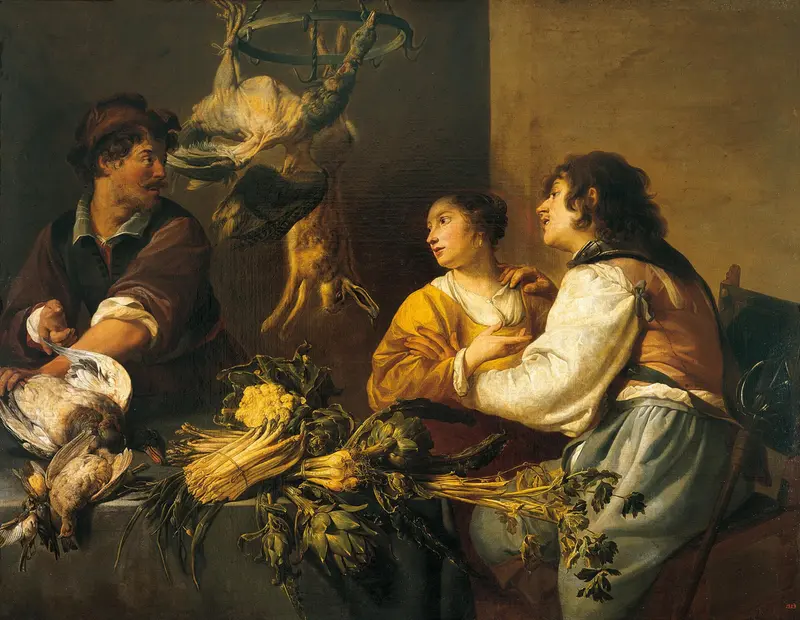
Kitchen
Adriaen van Utrecht
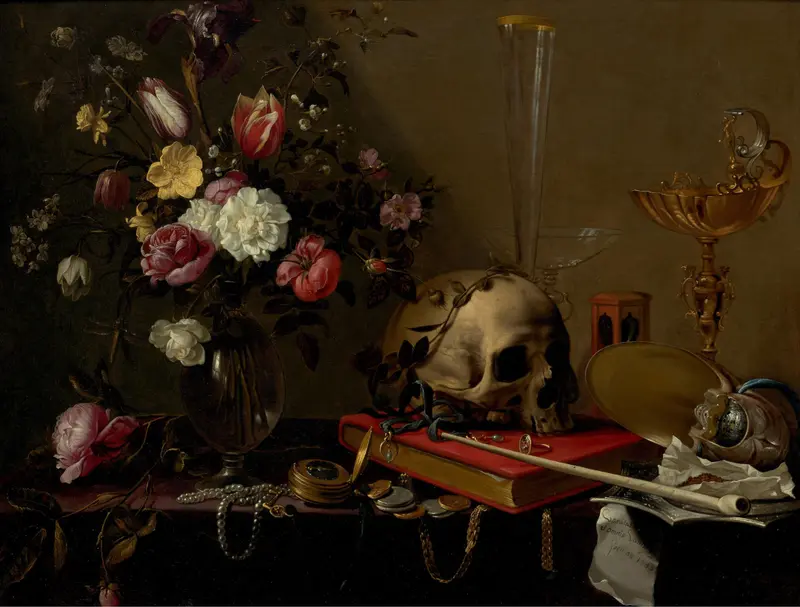
Vanitas - Still Life with Bouquet and Skull
Adriaen van Utrecht
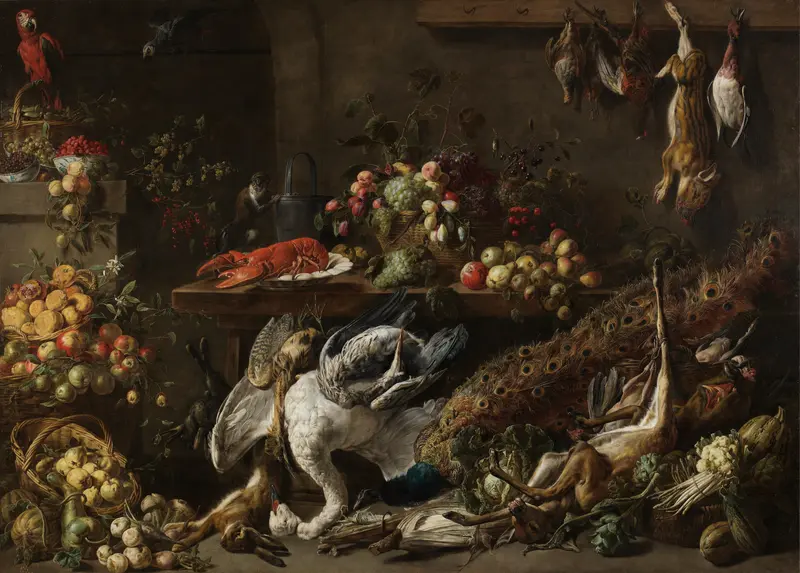
A Larder
Adriaen van Utrecht
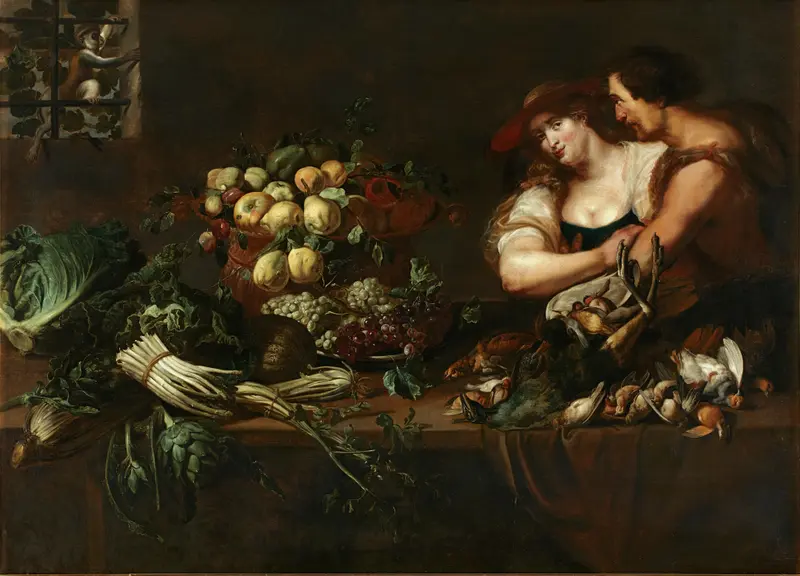
A Kitchen Still Life with Figures
Adriaen van Utrecht
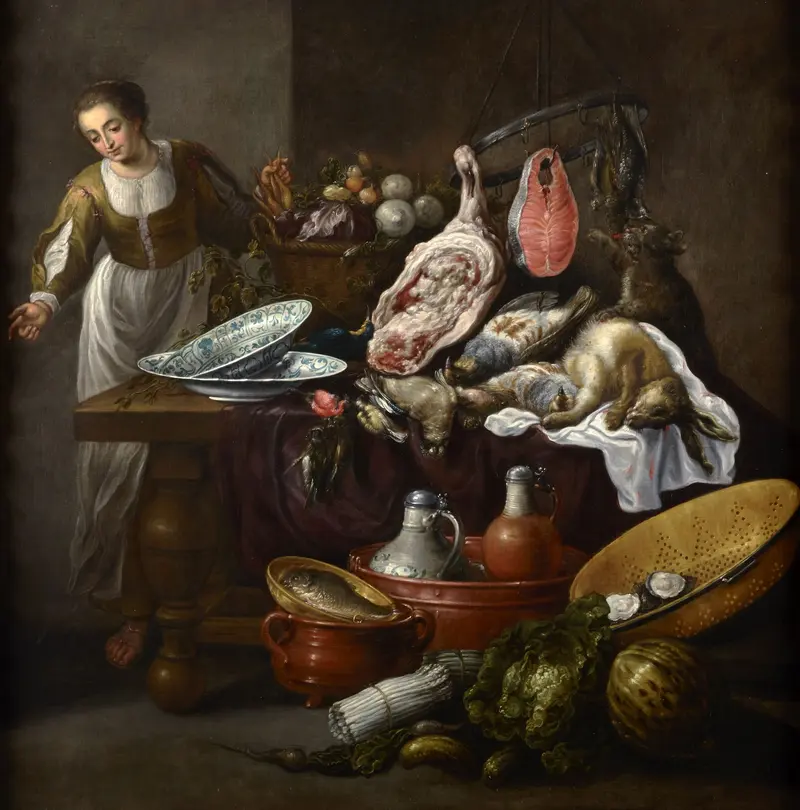
Large kitchen still life with a young woman
Adriaen van Utrecht





