
The chicken yard — History & Facts
A rooster stands tall at the heart of the scene, his feathers catching the golden light, while a watchful cat peers from the shadows above—a silent predator in a world of bustling birds. The eye is drawn first to the rooster’s commanding posture, then scattered outward by the restless energy of hens and chicks, each rendered with a precision that makes every downy body distinct. The palette is warm, earthy, and alive with subtle contrasts: the creamy whites and deep blacks of plumage, the soft ochres of straw, and the cool stone behind.
The cat’s wide, intent eyes add a note of suspense, a reminder that even the most ordinary barnyard is never entirely safe. Every gesture in the flock—pecking, strutting, huddling—suggests a pecking order, a social world in miniature. Painted in 1643 by Adriaen van Utrecht, this work belongs to a flourishing tradition of animal still lifes in seventeenth-century Flanders and the Dutch Republic, where artists delighted in the textures and behaviors of domestic creatures. Such paintings were often commissioned by prosperous citizens eager to display both their wealth and their appreciation for the natural order—sometimes with a moral undertone about vigilance or the unpredictability of fortune.
The chicken yard now resides in the collection of the Staatliche Museen zu Berlin, a reminder of a time when painters found grandeur in the everyday. Look again at the cat’s gaze, and the fragile peace of the yard: the story is never quite as simple as it first appears.
More Artworks by Adriaen van Utrecht
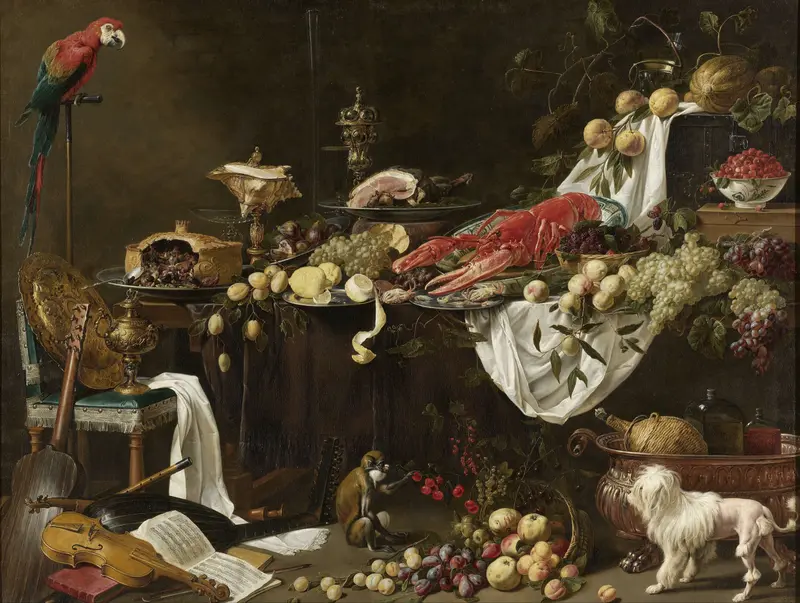
Banquet Still Life
Adriaen van Utrecht
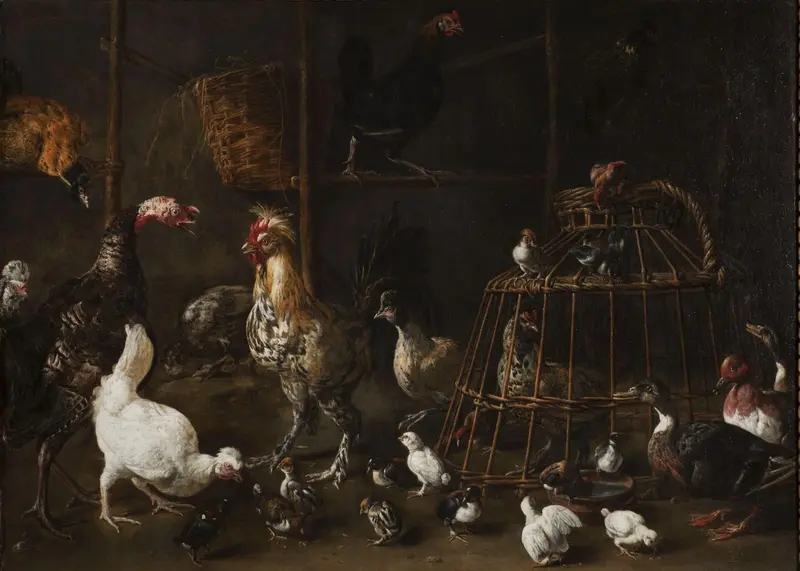
A barn interior with a turkey
Adriaen van Utrecht
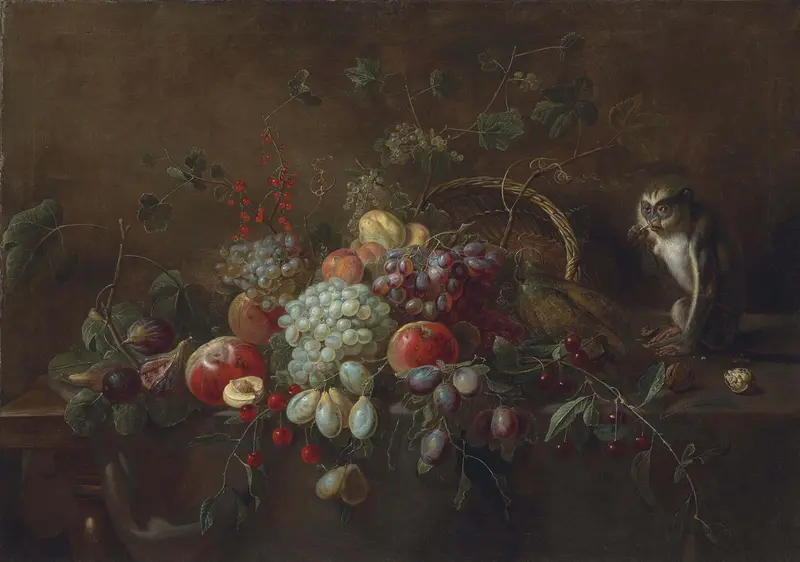
Grapes, apples, plums, figs and other fruit on a partly draped wooden table, a monkey eating walnuts by an upturned woven basket
Adriaen van Utrecht
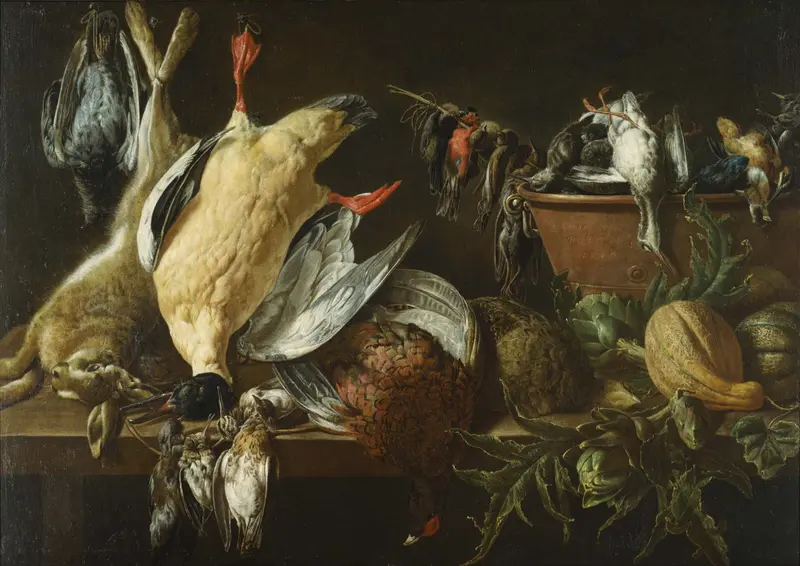
Still Life with Games and Vegetables
Adriaen van Utrecht
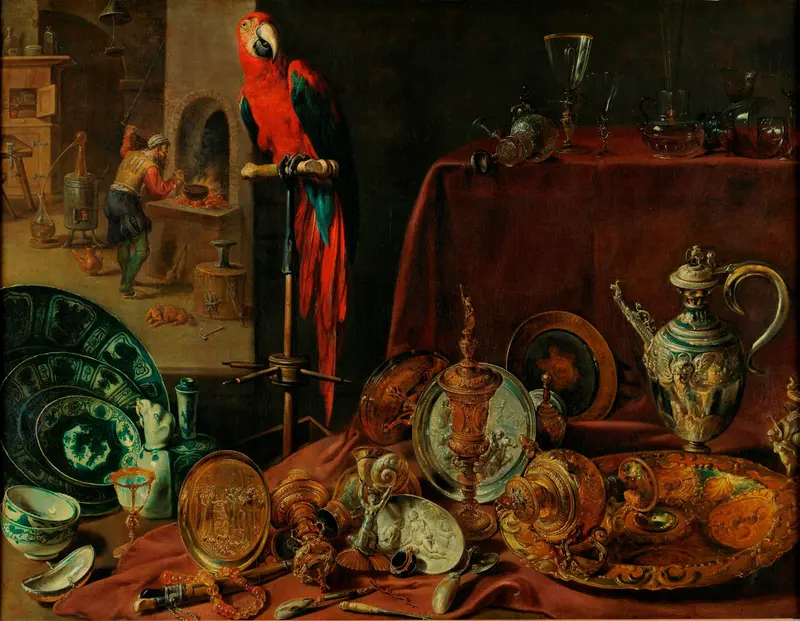
Still life with parrot, an allegory of fire
Adriaen van Utrecht
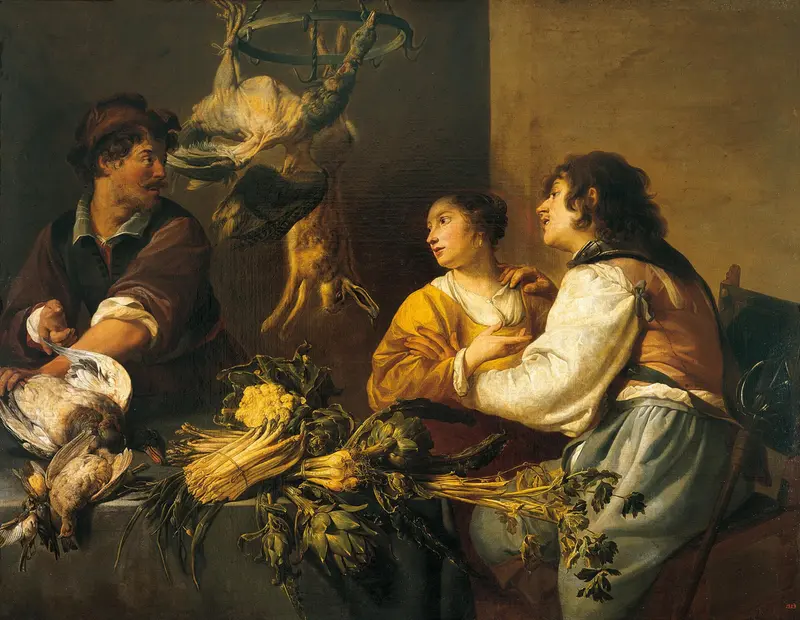
Kitchen
Adriaen van Utrecht
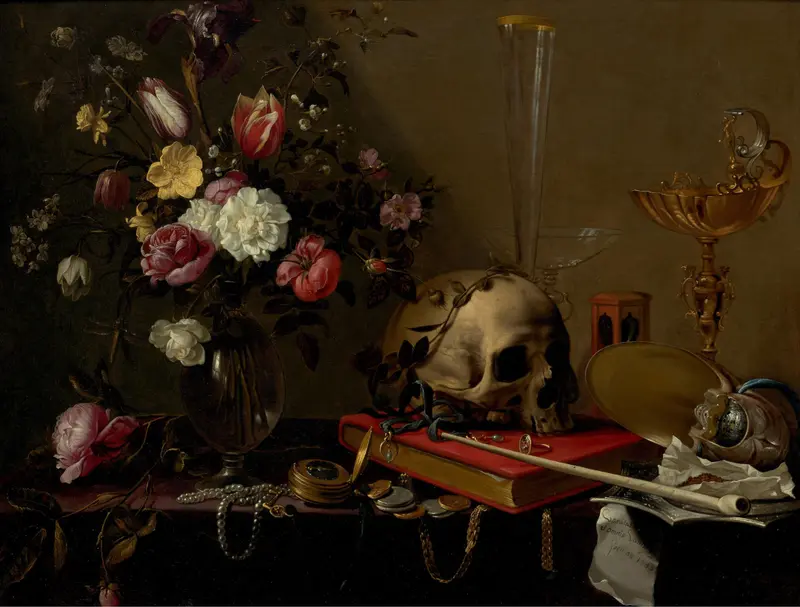
Vanitas - Still Life with Bouquet and Skull
Adriaen van Utrecht
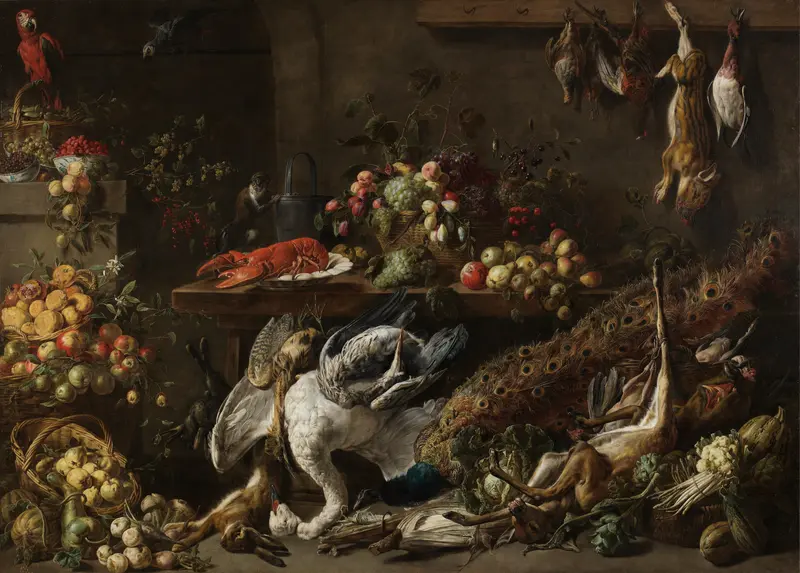
A Larder
Adriaen van Utrecht
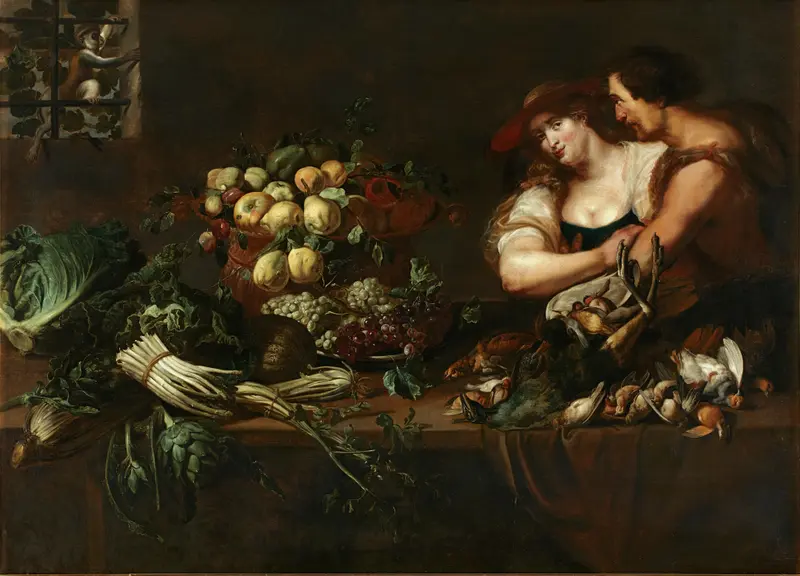
A Kitchen Still Life with Figures
Adriaen van Utrecht
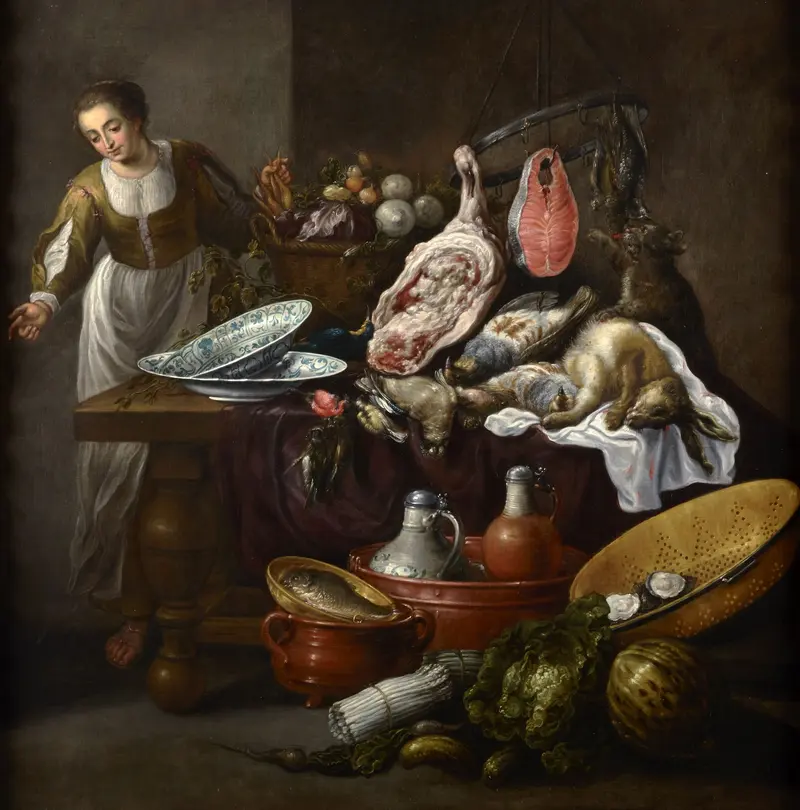
Large kitchen still life with a young woman
Adriaen van Utrecht





