
A Mountain Path — History & Facts
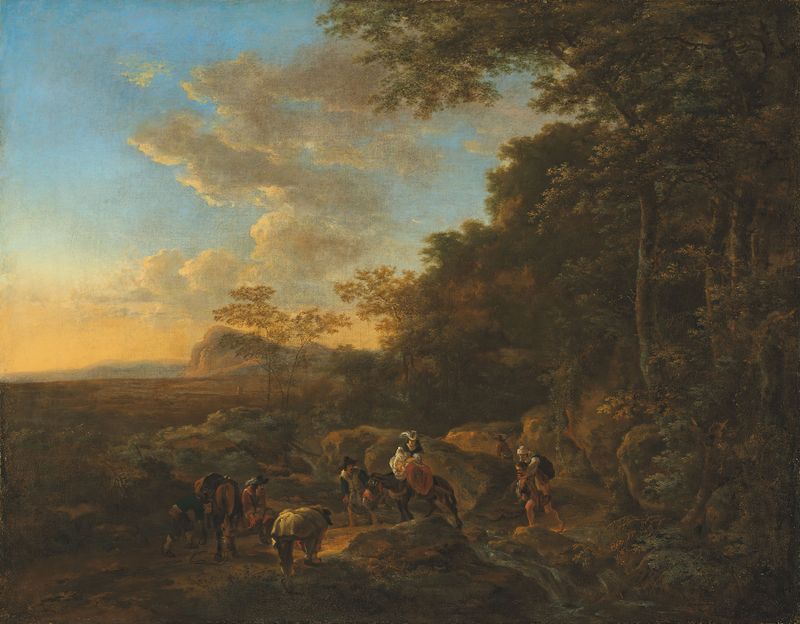
In the quiet hush of nature, the echoes of loss linger in the air, woven into the fabric of the landscape. Look to the foreground, where rugged stones line a narrow path, leading the eye into the embrace of towering mountains. The earthy tones of ochre and umber create a sense of grounding, while soft greens hint at life persevering amidst the weight of sorrow. A gentle light spills down from above, illuminating the scene with a melancholic glow, casting long shadows that whisper of paths taken and those yet to be explored. As you journey deeper into the composition, notice how the mountains loom, both majestic and oppressive, representing the monumental weight of grief.
The winding path suggests movement, yet fraught with uncertainty as it disappears into the mist, symbolizing a journey through mourning—a navigation through the unknown. Subtle contrasts emerge in the brushwork, where the chaos of rough textures meets the calm, smooth strokes of the sky, hinting at the duality of despair and hope. Jan Both painted this work during the late 17th century, a period rich with landscape exploration in art. At that time, he was creating in the Netherlands, where a burgeoning interest in nature's beauty was beginning to reflect personal introspections.
The natural world became a canvas for emotional depth, as artists sought to capture not only the external landscape but also the internal landscapes of the human soul, revealing a profound connection between nature and human experience.
More Artworks by Jan Both
Browse all →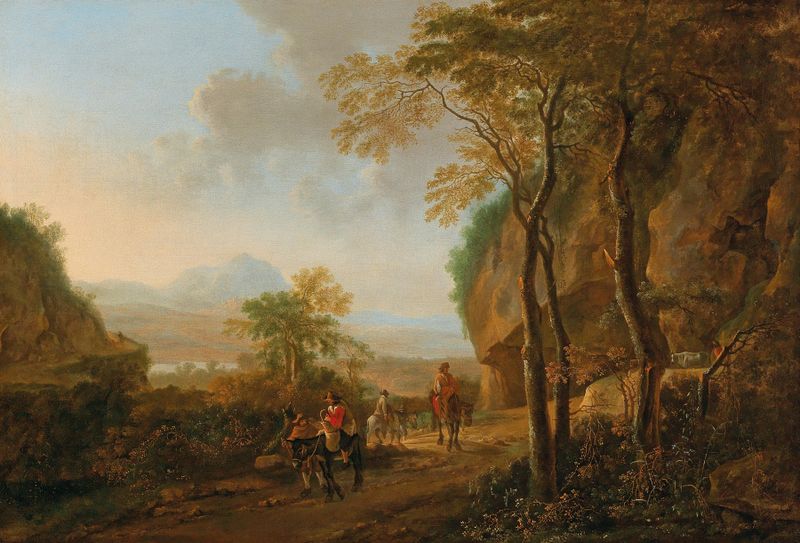
An Italianate landscape with travellers
Jan Both
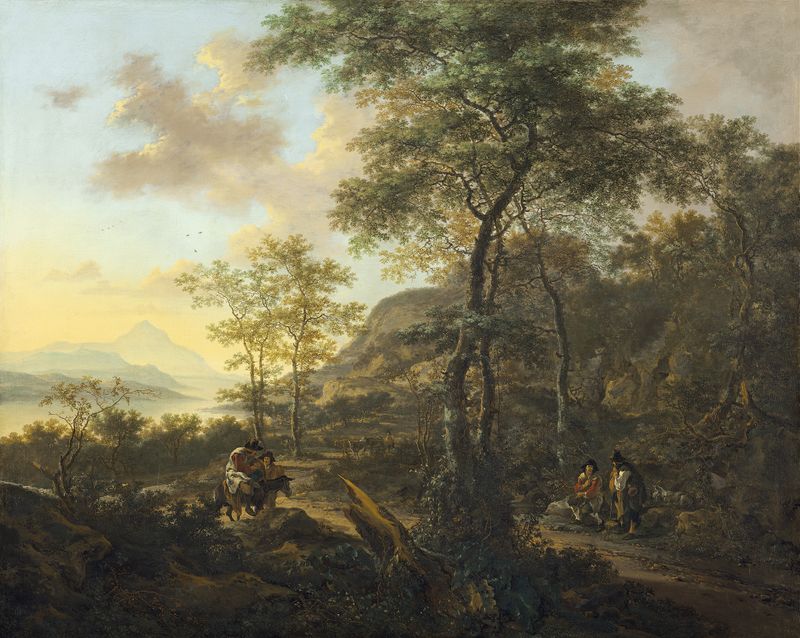
An Italianate Evening Landscape
Jan Both
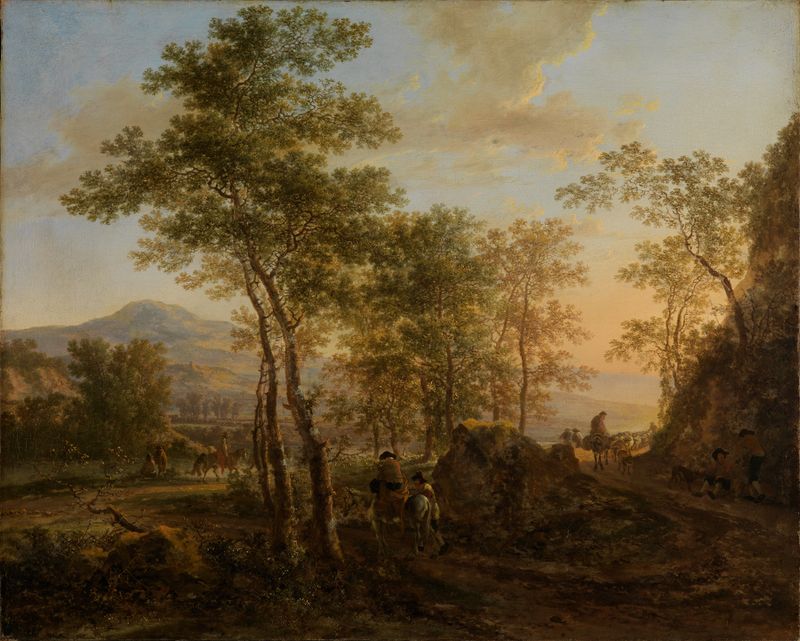
Italienische Landschaft am Abend
Jan Both
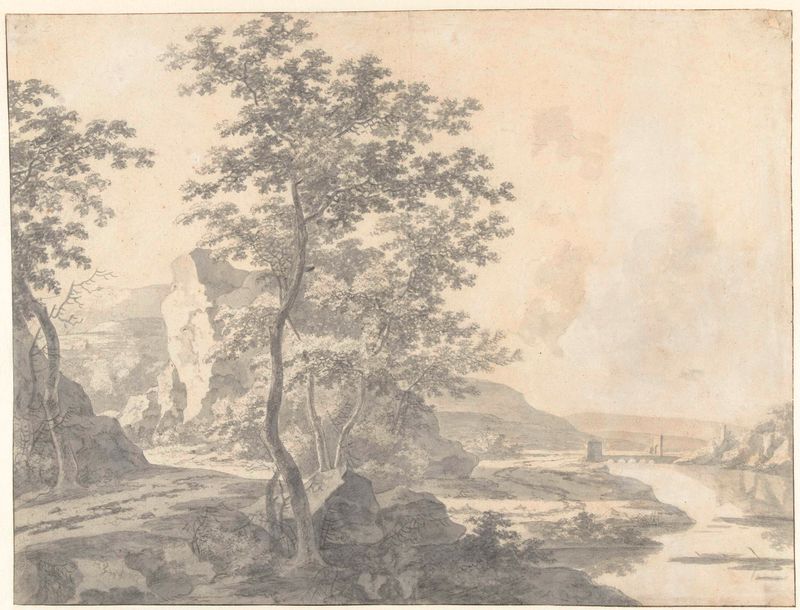
Italiaans landschap
Jan Both
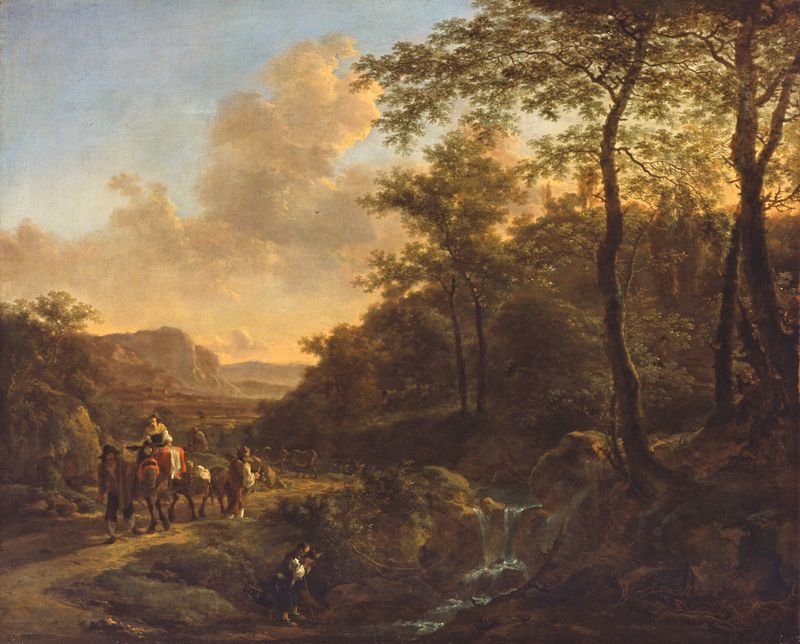
Scene of the Roman Campagna
Jan Both
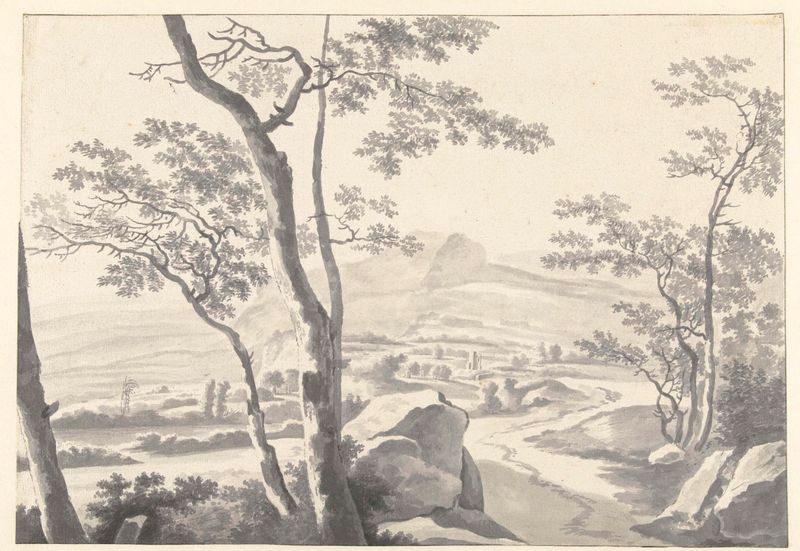
Landschap
Jan Both
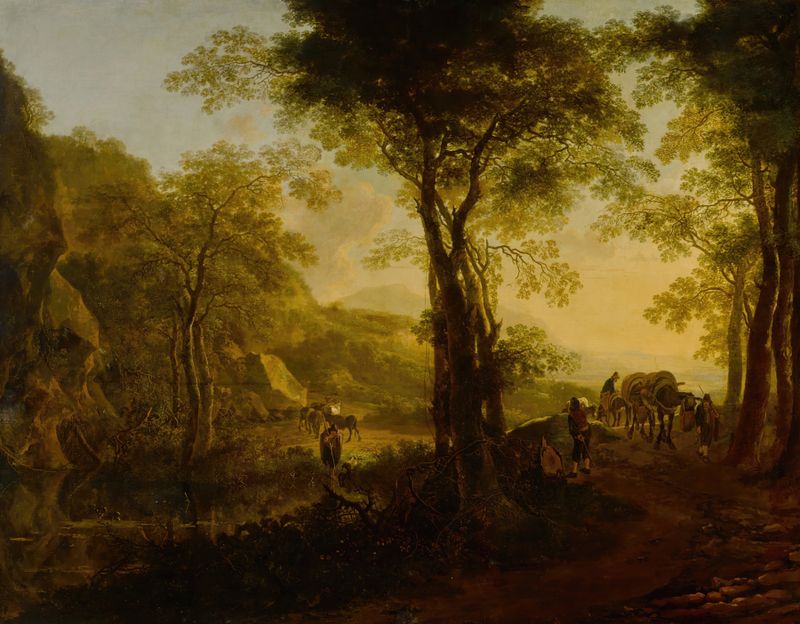
Italianate landscape at sunset, with travelers on a country road
Jan Both
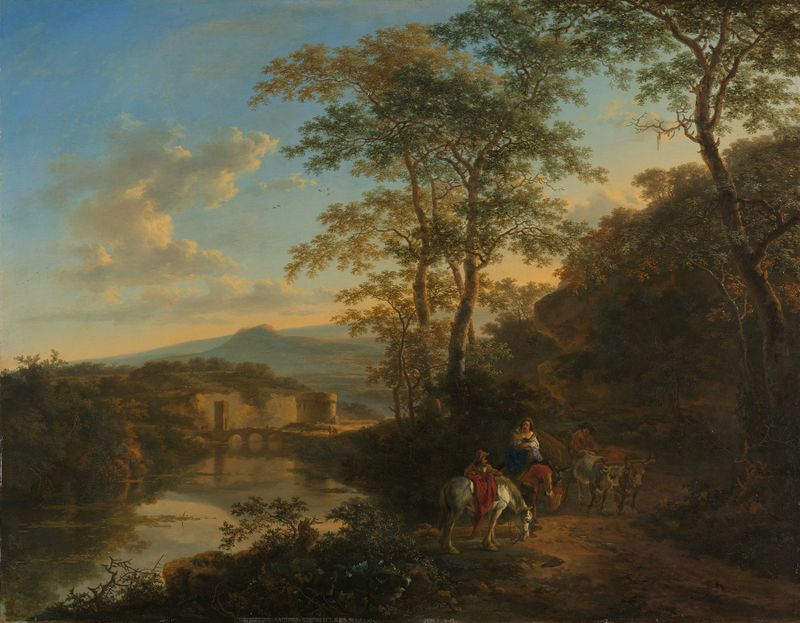
Italian Landscape with the Ponte Lucano over the Aniene River
Jan Both
A wooded landscape with travellers crossing a ford
Jan Both

Italian Landscape
Jan Both





