
A New England wharf — History & Facts
Could beauty survive in a century of chaos? In A New England Wharf, the resonance of obsession echoes through the tranquil yet charged landscape, inviting viewers to ponder the fragility of simplicity against the backdrop of relentless progress. Focus on the soft hues of the water, where gentle ripples cradle reflections of moored boats. Look to the left at the rustic wooden docks, their weathered textures hinting at countless stories of labor and life. Notice how the light delicately dances upon the surface, illuminating the warmth of the sunrise that casts a golden glow over the scene.
The careful brushstrokes convey a sense of stillness, yet the composition teeters on the edge of restless energy, as if the moment is caught in a breath before change. Digging deeper, the contrast between nature and humanity reveals an emotional tension inherent in the painting. The serene waterfront belies the ever-looming presence of industrialization, suggesting a world on the brink of transformation. Each detail, from the boats bobbing lightly to the birds dotting the sky, suggests an obsession with the ephemeral beauty of a bygone era, evoking nostalgia for a simplicity that may soon vanish. In 1888, Louis Kinney Harlow painted this work while living in a rapidly changing America, where industrial advancements were reshaping landscapes and lives.
During this period, artists were beginning to explore themes of modernity juxtaposed with an appreciation for natural beauty. Harlow’s choice to capture this wharf reflects his personal journey and a wider historical moment—an attempt to preserve the quiet allure of New England before it succumbed to the chaos of progress.
More Artworks by Louis Kinney Harlow
Browse all →
West Chop Light, Vineyard Sound, Mass.
Louis Kinney Harlow
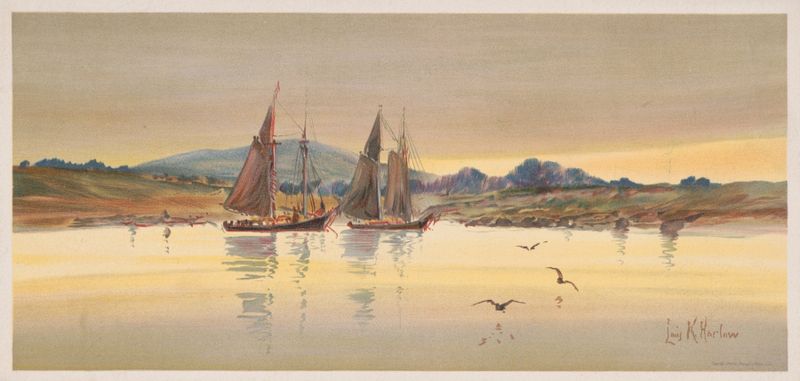
Sunset in Rockland Harbor
Louis Kinney Harlow
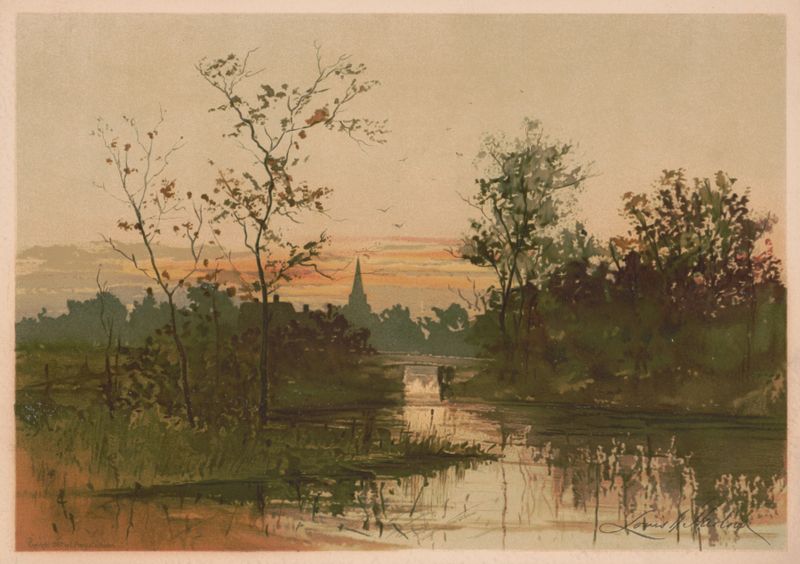
Nemasket River, Maine
Louis Kinney Harlow
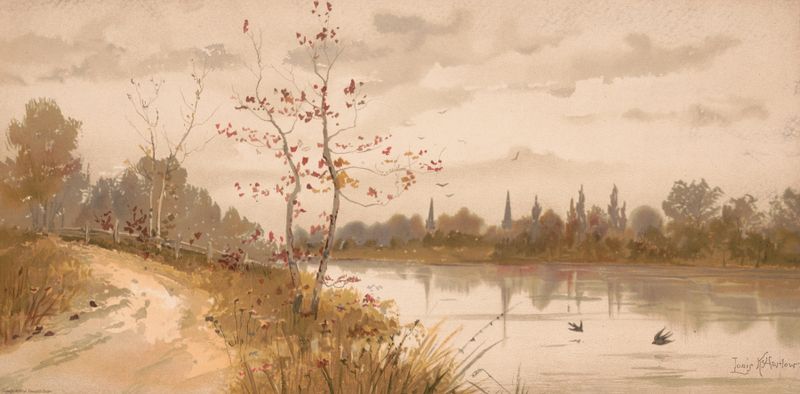
A river path
Louis Kinney Harlow

Castine, Maine
Louis Kinney Harlow

A bit of Monhegan, Maine
Louis Kinney Harlow
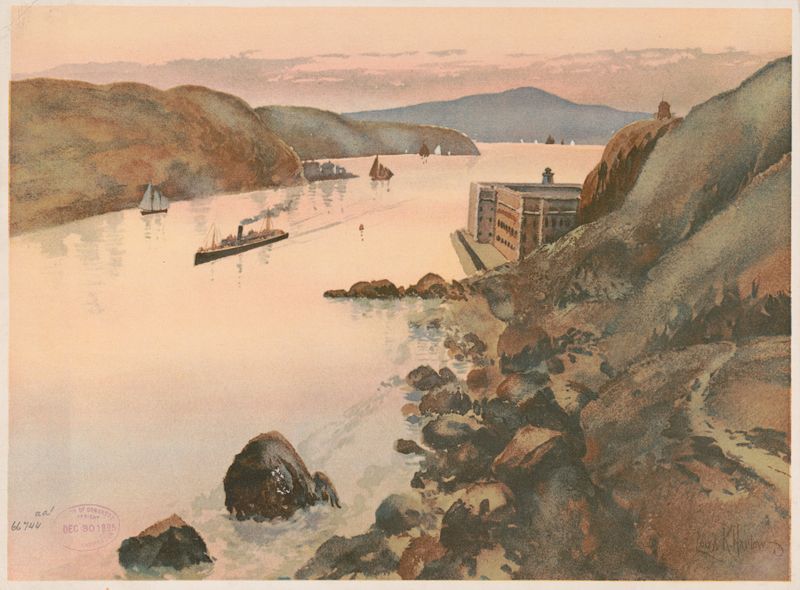
Fortifications and Golden Gate
Louis Kinney Harlow

Blue Hills, Camden, Me.
Louis Kinney Harlow

Near Boothbay Harbor, Maine coast
Louis Kinney Harlow

Evening rest
Louis Kinney Harlow





