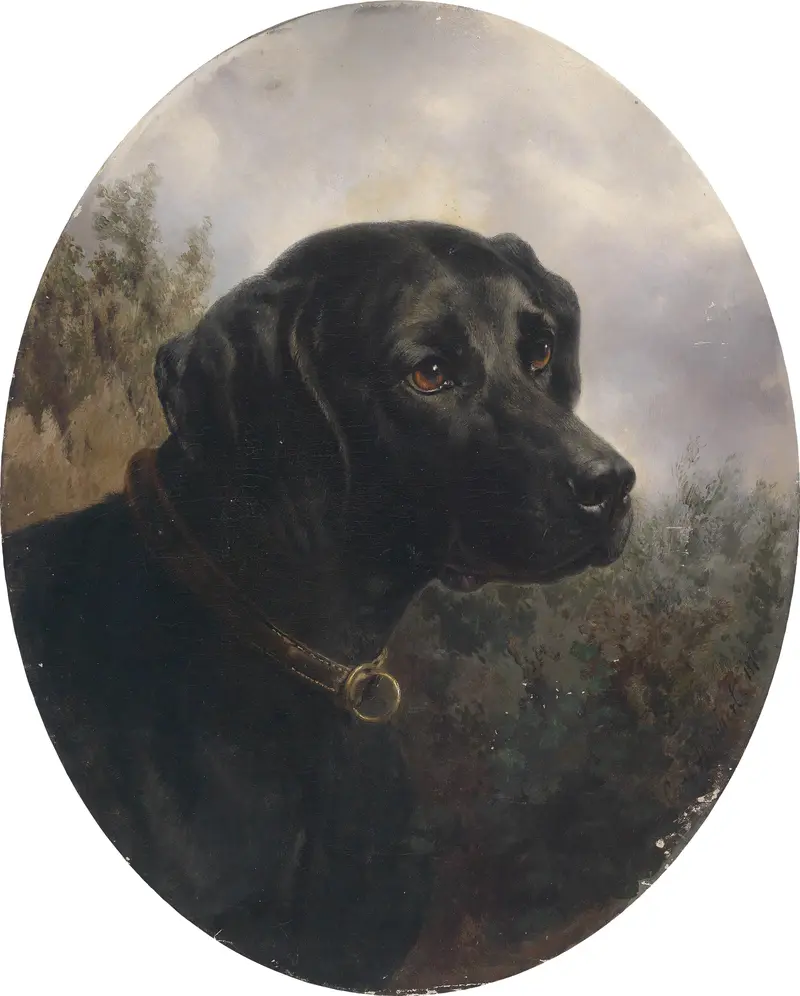
A Newfoundland Dog — History & Facts
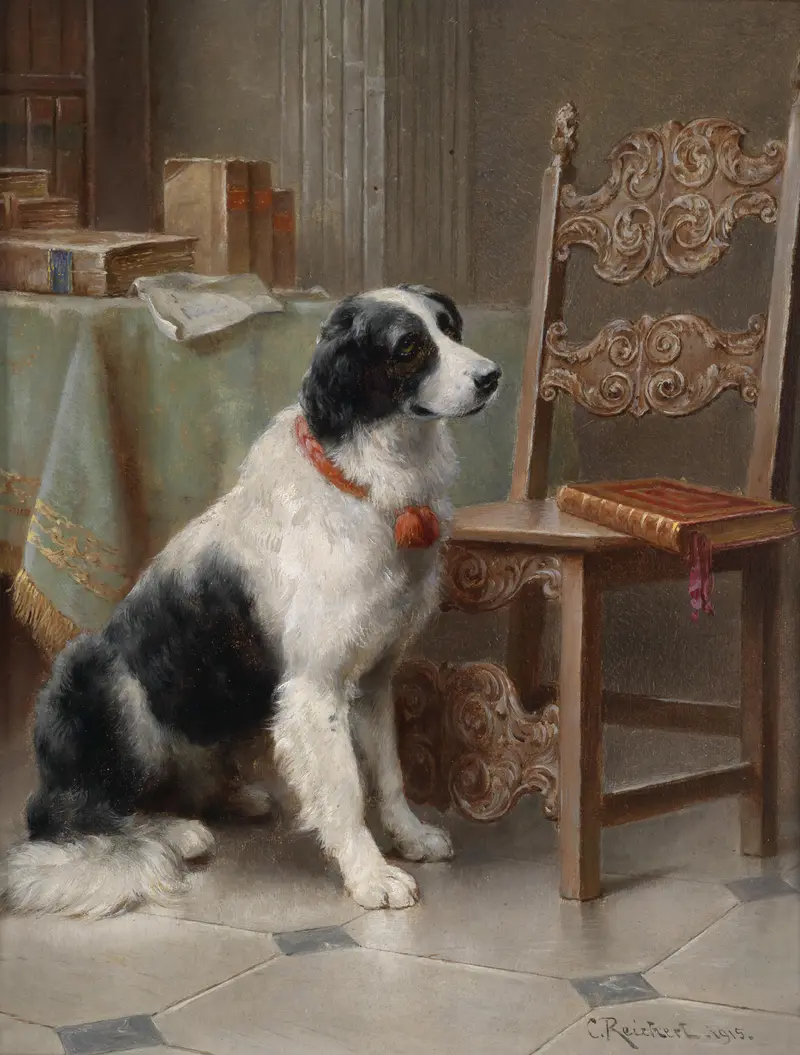
The glint in the dog’s amber eye is what first holds you—an expression caught between alertness and gentleness, as if the animal has just turned its head at a familiar sound. The artist, Carl Reichert, chooses not to show the Newfoundland in action or repose, but in a moment of attentive stillness. Every strand of the thick, dark fur is rendered with almost scientific precision, but the real artistry lies in the way the light glances off the muzzle and brow, softening the massive head into something approachable.
The background, a haze of soft colors, keeps all attention on the animal’s face, making the viewer feel as if they are meeting this dog at eye level, in a private encounter. Painted by 1918, this work belongs to a period when animal portraiture was both a sentimental keepsake and a display of status, especially among the European middle and upper classes. The Newfoundland, celebrated for its loyalty and strength, was a favored subject for such commissions. Though history has kept few traces of this particular painting’s early journey, its presence in a modern auction house speaks to the lasting affection for both the breed and the tradition of animal portraiture.
As you linger on the details—the careful highlights, the softness of the gaze—you sense the quiet pride of a world that valued not just the animal, but the act of seeing and remembering it in paint.