
A North East Headland — History & Facts
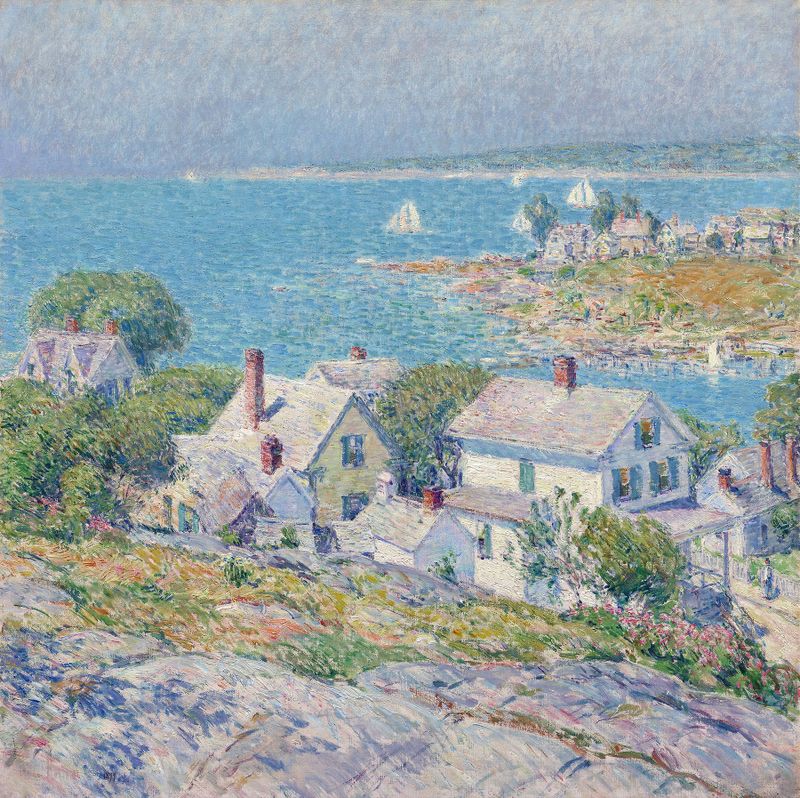
In the tranquil expanse of nature, what whispers lie beneath the surface of each stroke, yearning for rebirth and renewal? Look to the canvas; the soft hues of blue and green immediately draw your gaze across the horizon, where the sea meets the sky. The gentle brushwork conveys waves shimmering in sunlight, while the coastal headland stands proudly, a sentinel of time. Notice how the light dances over the water, illuminating patches of white foam that momentarily break the surface; it is a delicate interplay of color and texture that invites contemplation. Beyond the surface, a deeper connection emerges.
The headland, with its jagged edges, symbolizes resilience amidst the ebb and flow of the tides, hinting at nature's ability to endure and transform. This juxtaposition of rugged cliffs against the gentle sea embodies a harmony between strength and fluidity, evoking a sense of rebirth that resonates with the viewer. The subtle yet powerful contrasts speak to the cycles of life, emphasizing a return to the beginnings that define not only the landscape but also the human experience. Childe Hassam created A North East Headland in 1901 while living in New England, a time when he was increasingly influenced by Impressionism and capturing the American landscape.
At this point in his career, he had already established his reputation as a painter dedicated to exploring the interplay of light and color. The world of art was evolving, with new movements challenging traditional techniques; Hassam embraced this change, reflecting the spirit of a nation in search of its identity through artistic expression.
More Artworks by Childe Hassam
Browse all →
Beach at Newport
Childe Hassam

Washington Arch, Spring
Childe Hassam

Thaxter’s Garden
Childe Hassam

New England Headlands
Childe Hassam

Rocks At Appledore, Morning
Childe Hassam
New England Headlands
Childe Hassam
Landscape at Newfields, New Hampshire
Childe Hassam

Piazza di Spagna, Rome
Childe Hassam

The Harbor
Childe Hassam

Late Afternoon, New York, Winter
Childe Hassam





