
A Pond — History & Facts
When did color learn to lie? In the delicate brushstrokes of this landscape, truth and beauty entwine, revealing the hidden depths of nature's facade. Look to the foreground where the vibrant greens of the grass meet the serene blue of the pond. Notice how the light dances across the water's surface, creating glimmers that mimic the sky above. The artist's adept use of color juxtaposes the cool tones of the water with the warm hues of the surrounding foliage, leading the eye toward the horizon where the landscape unfurls in a gentle embrace. Beneath this tranquil scene lies an emotional tension, an underlying duality.
The shimmering surface suggests calm, yet the ripples hint at disturbances below, inviting contemplation of the unseen. Moreover, the interplay of light and shadow creates a dialogue between illusion and reality, urging viewers to question their perceptions of both beauty and truth. In 1867, Appian was immersed in the world of the Barbizon School in France, a movement focused on capturing the essence of nature. During this period, he sought to reconcile the naturalistic depths of his subjects with an emotional resonance that spoke to the viewer's soul.
This painting reflects both his mastery in landscape representation and the broader artistic pursuit of authenticity in an era often characterized by romantic ideals.
More Artworks by Adolphe Appian
Browse all →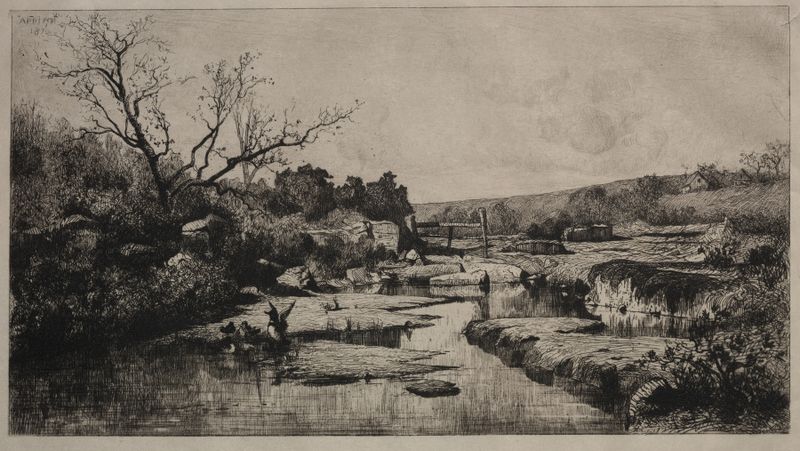
Source of the Albarine
Adolphe Appian
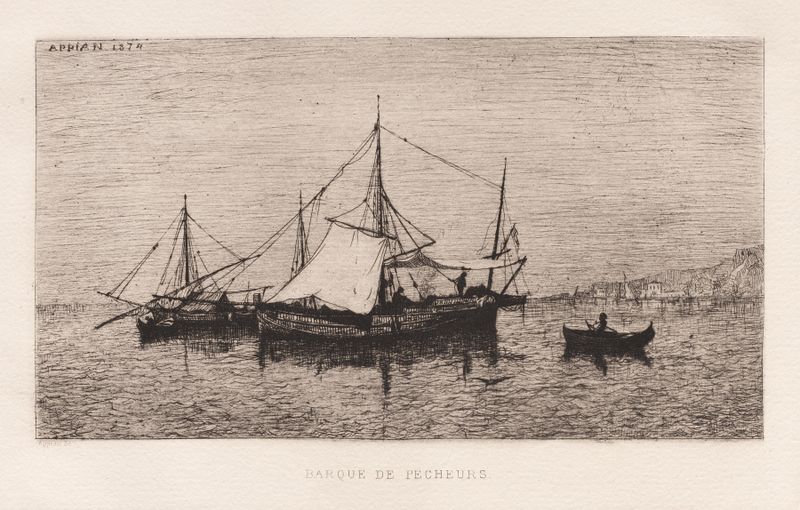
Barque de Pecheurs
Adolphe Appian
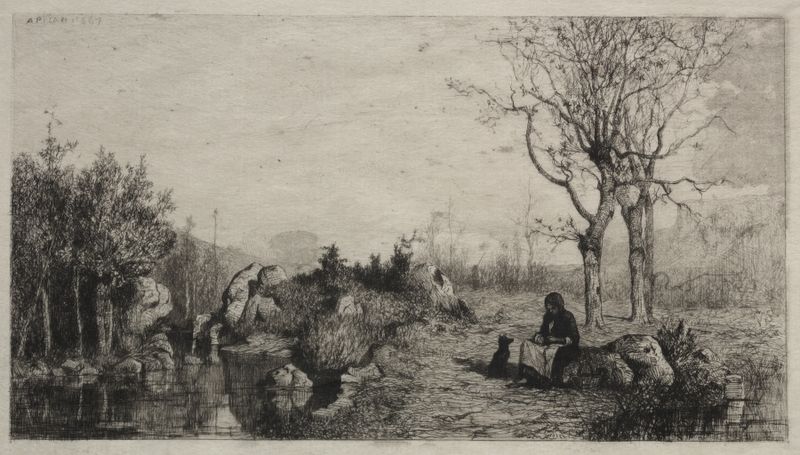
Shore of a Stream at Rossillon
Adolphe Appian

At Valromay (Ain)
Adolphe Appian

Woman Seated at the Edge of a Pond
Adolphe Appian
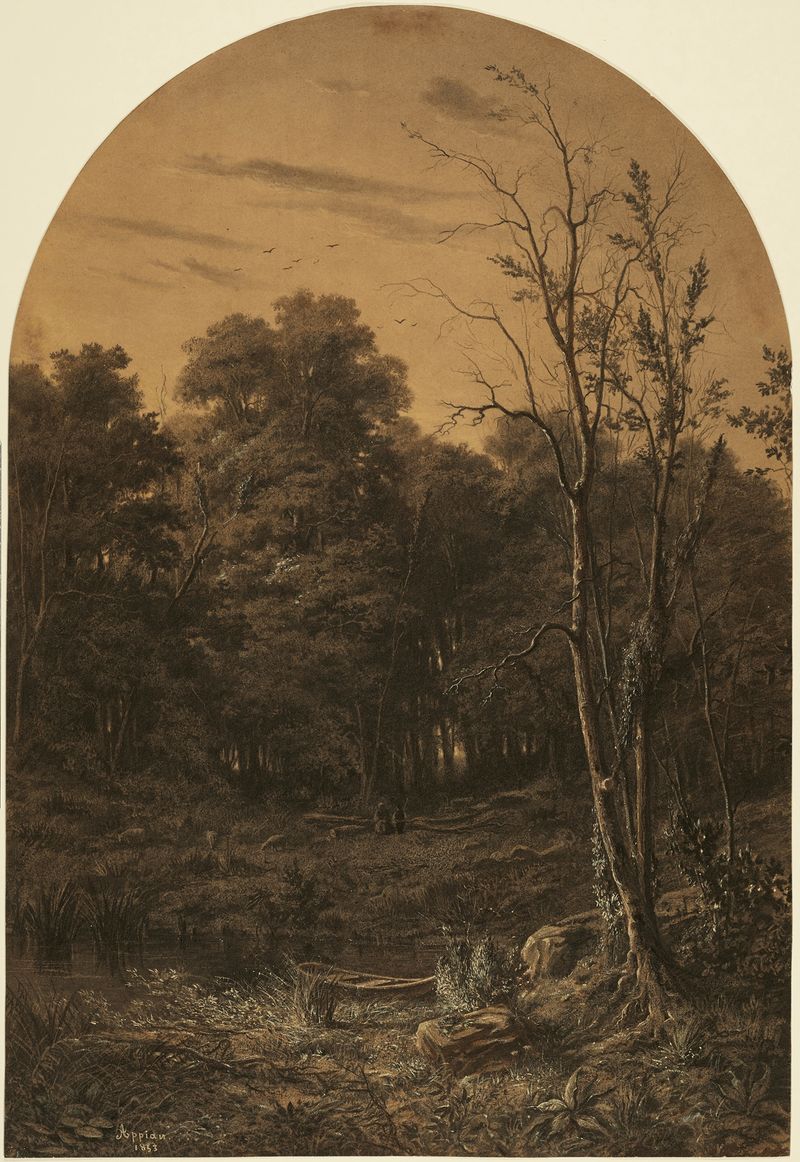
Forest Landscape near a Pond
Adolphe Appian
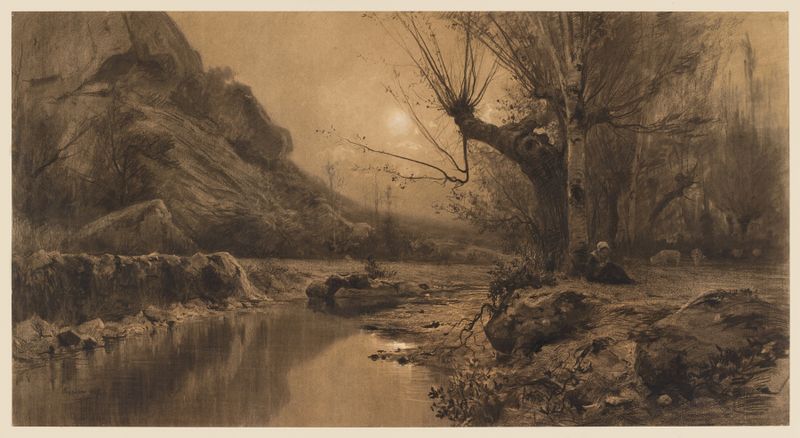
In the Valromey Valley, near the Rhône River
Adolphe Appian
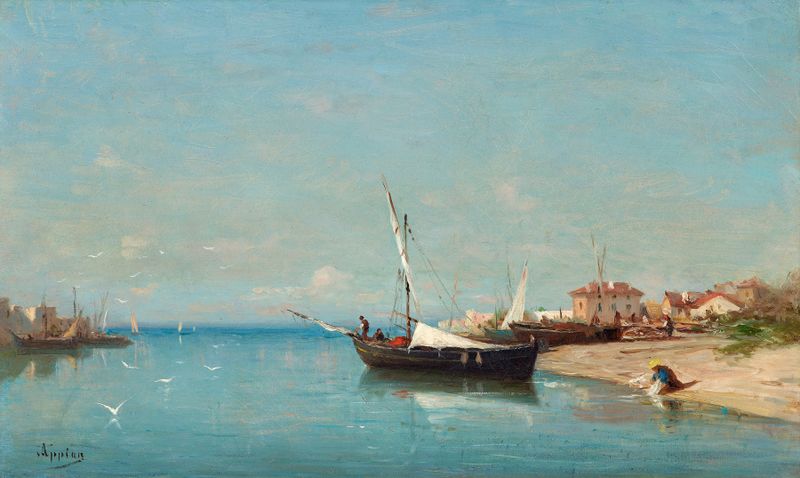
Bord de mer
Adolphe Appian

Pond at the Edge of the Wood
Adolphe Appian
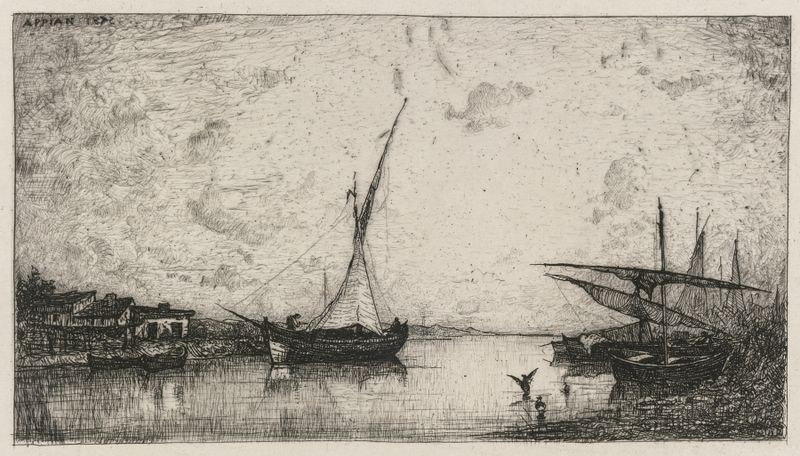
Canal aux Martigues
Adolphe Appian





