
In the Valromey Valley, near the Rhône River — History & Facts
In the gentle embrace of nature, the longing for connection pulses through the landscape, inviting the viewer into a world alive with yearning. Focus on the interplay of soft greens and muted blues that dominate the canvas, guiding your gaze across the undulating hills bathed in the warm glow of the setting sun. Notice how the delicate strokes capture the play of light on the Rhône River, shimmering like a ribbon of silver. The composition draws you in, inviting an exploration of the meandering path that beckons toward the horizon, suggesting both a journey and a destination. As you delve deeper, consider the emotional resonance of the lone figure standing at the water’s edge.
This solitary presence, framed by nature's vastness, embodies a sense of quiet desire—a longing for solitude, reflection, or perhaps something more profound. The contrast between the vibrant landscape and the figure's stillness amplifies the tension, evoking feelings of nostalgia and wistfulness as you ponder their story. In 1868, the artist created this piece while living in France, a time marked by rapid industrialization and shifts in artistic expression. Appian was part of the Barbizon school, focusing on capturing the essence of the French countryside, which was a response to the changing world.
His work emerged from a deep appreciation for nature, reflecting both personal and societal transformations that shaped the landscape of art during this period.
More Artworks by Adolphe Appian
Browse all →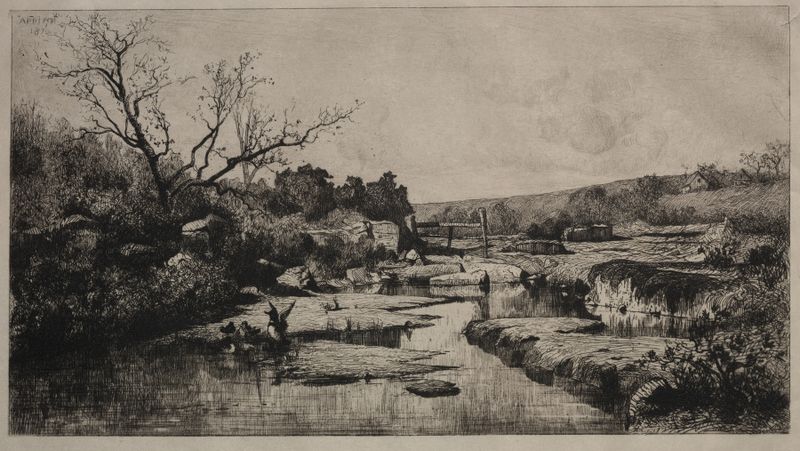
Source of the Albarine
Adolphe Appian
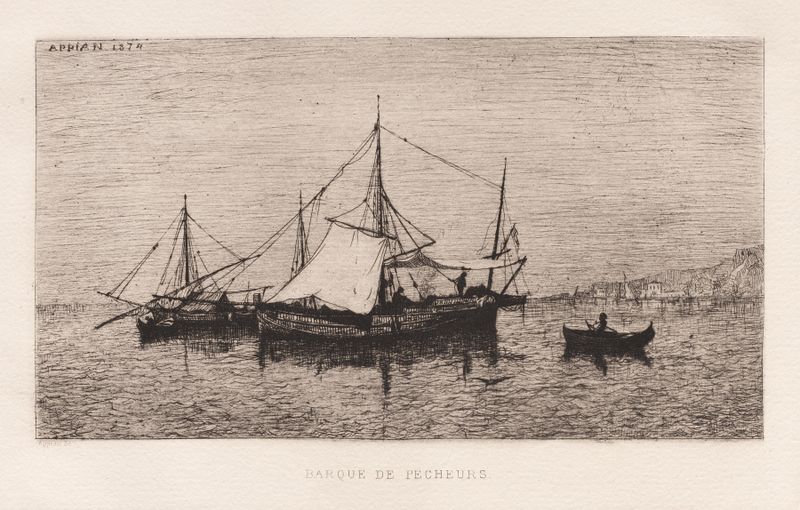
Barque de Pecheurs
Adolphe Appian
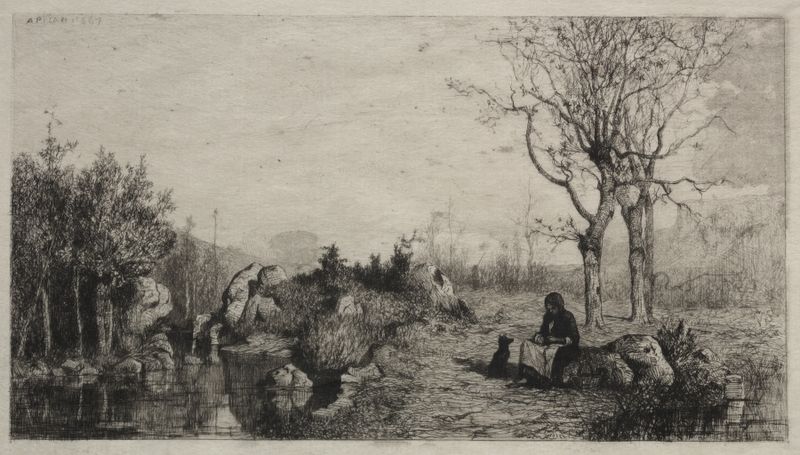
Shore of a Stream at Rossillon
Adolphe Appian

A Pond
Adolphe Appian

At Valromay (Ain)
Adolphe Appian

Woman Seated at the Edge of a Pond
Adolphe Appian
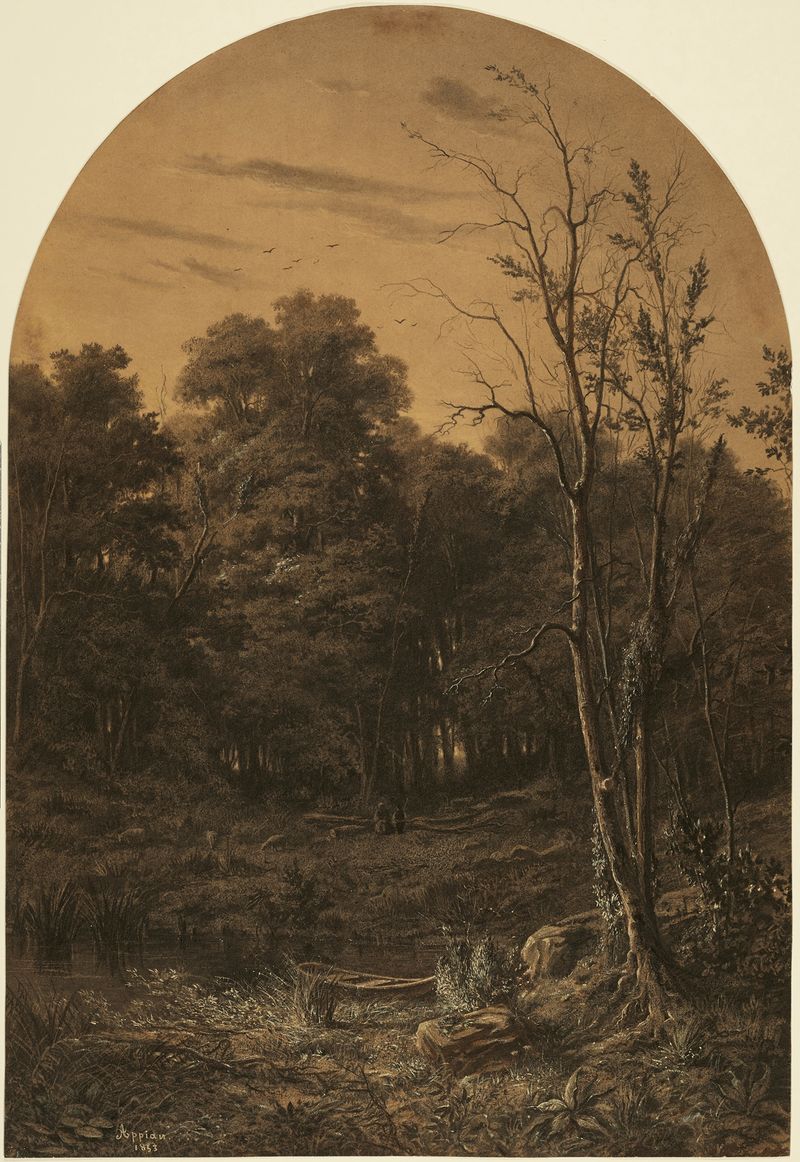
Forest Landscape near a Pond
Adolphe Appian
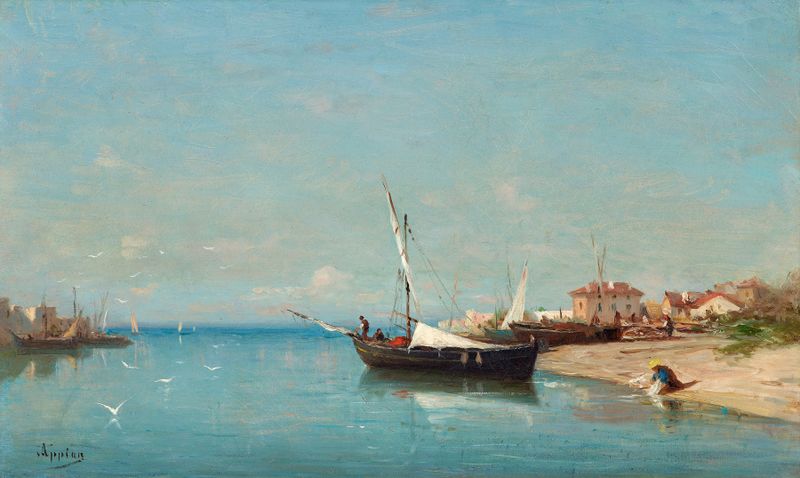
Bord de mer
Adolphe Appian

Pond at the Edge of the Wood
Adolphe Appian
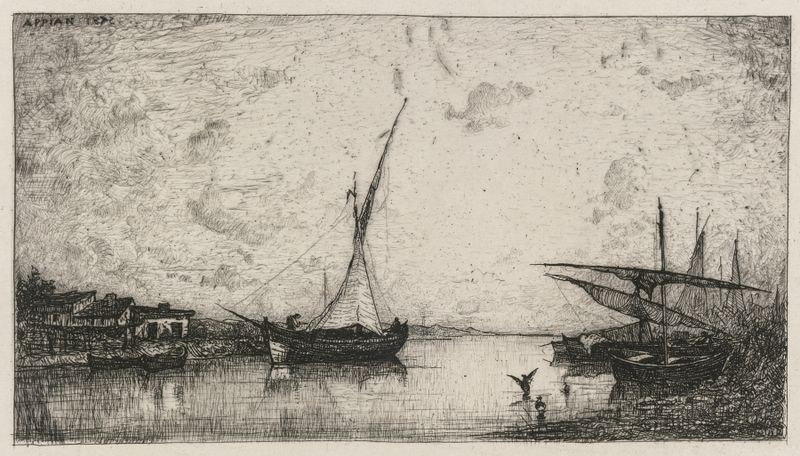
Canal aux Martigues
Adolphe Appian





