
At Valromay (Ain) — History & Facts
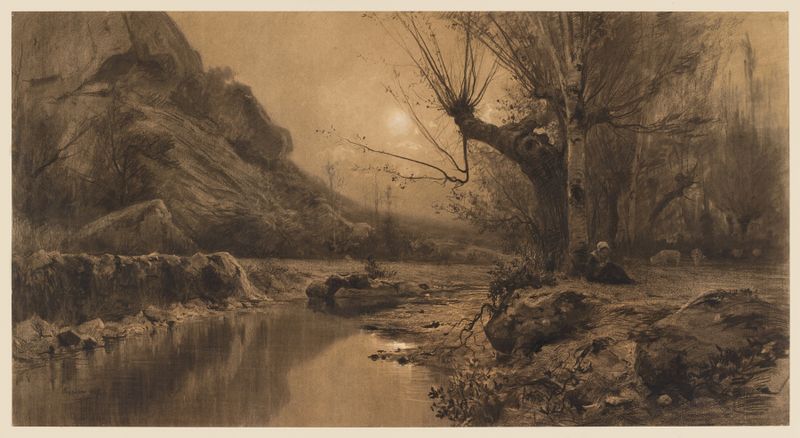
What if silence could speak through light? In Adolphe Appian's At Valromay (Ain), an evocative stillness envelops the landscape, suggesting that nature carries the weight of unvoiced emotions, perhaps even betrayal. Look to the foreground where a gentle river winds through verdant foliage, its surface reflecting the soft hues of an overcast sky. The interplay of light and shadow masterfully captures the evening ambiance, creating a sense of serene isolation. Notice how the trees lean towards the water, as if drawn into a whispered conversation, while distant hills recede into a muted palette, hinting at the complexity of feelings that lie beneath the surface. Delve deeper into the contrasting elements present in the painting.
The tranquil river, a symbol of continuity and life, stands in stark juxtaposition to the looming clouds, suggesting an undercurrent of tumultuous emotions. The soft brushwork evokes a dreamlike quality, yet the darker tones lurking in the shadows speak to hidden tensions, as if the landscape itself is grappling with a profound sense of longing and loss. In 1868, when this piece was created, Appian was a prominent figure in the French landscape movement. He painted At Valromay (Ain) in the context of a rapidly industrializing France, where traditional pastoral scenes were often overshadowed by urban expansion.
It was a time when artists wrestled with the dualities of nature versus progress, and Appian's choice to embrace the lyrical beauty of the landscape reflects his pursuit of tranquility amidst societal change.
More Artworks by Adolphe Appian
Browse all →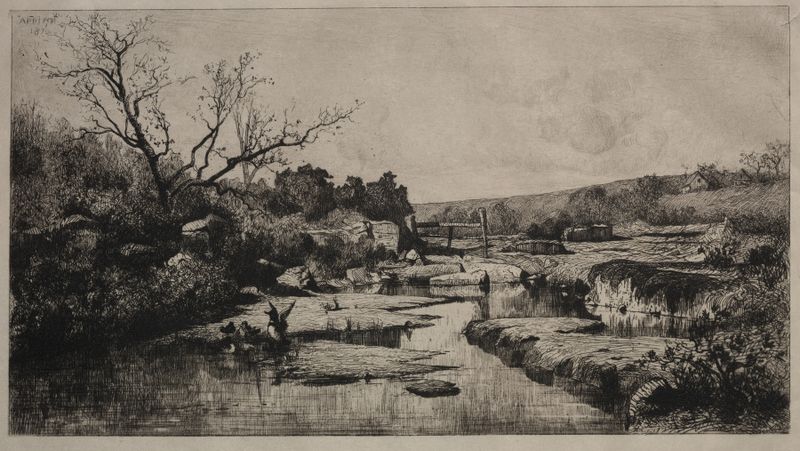
Source of the Albarine
Adolphe Appian
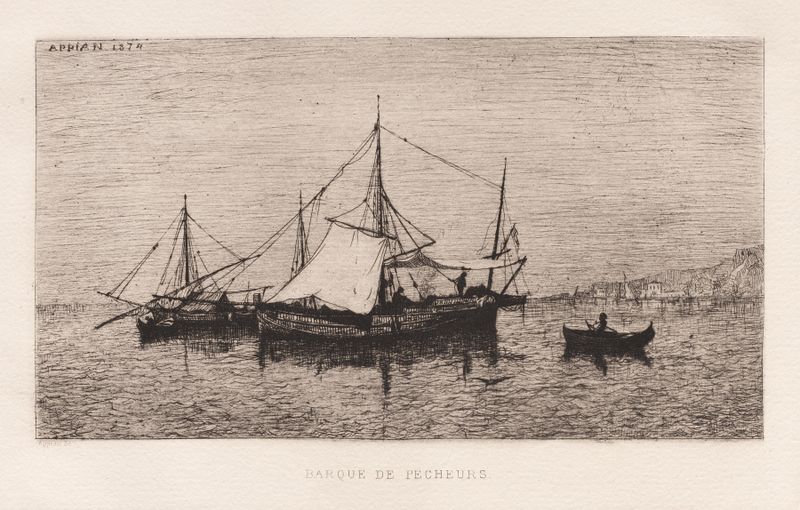
Barque de Pecheurs
Adolphe Appian
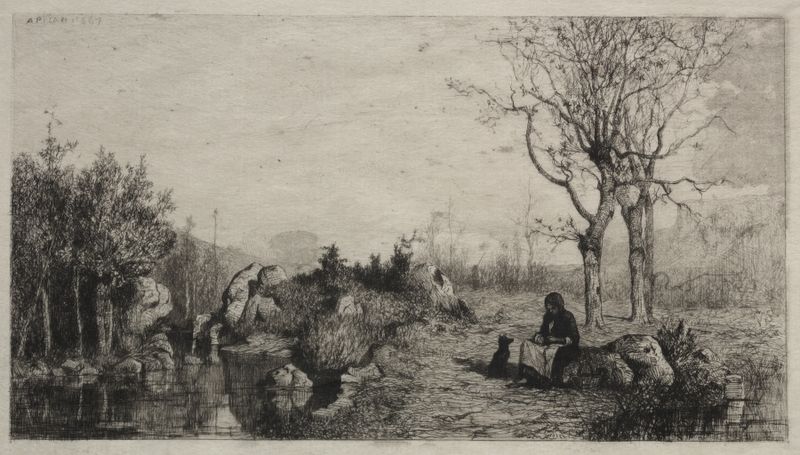
Shore of a Stream at Rossillon
Adolphe Appian

A Pond
Adolphe Appian

Woman Seated at the Edge of a Pond
Adolphe Appian
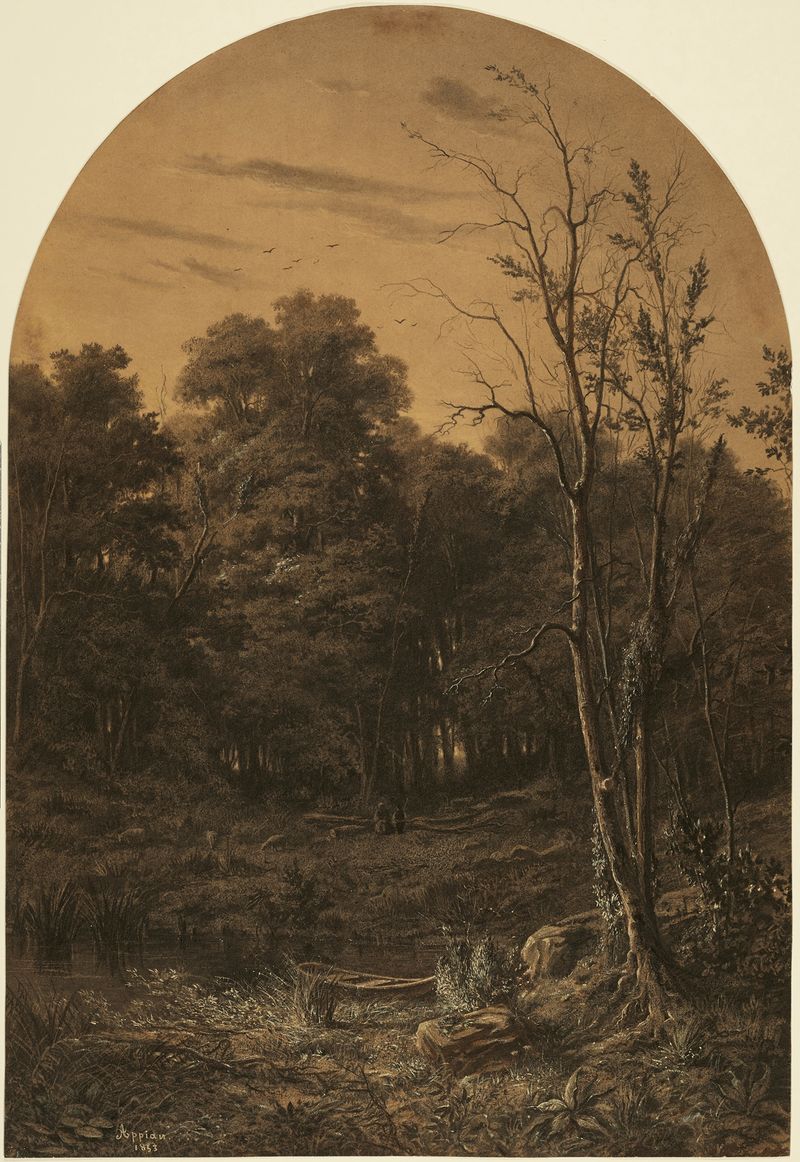
Forest Landscape near a Pond
Adolphe Appian
In the Valromey Valley, near the Rhône River
Adolphe Appian
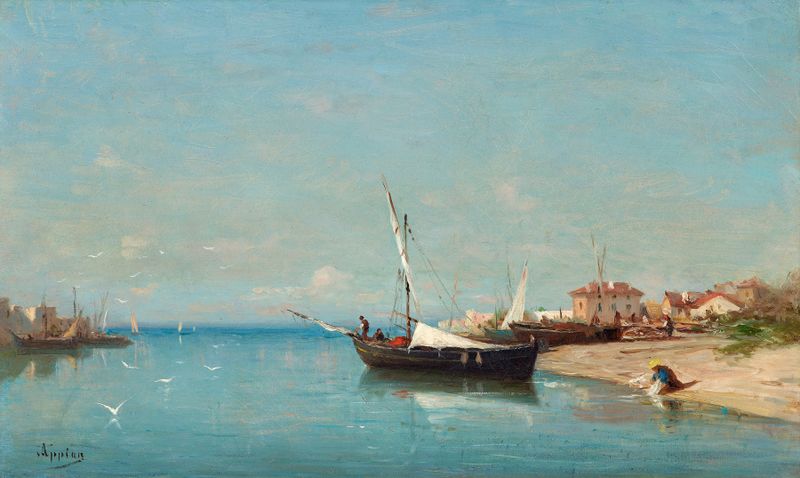
Bord de mer
Adolphe Appian

Pond at the Edge of the Wood
Adolphe Appian
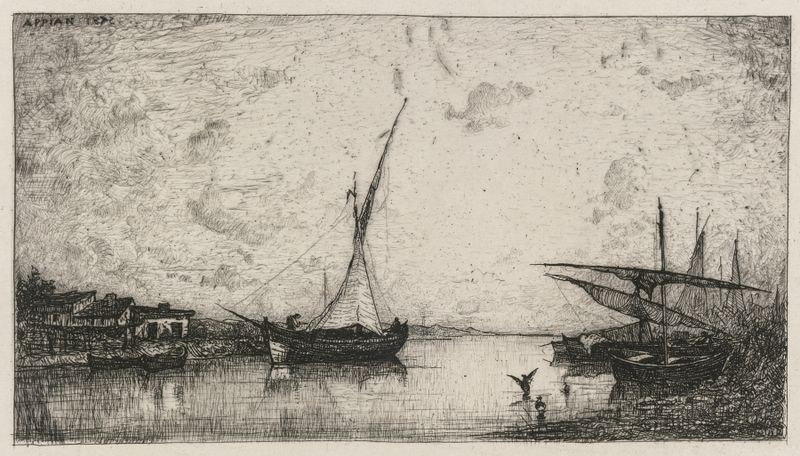
Canal aux Martigues
Adolphe Appian





