
Canal aux Martigues — History & Facts
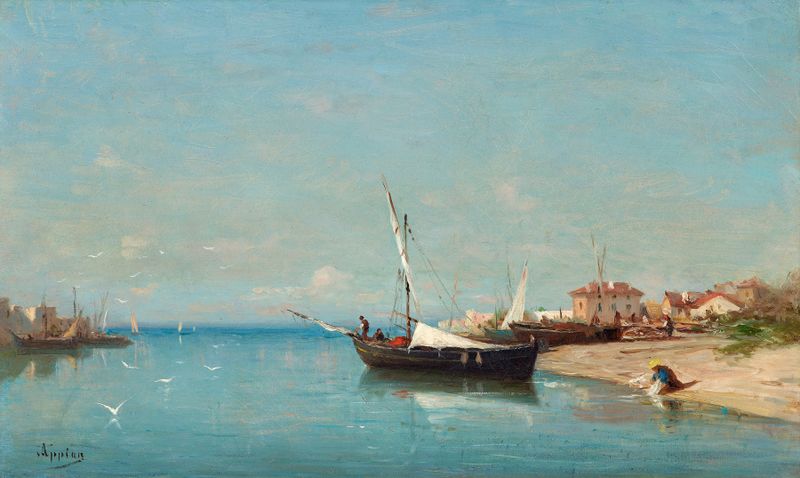
Can paint confess what words never could? In Canal aux Martigues, a quiet sorrow lingers over the tranquil waters, where every brushstroke seems to whisper the secrets of lost moments. Look to the left at the gentle curve of the canal, where the water reflects the muted hues of the sky. Notice how the artist masterfully balances warm oranges and cool blues, creating a harmonious interplay that evokes both serenity and melancholy. The soft touches of light dancing on the surface invite the viewer to linger, while the distant silhouettes of trees frame the scene, offering a sense of intimacy and perspective. Delve deeper into the subtle contrasts within the work.
The stillness of the water is juxtaposed with an underlying tension, a reminder of the inevitable passage of time. The warm light suggests fleeting beauty, while the faded colors hint at memories that have begun to fade — a poignant reflection on what once was and what remains. These nuances evoke a sense of nostalgia that resonates deeply, revealing the emotional weight that lies beneath the surface. Adolphe Appian painted Canal aux Martigues in 1872 during a period of personal and artistic evolution.
Living in France, he was at the forefront of the landscape movement, seeking to capture the essence of nature through his unique approach to color and light. Amidst a world shifting towards modernity, Appian’s work reflects both the harmony found in natural beauty and the quiet introspection of his own experiences, offering viewers a glimpse into the soul of a time both lost and cherished.
More Artworks by Adolphe Appian
Browse all →
Source of the Albarine
Adolphe Appian
Barque de Pecheurs
Adolphe Appian
Shore of a Stream at Rossillon
Adolphe Appian

A Pond
Adolphe Appian

At Valromay (Ain)
Adolphe Appian

Woman Seated at the Edge of a Pond
Adolphe Appian
Forest Landscape near a Pond
Adolphe Appian
In the Valromey Valley, near the Rhône River
Adolphe Appian
Bord de mer
Adolphe Appian

Pond at the Edge of the Wood
Adolphe Appian





