
A River Landscape in Spring — History & Facts
Can paint confess what words never could? In the delicate interplay of color and brushstroke, the essence of a fleeting moment is captured, urging us to contemplate the illusions inherent in both nature and art. Look to the foreground, where gentle ripples dance across the water’s surface, reflecting the vibrant greens of the flourishing banks. The light spills over the landscape, casting a warm glow that highlights the budding leaves and fragile blossoms swaying in the breeze. Notice how the artist employs soft pastels and layered textures to convey the lightness of spring, inviting viewers to breathe in the refreshing air of renewal and hope. Yet, beneath this serene facade lies a tension between reality and representation.
The juxtaposition of the tranquil river and the distant hills suggests a pathway — perhaps towards new beginnings or the inevitable passage of time. The small details, like the delicate brushwork that defines the horizon and the subtle play of shadows, remind us that beauty is often transient, an illusion that beckons us to linger while we can. During the late 19th century, when this piece was likely painted, Kaufmann was immersed in the burgeoning world of landscape painting, influenced by the Romantic movement's reverence for nature. His works often reflect a deep connection to the environment and the emotional nuances it evokes.
It was a time when artists sought to capture not just the external world but the shifting moods of the human spirit, aligning perfectly with the themes present in this captivating landscape.
More Artworks by Adolf Kaufmann
Browse all →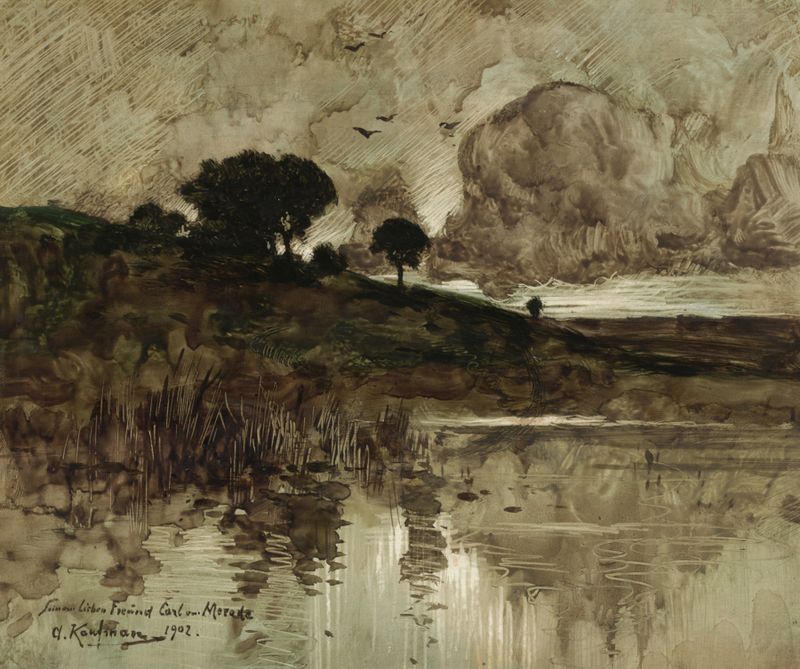
Herbstabend am See
Adolf Kaufmann

Winterliche Flusslandschaft
Adolf Kaufmann
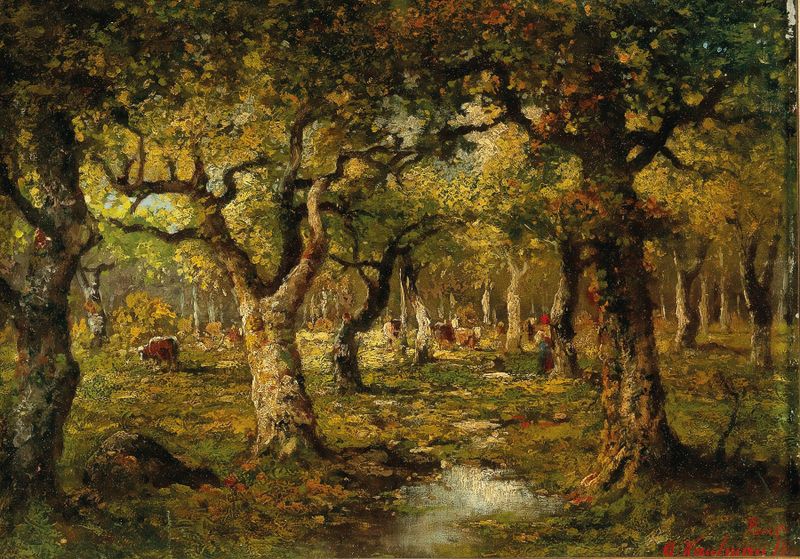
In the Forest of Barbizon
Adolf Kaufmann
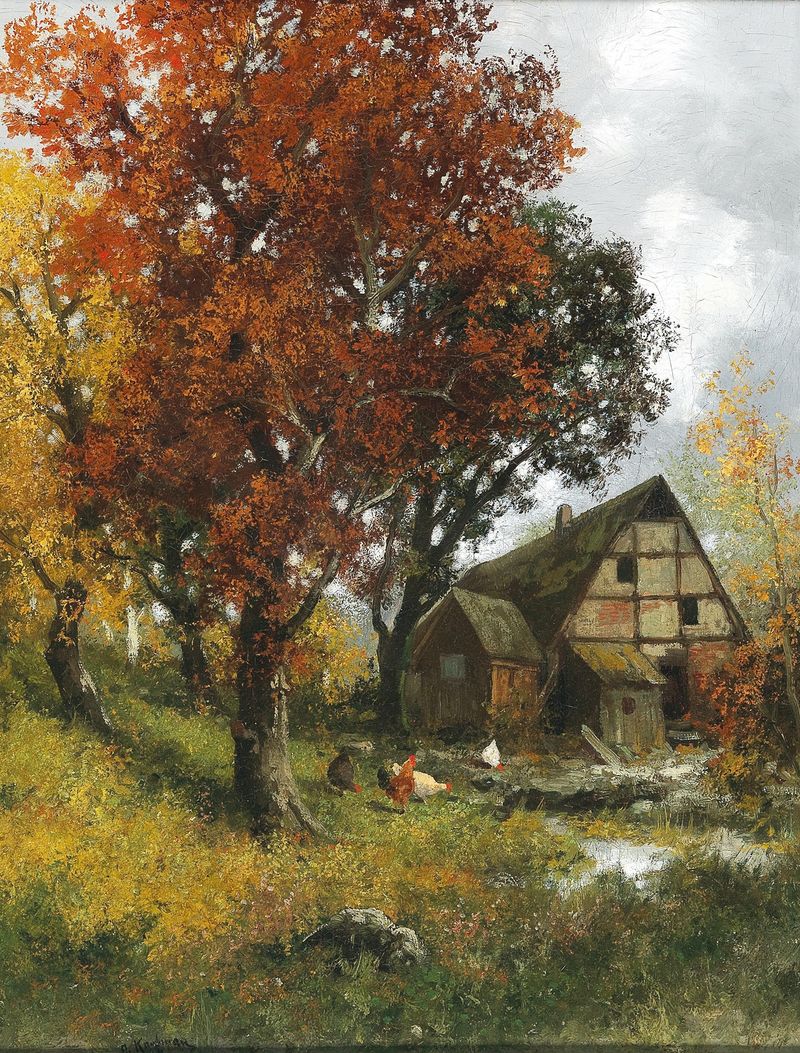
A Mill in an Autumnal Forest
Adolf Kaufmann
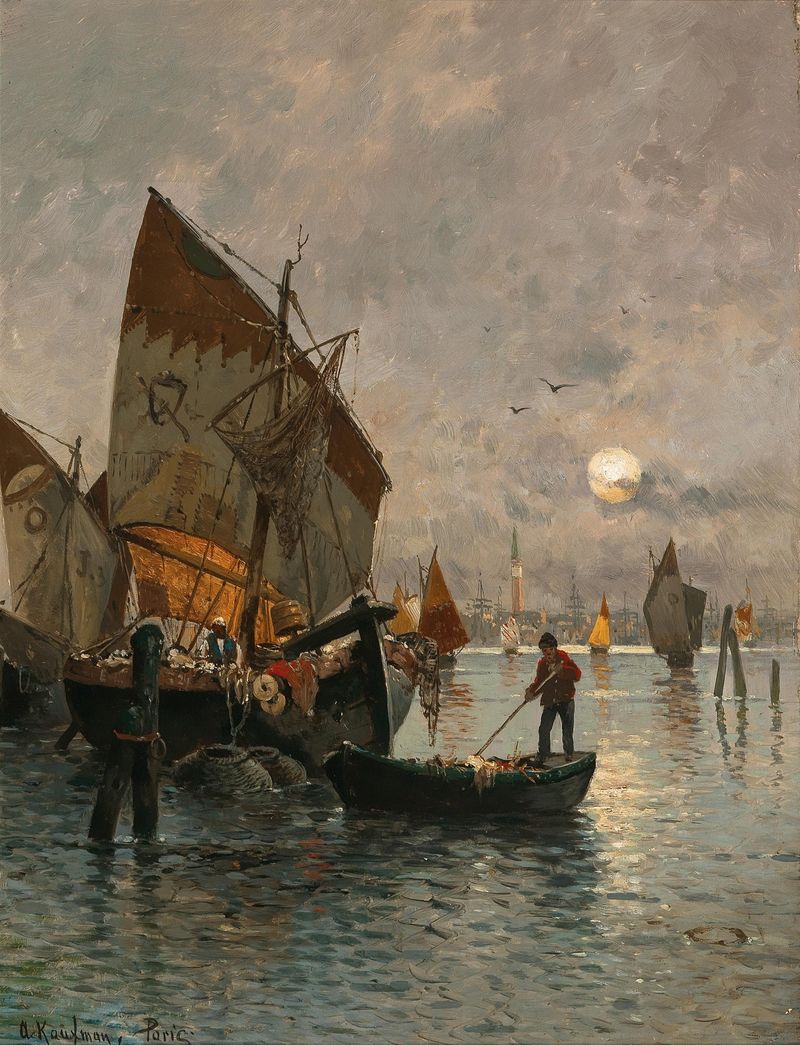
In der Lagune Venedigs
Adolf Kaufmann
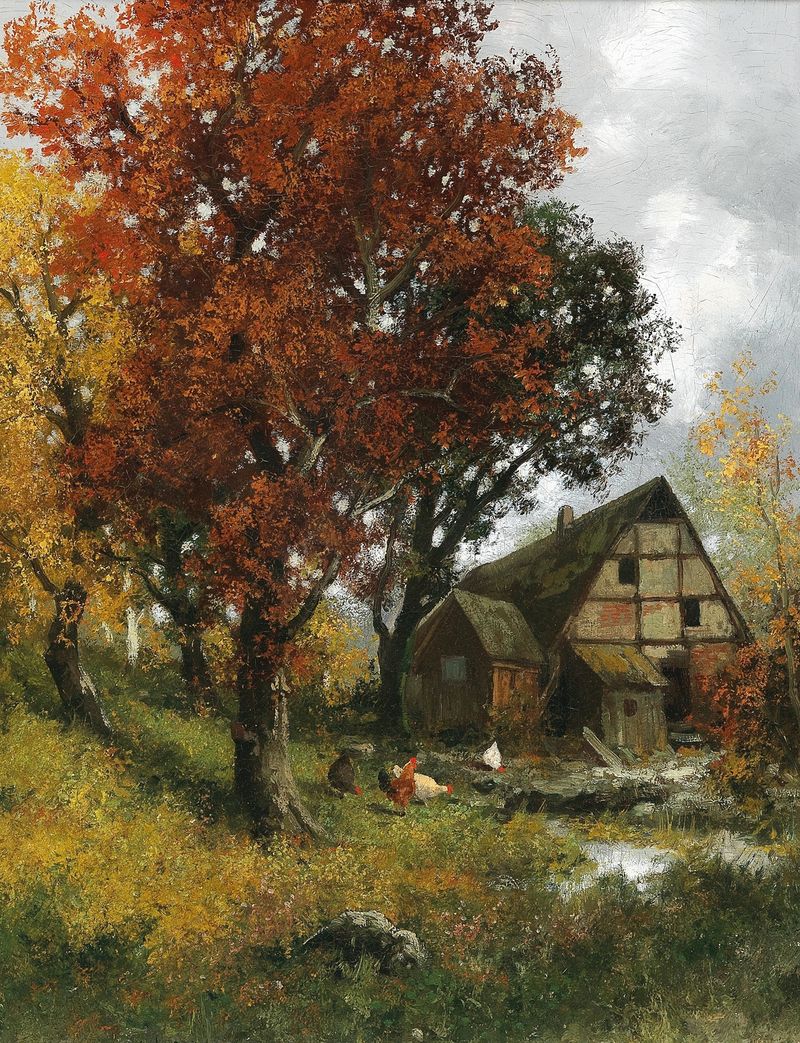
Mühle im Herbstwald
Adolf Kaufmann
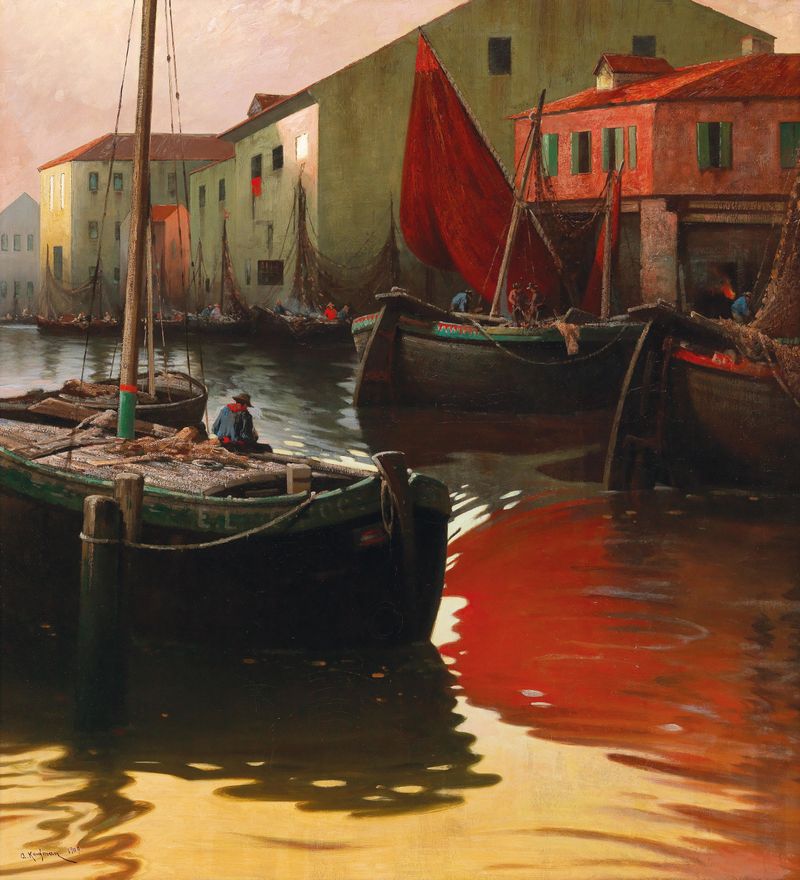
Motif Of Chioggia
Adolf Kaufmann
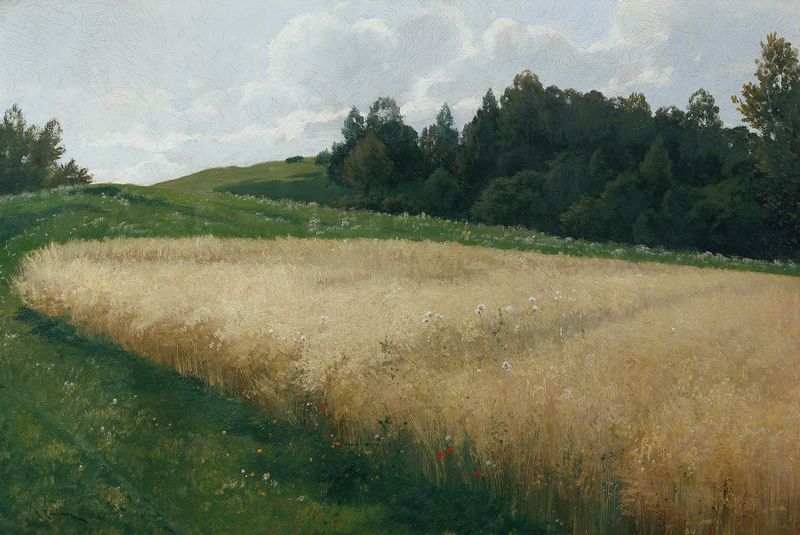
Das Haferfeld
Adolf Kaufmann
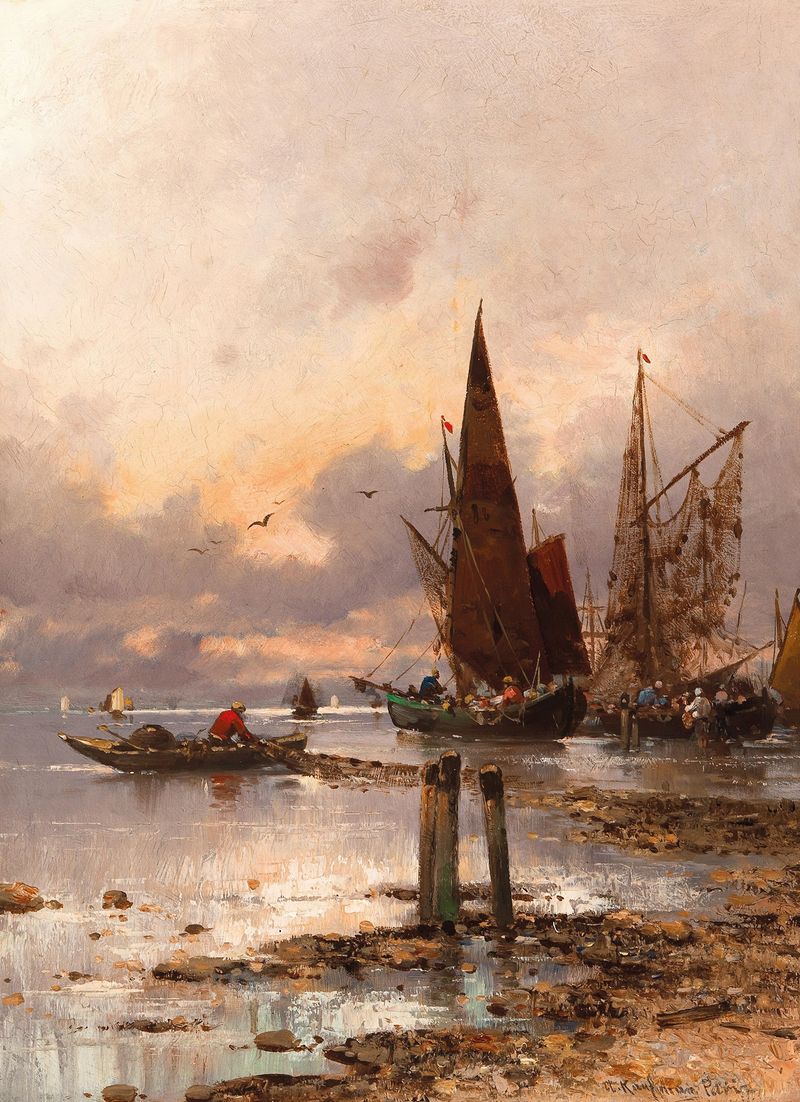
Sonnenuntergang an der griech. Küste
Adolf Kaufmann
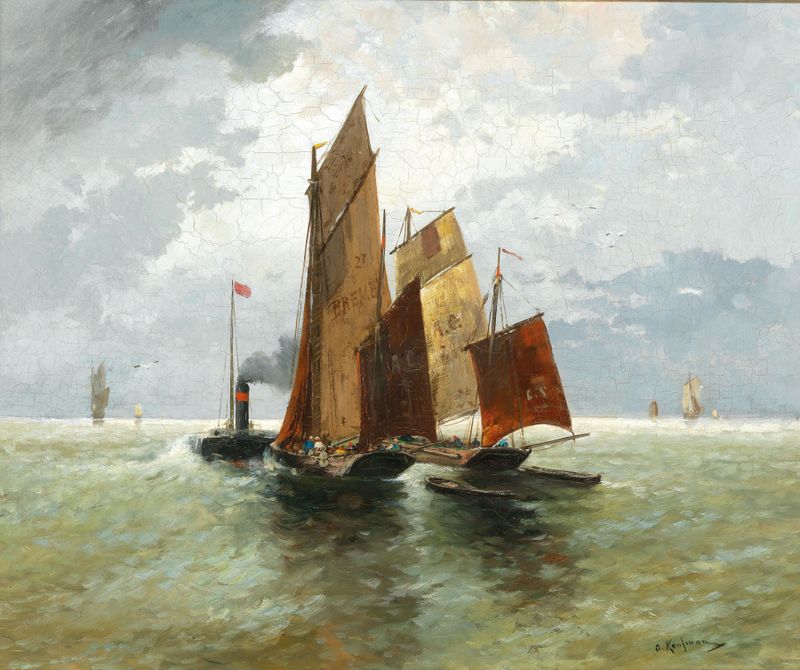
Steamboat and Fishing Boats at Sea
Adolf Kaufmann





