
Winterliche Flusslandschaft — History & Facts
Can beauty exist without sorrow? In Winterliche Flusslandschaft, a tranquil, icy expanse unfolds, whispering secrets of longing amidst its serene charm. Look to the left, where the frozen river glistens like a mirror, reflecting a soft, muted sky that hints at both dawn and dusk. The subdued palette of whites and blues envelops the scene, creating a chilling calm that invites contemplation. Notice how the delicate brushwork evokes the texture of snow and ice, while the distant trees, slightly blurred, suggest an ethereal quality, as if nature itself is holding its breath. Within this wintry landscape lies a tension between peace and melancholy.
The absence of human figures evokes a sense of solitude, prompting the viewer to ponder the stories untold. The stark contrast of the bright river against the somber backdrop embodies longing—a desire for warmth and connection amid the cold desolation. Kaufmann created this piece during a period of significant transition in European art, likely in the late 19th or early 20th century. He was influenced by the plein air movement, striving to capture the fleeting effects of light and atmosphere.
As he painted, the world was undergoing profound changes, with industrialization reshaping landscapes and lives, influencing his portrayal of nature as both a refuge and a stark reminder of solitude.
More Artworks by Adolf Kaufmann
Browse all →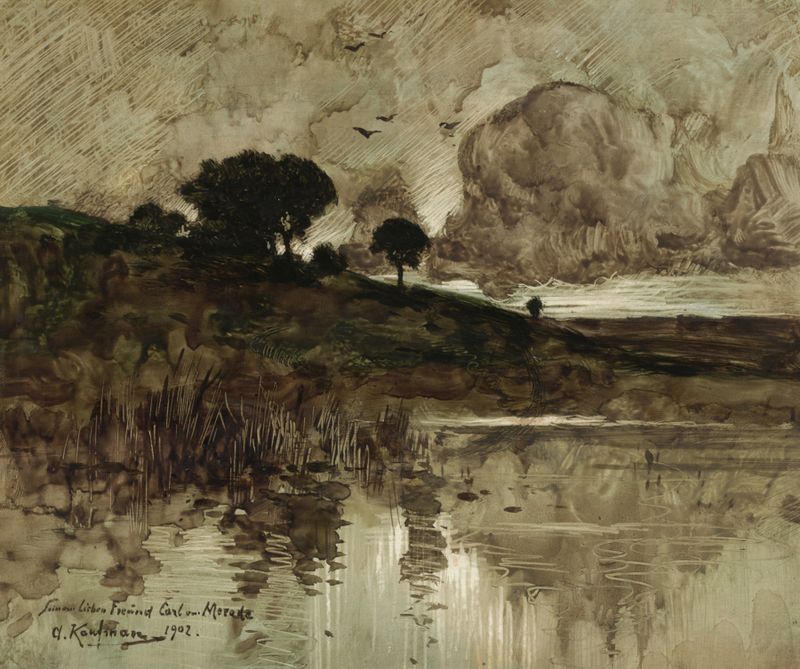
Herbstabend am See
Adolf Kaufmann
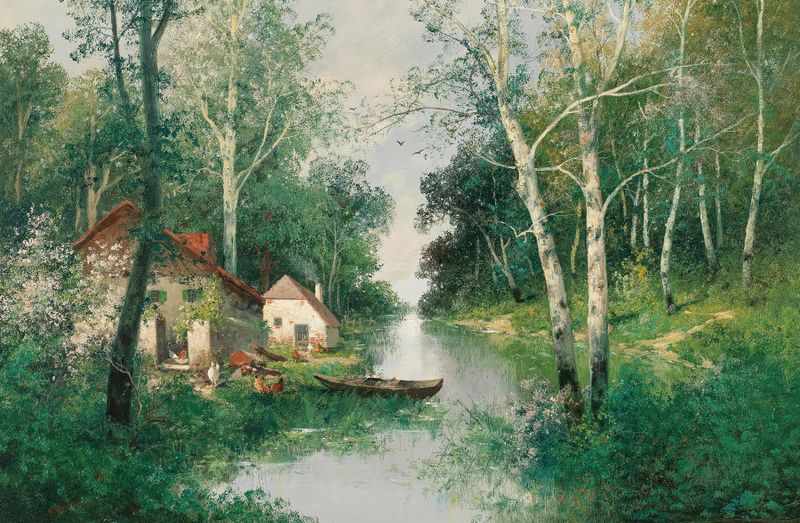
A River Landscape in Spring
Adolf Kaufmann
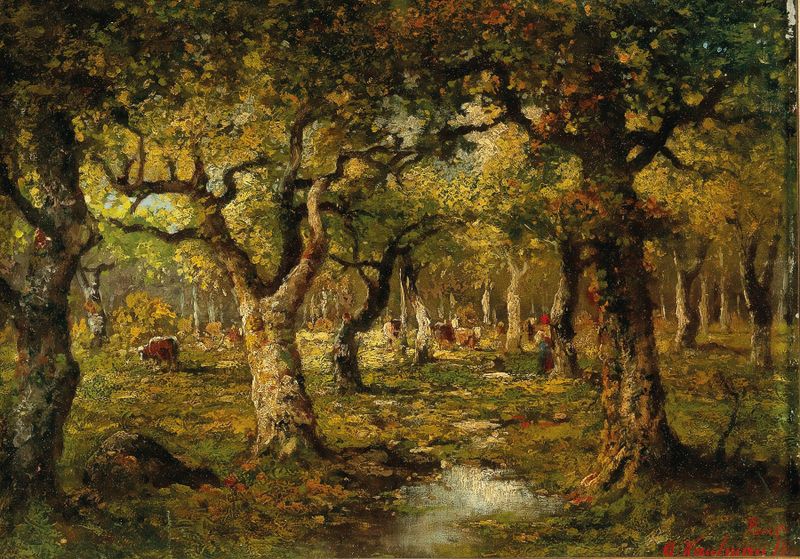
In the Forest of Barbizon
Adolf Kaufmann
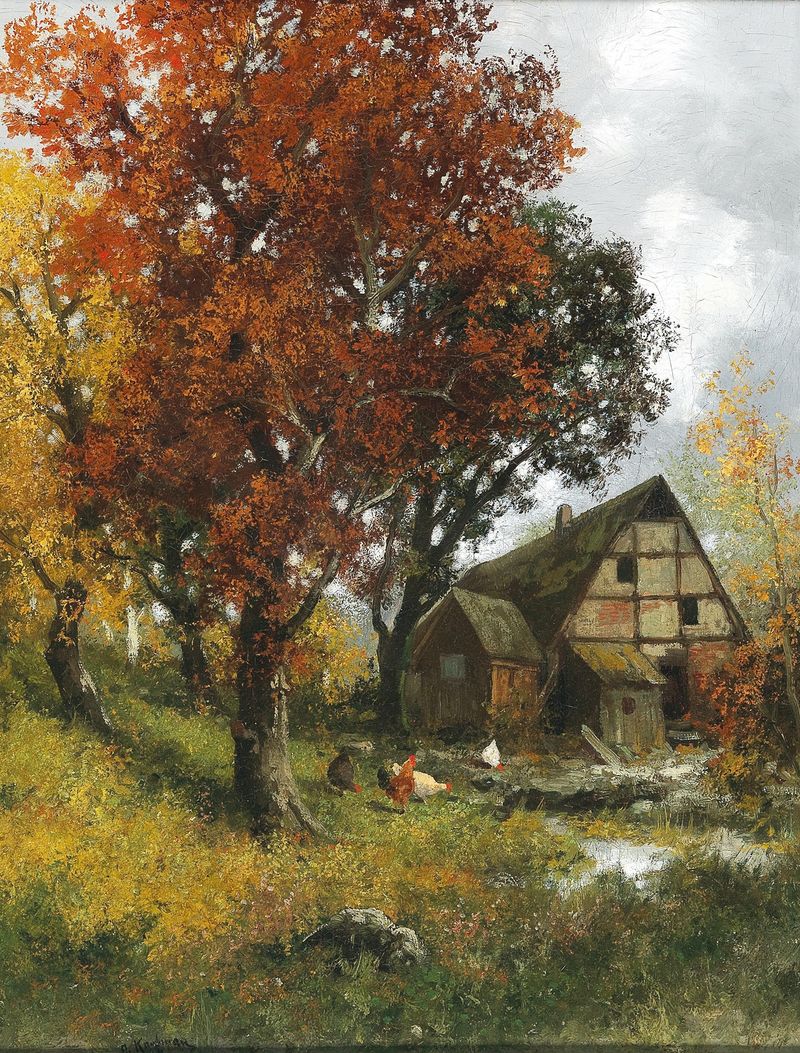
A Mill in an Autumnal Forest
Adolf Kaufmann
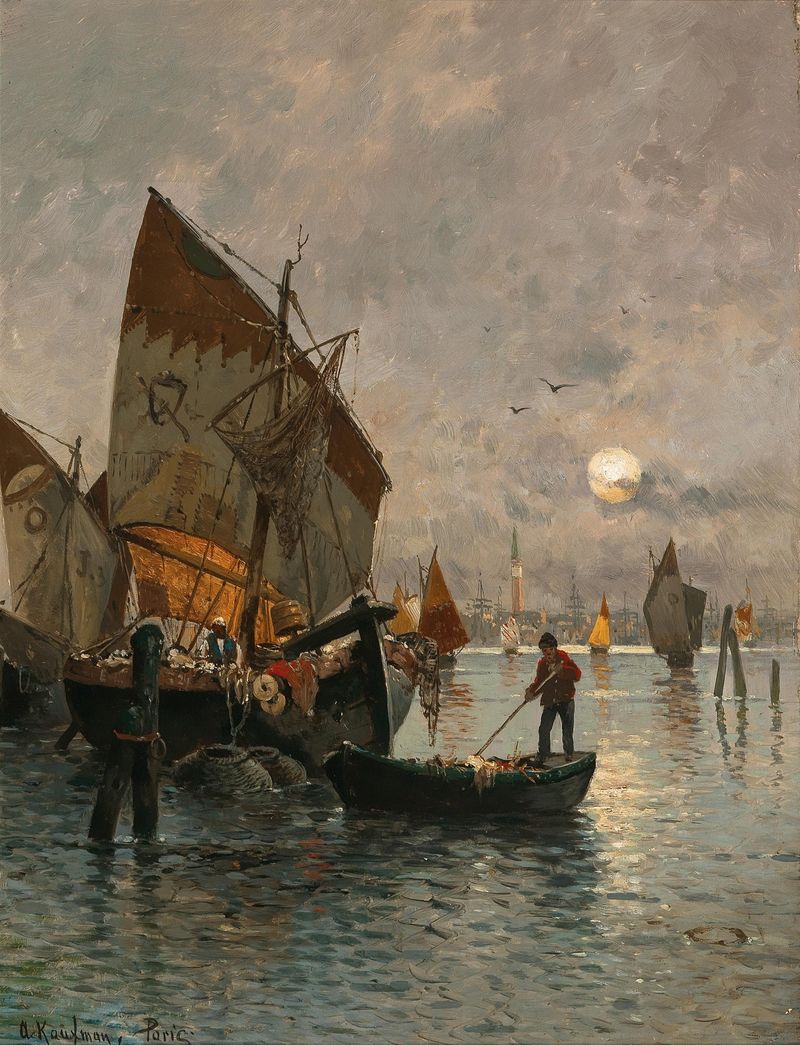
In der Lagune Venedigs
Adolf Kaufmann
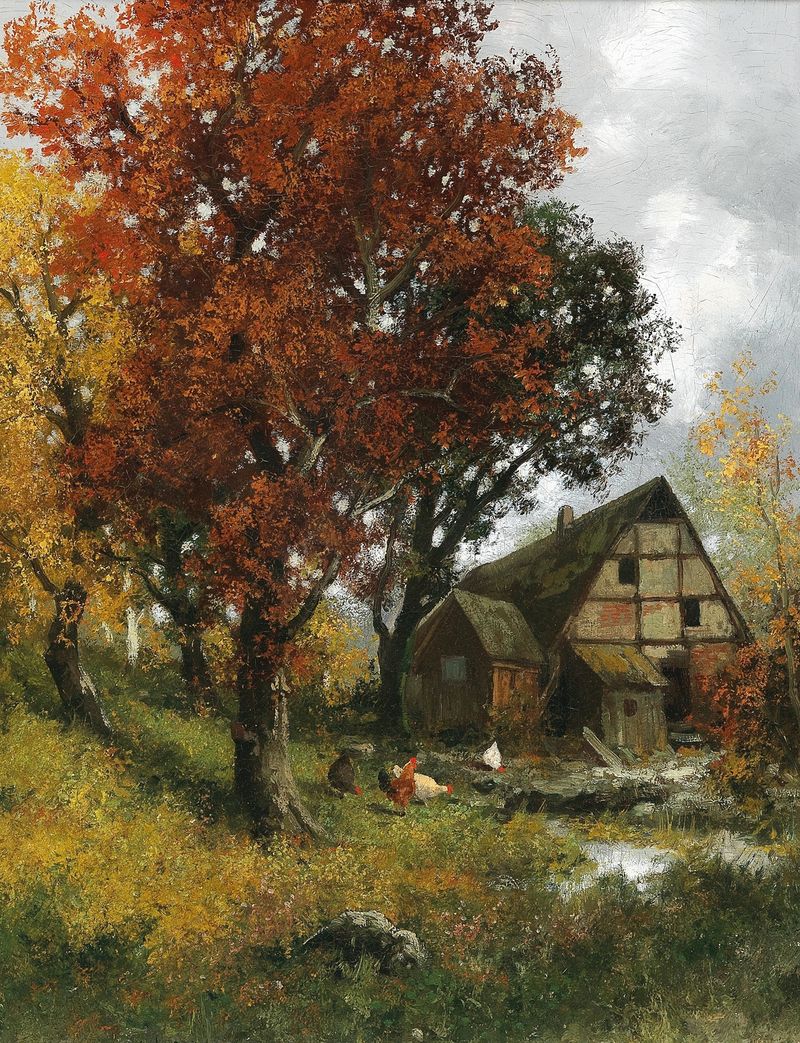
Mühle im Herbstwald
Adolf Kaufmann
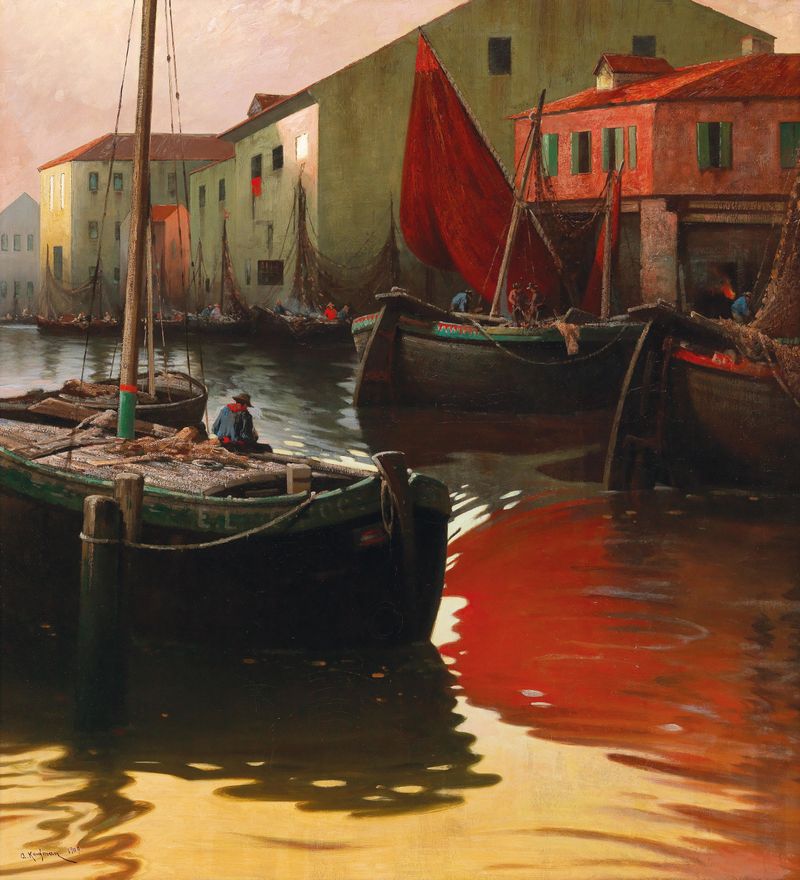
Motif Of Chioggia
Adolf Kaufmann
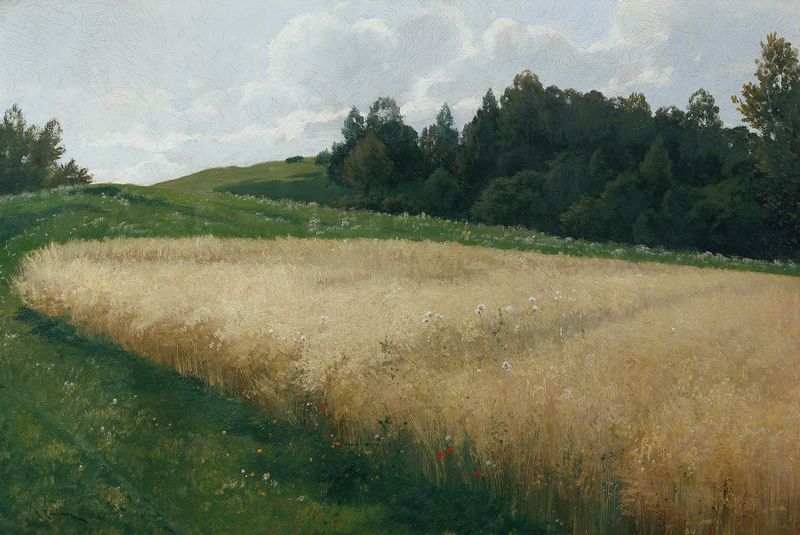
Das Haferfeld
Adolf Kaufmann
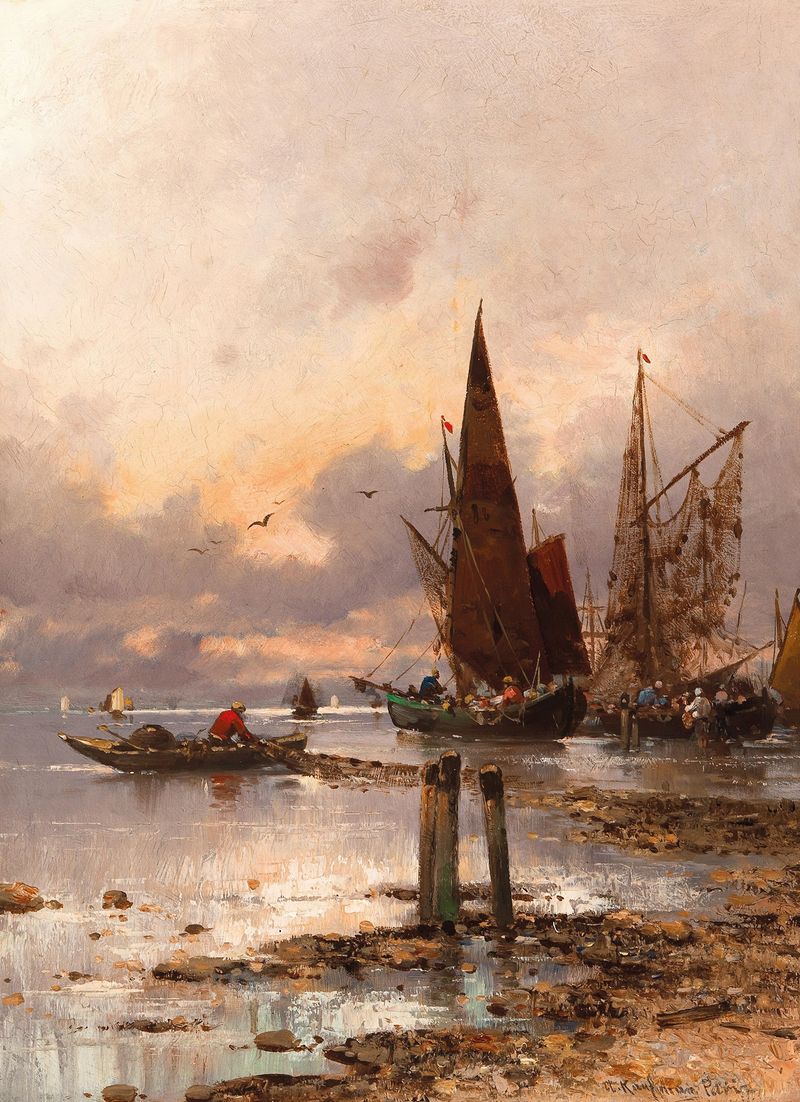
Sonnenuntergang an der griech. Küste
Adolf Kaufmann
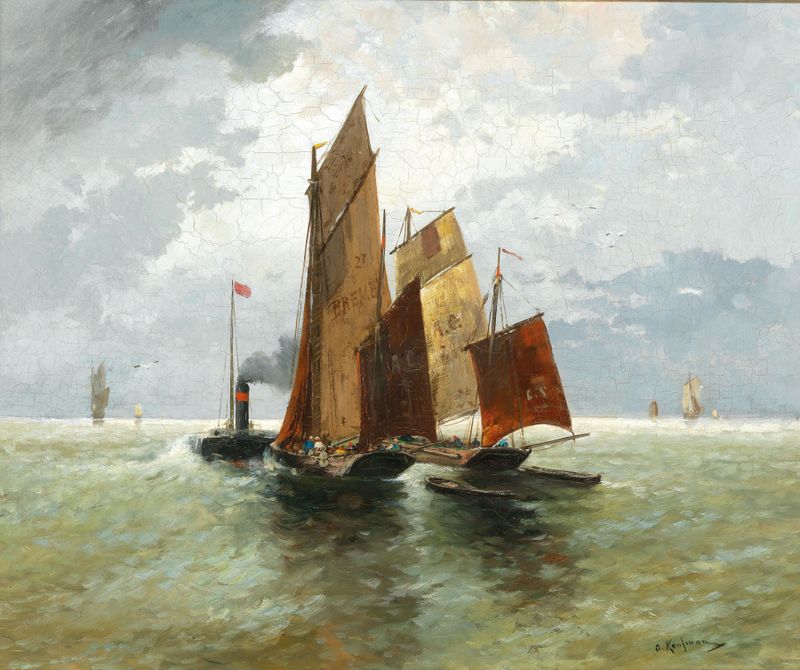
Steamboat and Fishing Boats at Sea
Adolf Kaufmann





