
A Mill in an Autumnal Forest — History & Facts
Could beauty survive in a century of chaos? Look to the canvas, where soft strokes of orange and gold embody an autumnal embrace. The mill is nestled within a tapestry of trees, their leaves a vibrant chorus of seasonal change. Notice how the light filters through the foliage, casting dappled shadows that dance upon the ground and the wooden structure, creating an intimate interplay between the natural and the manmade. As you delve deeper, consider the contrasting elements at play.
The rustic mill, a symbol of industriousness, stands in stark juxtaposition to the wild, untamed beauty of the forest. This tension hints at a longing — a desire for harmony amidst the chaos of modernity. The swirling clouds above suggest an impending storm, perhaps a metaphor for the tumultuous times that threaten to disrupt the tranquil scene.
Yet the enduring quality of the mill evokes resilience, a testament to humanity's place within the cycle of nature. Adolf Kaufmann painted this work during a time of significant transition in the late 19th century, likely before the First World War. Living in Germany, he was influenced by the burgeoning Romantic movement that sought to reconnect humanity with nature and the emotional depth found within it. This canvas reflects not only his personal exploration of landscape but also a broader yearning for stability in an era marked by social upheaval.
More Artworks by Adolf Kaufmann
Browse all →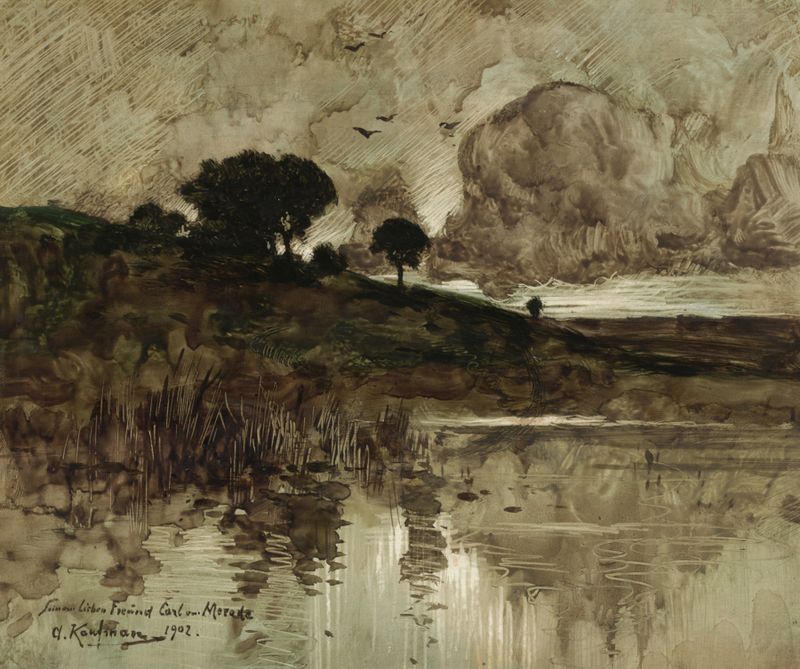
Herbstabend am See
Adolf Kaufmann
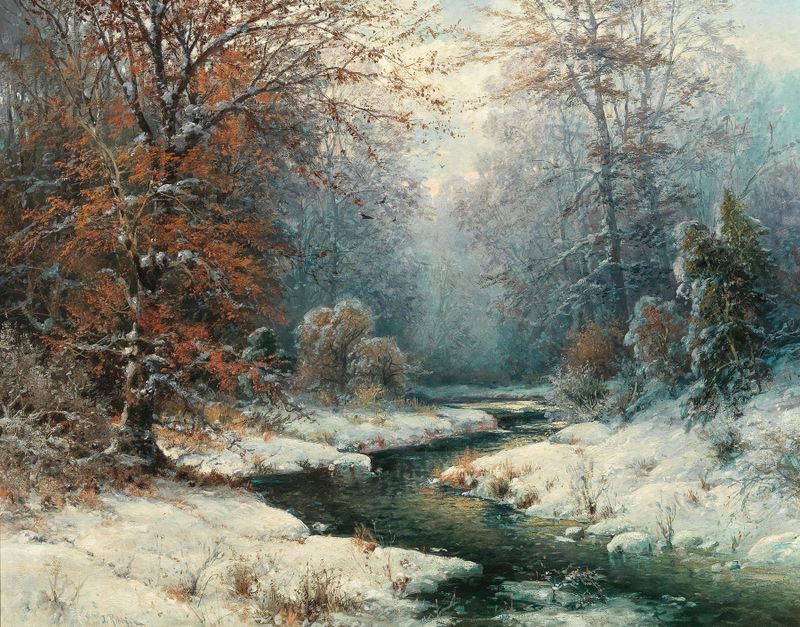
Winterliche Flusslandschaft
Adolf Kaufmann
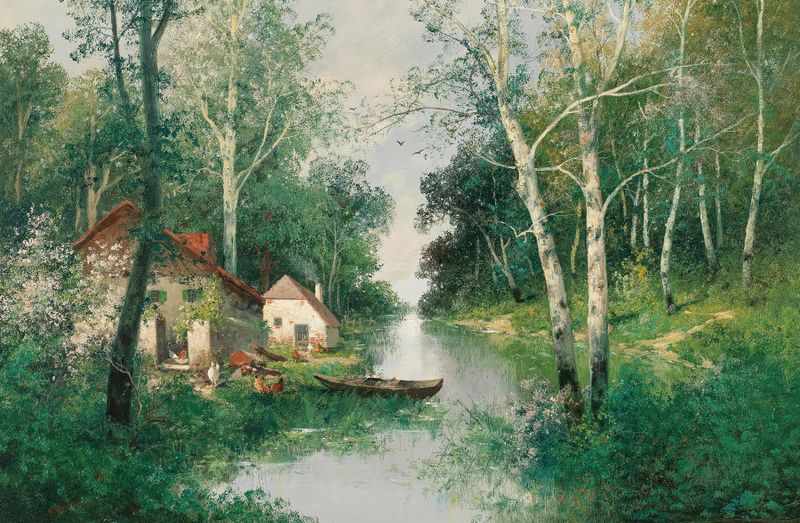
A River Landscape in Spring
Adolf Kaufmann
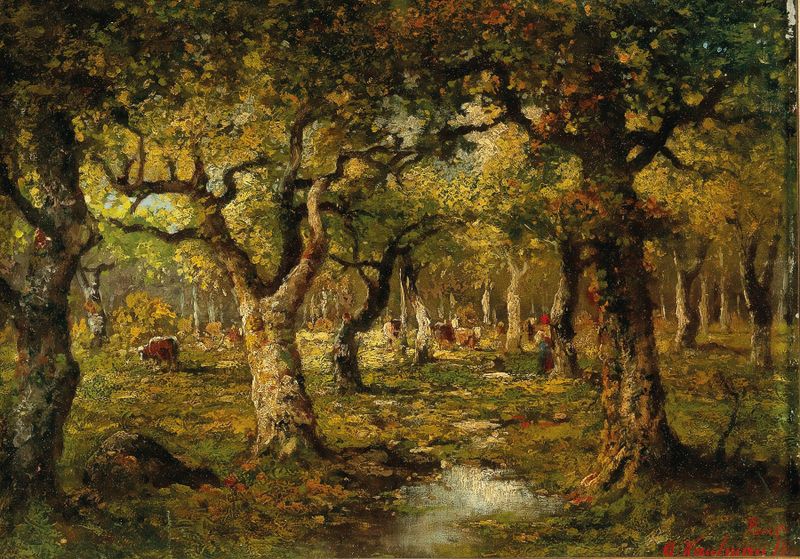
In the Forest of Barbizon
Adolf Kaufmann
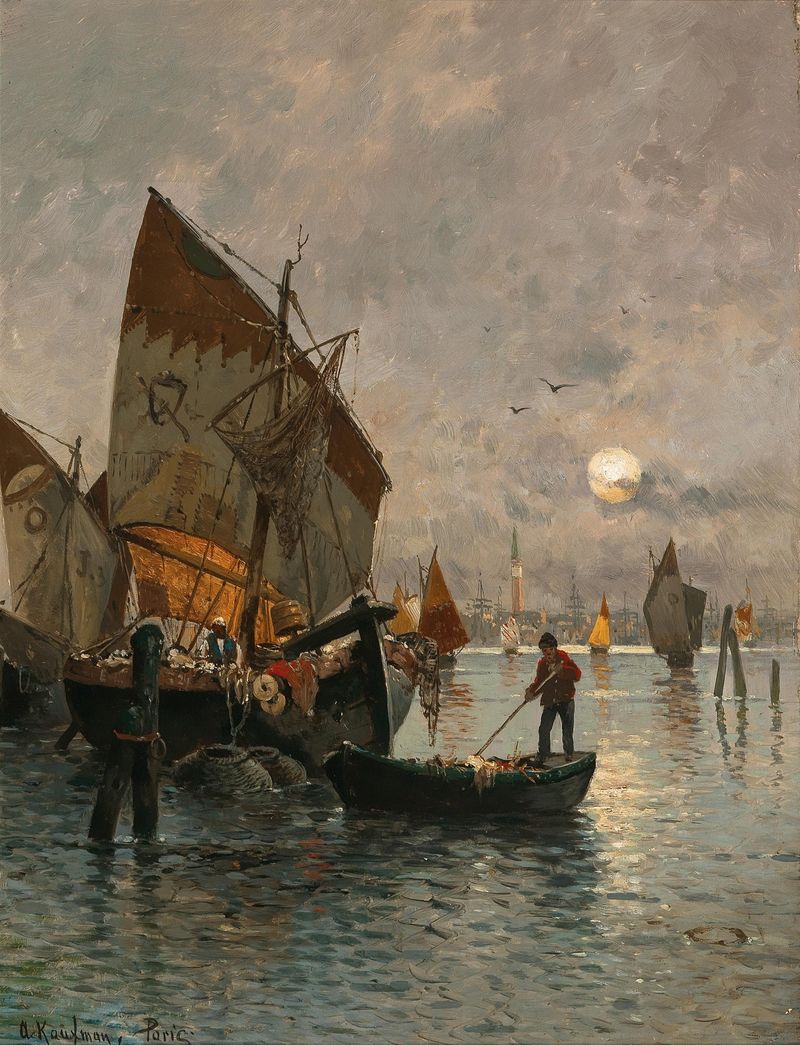
In der Lagune Venedigs
Adolf Kaufmann
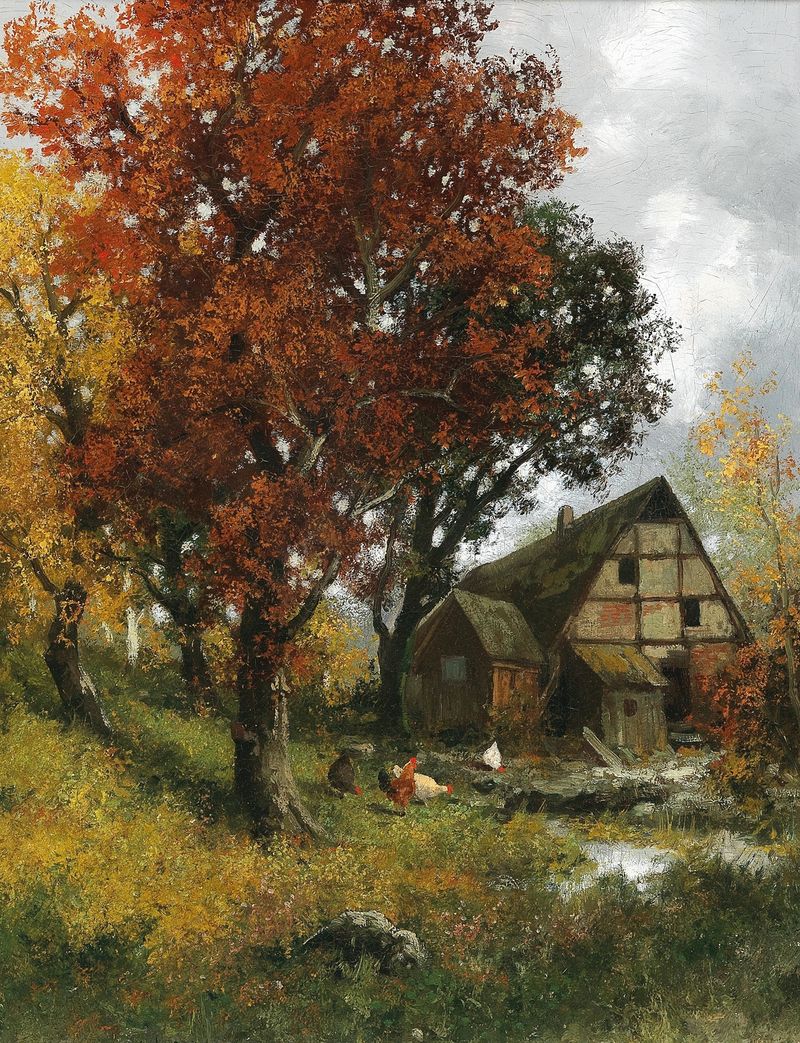
Mühle im Herbstwald
Adolf Kaufmann
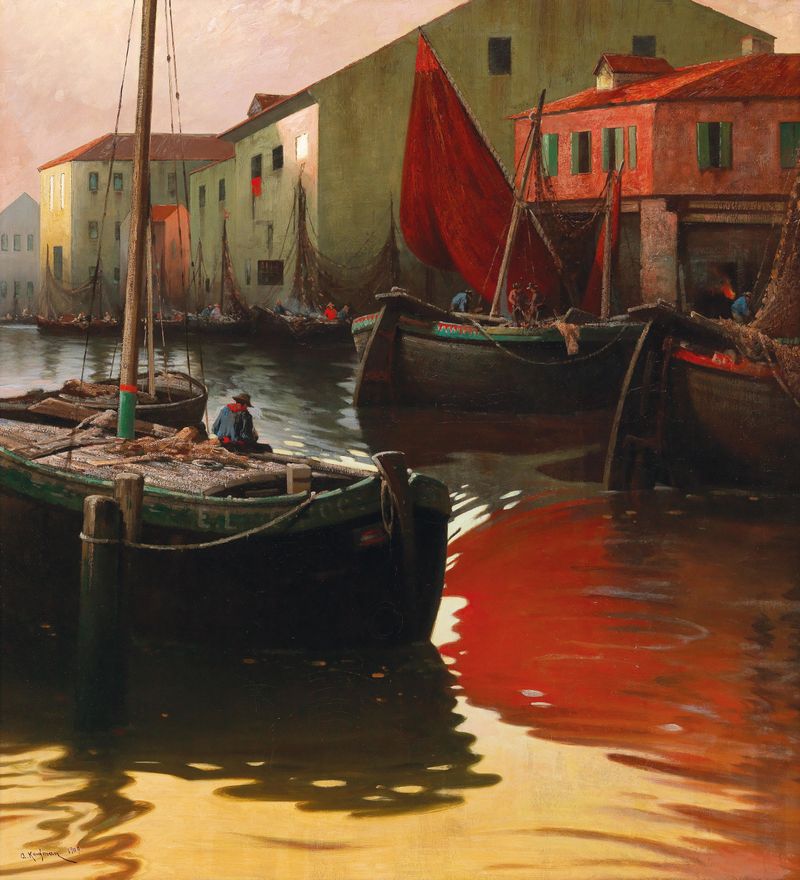
Motif Of Chioggia
Adolf Kaufmann
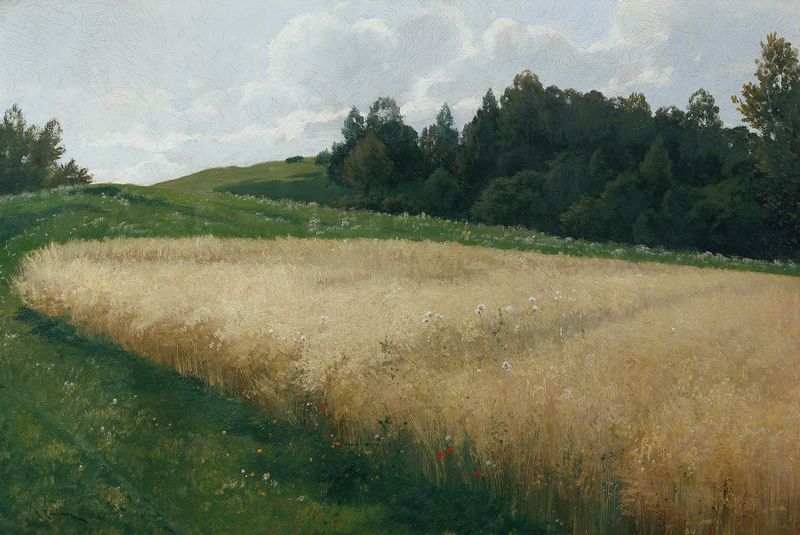
Das Haferfeld
Adolf Kaufmann
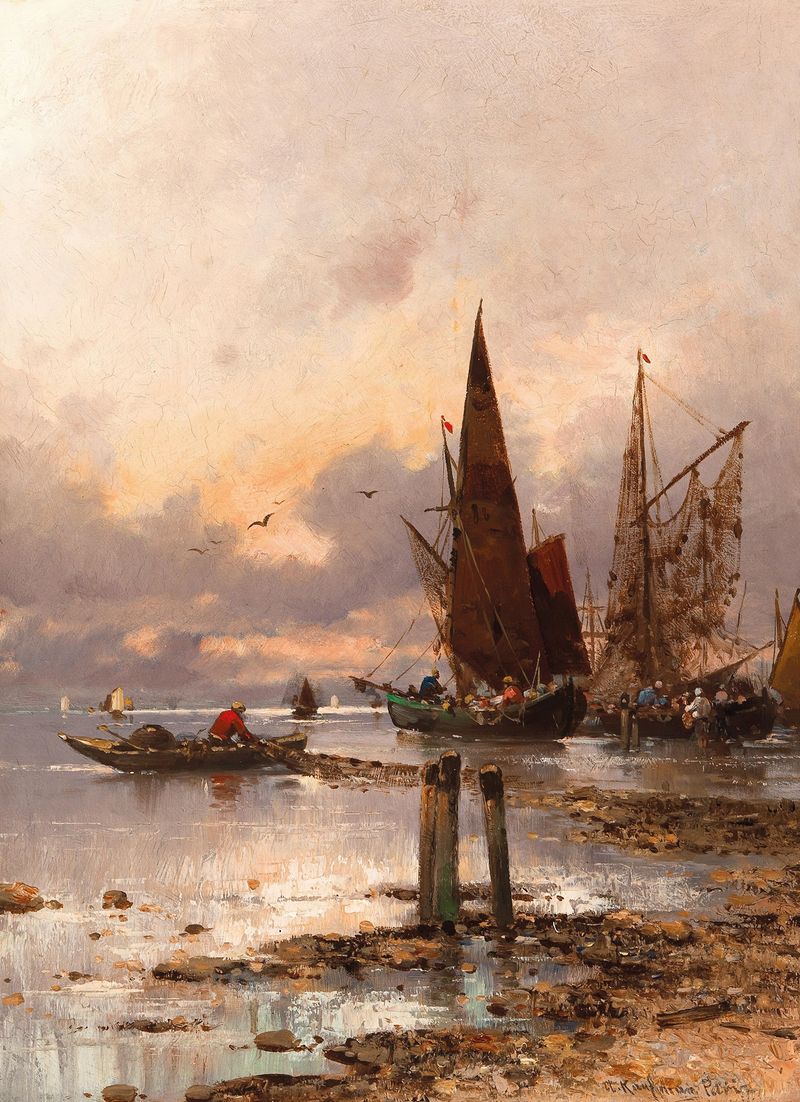
Sonnenuntergang an der griech. Küste
Adolf Kaufmann
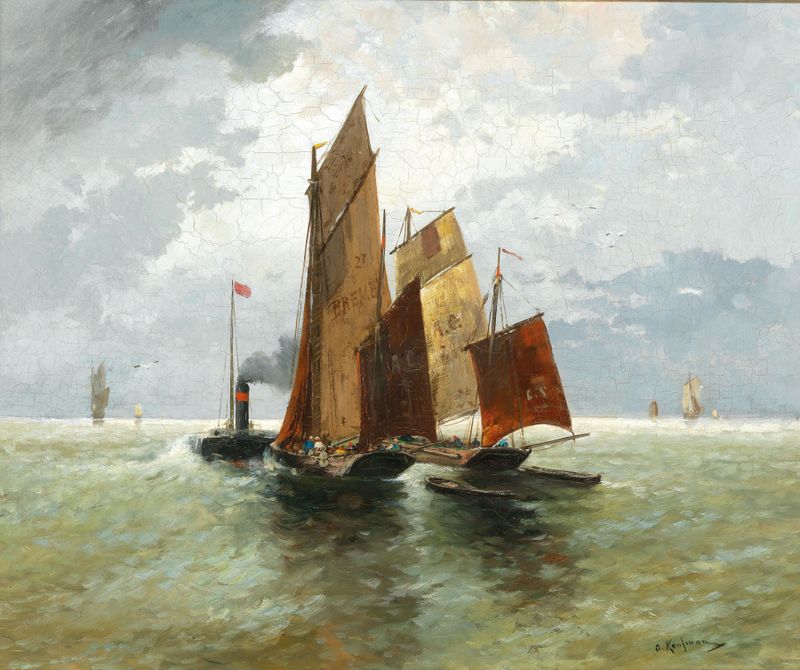
Steamboat and Fishing Boats at Sea
Adolf Kaufmann





