
A shipwreck on a coast during a storm, a lighthouse beyond — History & Facts
Could a single brushstroke hold eternity? In A shipwreck on a coast during a storm, a lighthouse beyond, the tumultuous waves and swirling clouds evoke the depth of human grief, illuminating the struggle between despair and hope. Focus first on the ship, battered against the rocks in the foreground. Its tattered sails flutter like desperate flags, while dark, churning waters encapsulate the chaos surrounding it. Notice how the light fights through the stormy skies, casting a stark contrast between the ship's dark silhouette and the radiant, unwavering light of the distant lighthouse.
The palette, dominated by tempestuous grays and blues, sharpens the emotional weight of the scene, while vibrant hints of white suggest fragile moments of clarity amidst confusion. Beneath the surface of the storm lies a poignant narrative of loss and resilience. The shipwreck symbolizes the fragility of human endeavor, caught in the merciless grip of nature. The lighthouse, resilient and steadfast, represents the flicker of hope that persists even in our darkest hours.
This dance of despair and hope resonates deeply, reminding viewers of the cycles of grief that accompany both loss and survival. Created during an unspecified period, the artist was likely influenced by the Romantic movement sweeping through Europe, which celebrated the sublime power of nature. Pillement's work reflects a time when artists were increasingly drawn to dramatic themes, exploring the emotional landscapes of their subjects. Likely painted in the late 18th century, A shipwreck on a coast during a storm, a lighthouse beyond captures the artist's response to the tumult of his contemporary world, reflecting a society grappling with its own uncertainties.
More Artworks by Jean-Baptiste Pillement
Browse all →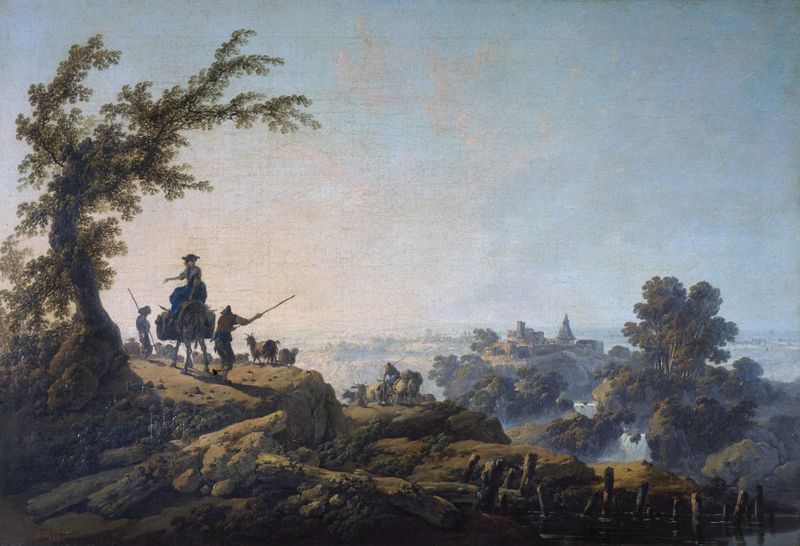
Paysage animé
Jean-Baptiste Pillement
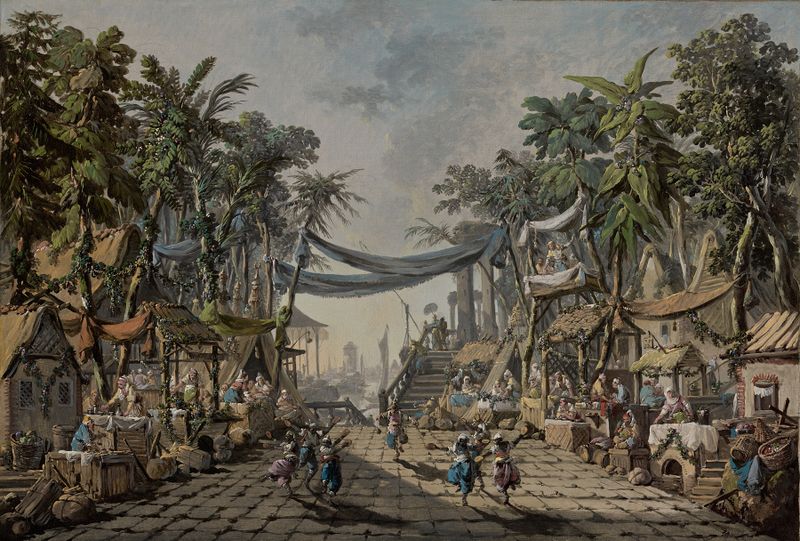
Market Scene in an Imaginary Oriental Port
Jean-Baptiste Pillement
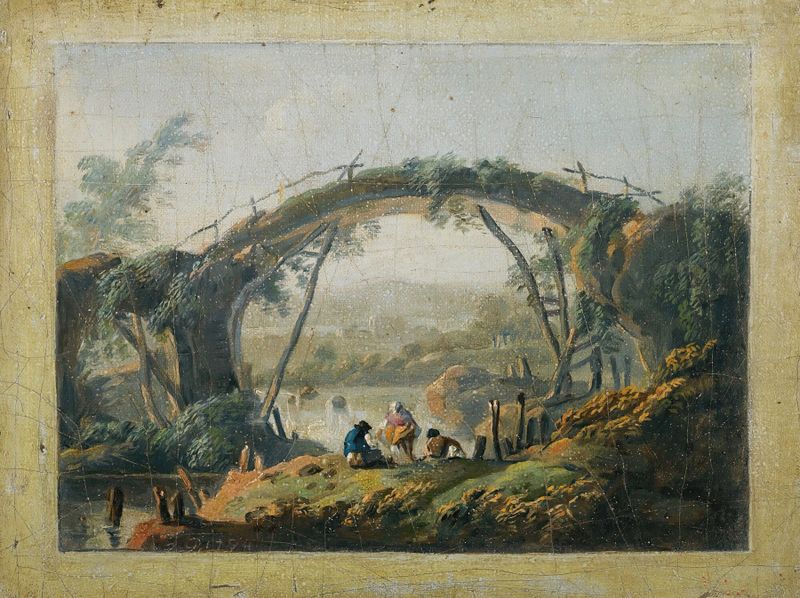
A Pair Of River Landscapes With Figures Approaching A Bridge
Jean-Baptiste Pillement
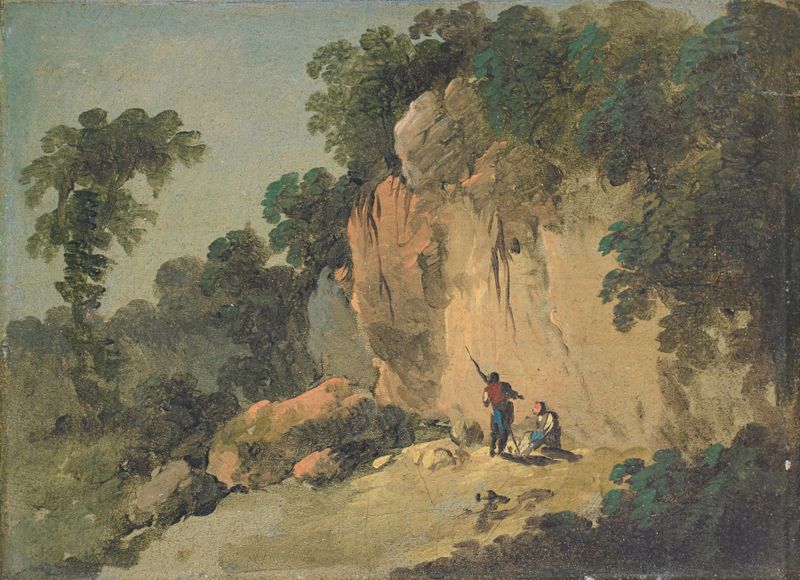
À falaises (Pastoral Landscape).
Jean-Baptiste Pillement
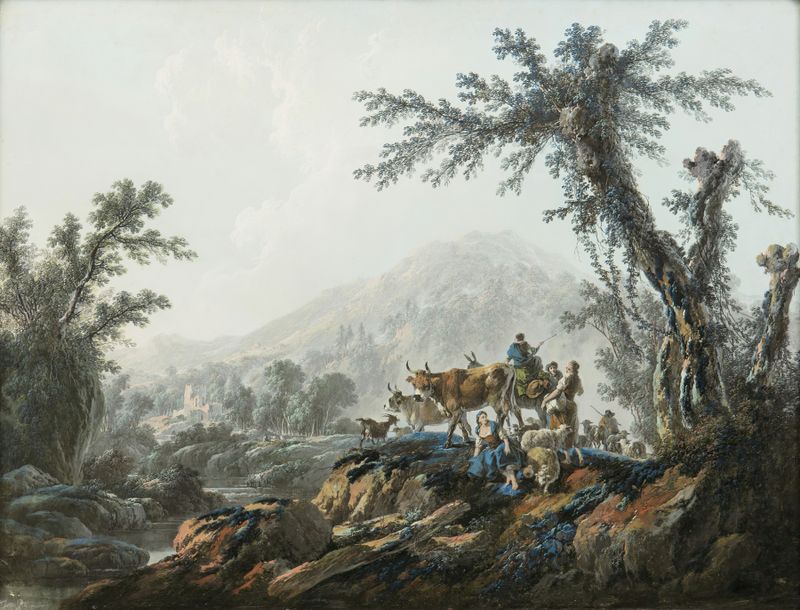
Pastoral Landscape
Jean-Baptiste Pillement
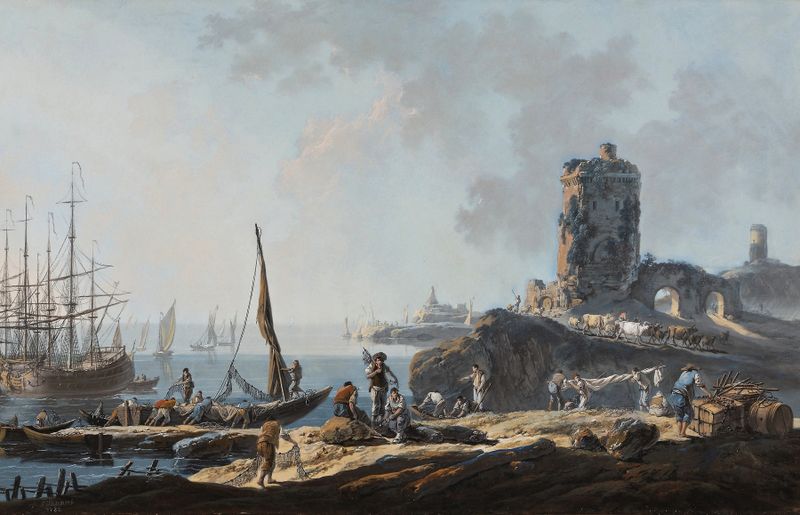
Port Scene in Calm Weather
Jean-Baptiste Pillement
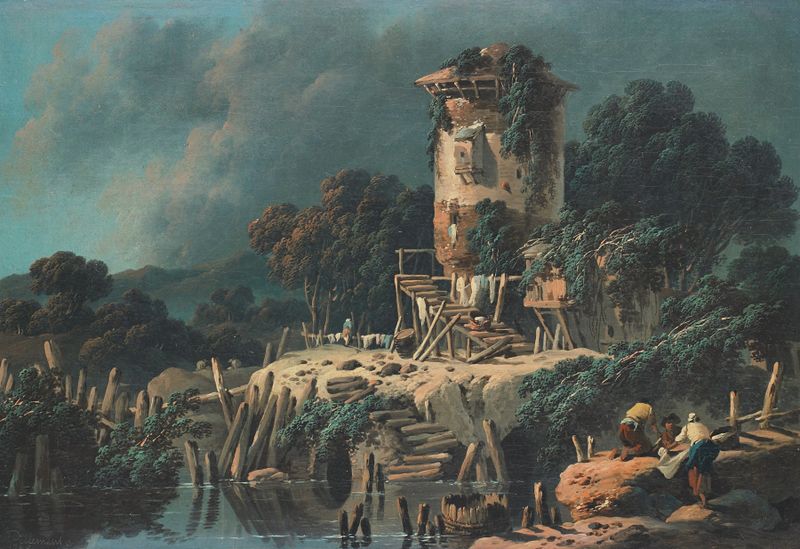
La Vielle Tour (Pastoral Landscape)
Jean-Baptiste Pillement
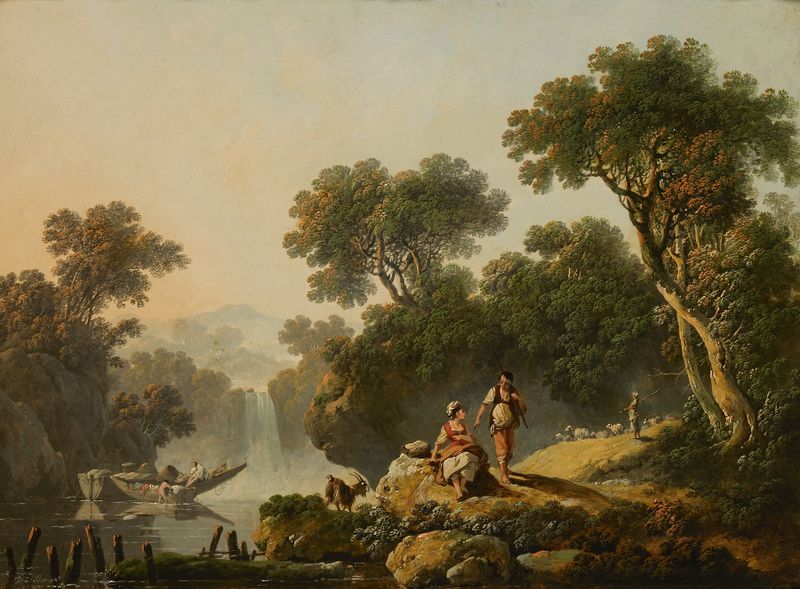
Landschap
Jean-Baptiste Pillement
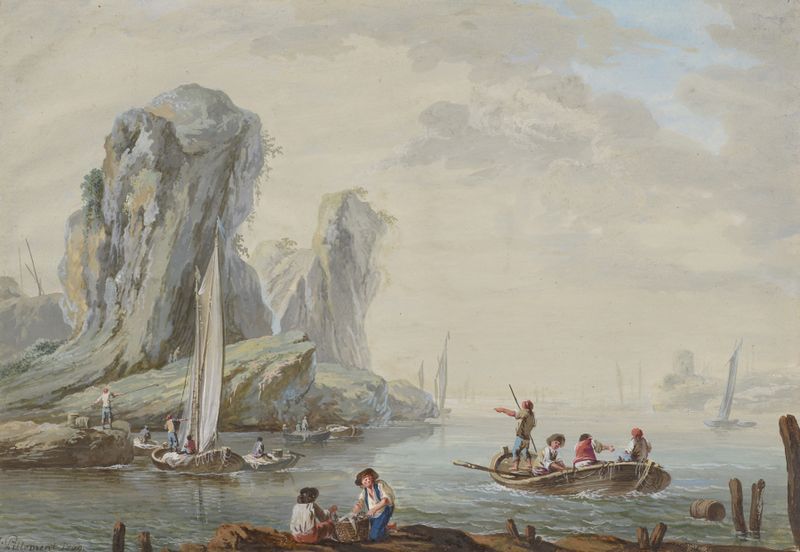
Meeresbucht mit großen Felsen links und Fischern
Jean-Baptiste Pillement
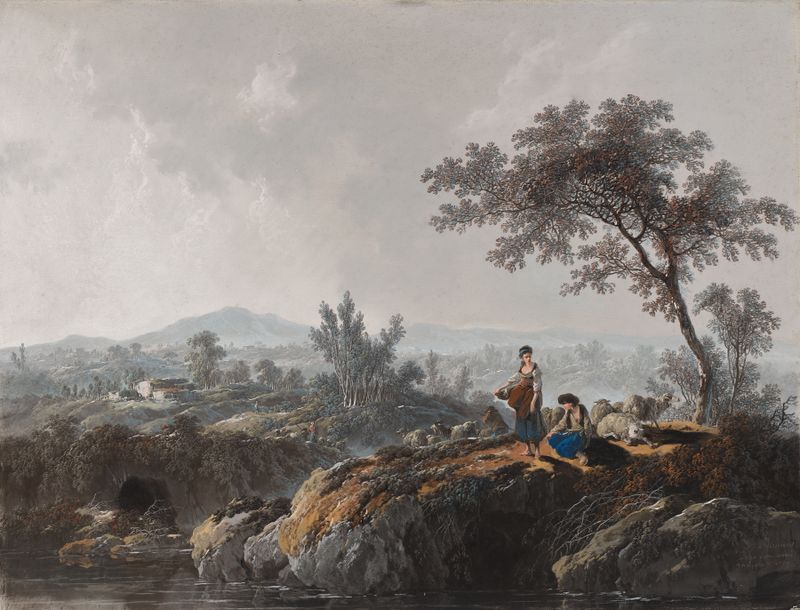
Shepherds in a Landscape
Jean-Baptiste Pillement





