
A Soldier's Standoff — History & Facts
A moment of tension crackles in the stark black lines of A Soldier’s Standoff, where the drama is compressed into a single, decisive instant. The eye is pulled first to the soldier on the right, his uniform crisp, his posture almost casual as he faces the rifles aimed squarely at him. The artist, José Guadalupe Posada, builds the scene with a sense of immediacy: the smoke from the gunfire curls up behind the figures, while the rigid columns in the background lend a sense of formality and fate to the confrontation.
The central figure, caught mid-stride, seems to bridge the gap between the firing squad and their target, his baton or rifle held at an angle that suggests both authority and helplessness. Each face is rendered with just enough detail to hint at character, but not enough to individualize—this is a scene meant to stand for many such moments. Created sometime between 1880 and 1910, this print belongs to a world in the throes of upheaval and modernization. In late nineteenth-century Mexico, prints like this were cheap, widely circulated, and often used to comment on the social and political climate—sometimes satirical, sometimes deadly serious.
Posada was renowned for his ability to distill the anxieties and ironies of his age into bold, economical compositions, and this work, now held in the collection of the Metropolitan Museum of Art, is a testament to that tradition. History has kept few traces of the specific events or commissions behind many of these images, but their power lies in their universality: the standoff, the moment before the inevitable, still holds the viewer in its grip.
More Artworks by José Guadalupe Posada

La Calavera Catrina
José Guadalupe Posada

The Rich Man Turning Away the Poor
José Guadalupe Posada

A Child Tipping a Table
José Guadalupe Posada

A Holy Procession
José Guadalupe Posada

A Man Before Three Monuments
José Guadalupe Posada

A Toy Vendor
José Guadalupe Posada

Woman Carrying a Child on Her Back
José Guadalupe Posada

Firefighters with a New Engine
José Guadalupe Posada

A Saint with Angels and Skeletons
José Guadalupe Posada
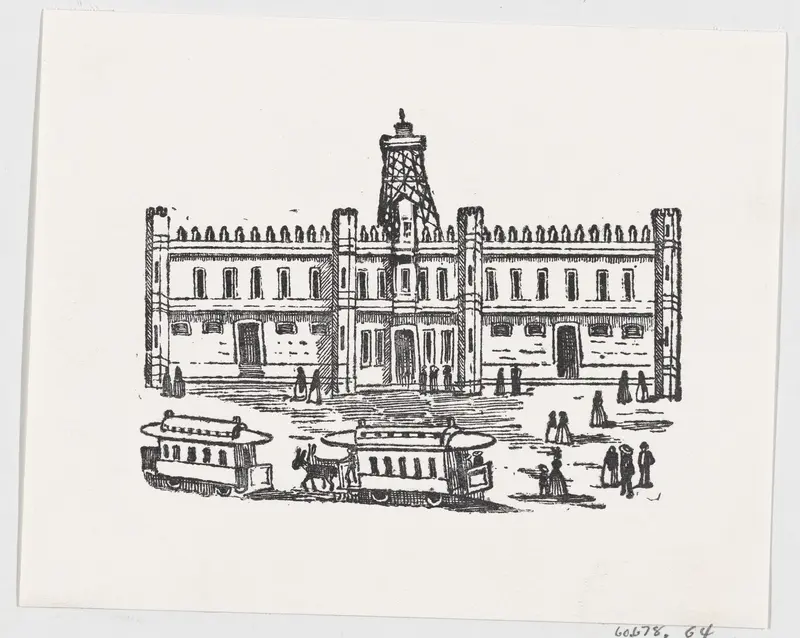
A Scene in the Town Square
José Guadalupe Posada





