
A Toy Vendor — History & Facts
What first catches the eye in A Toy Vendor is the riotous tumble of tiny figures—dolls or puppets—cascading from the pole hoisted by the vendor, each one caught in a different, animated posture. The vendor himself, face open and smiling, stands at the center of a small gathering: a woman wrapped in a shawl, a boy in checked trousers, and another child peeking out from behind. The artist draws the viewer’s gaze upward from the vendor’s confident grip, past the eager faces of his audience, to the playful chaos of the toys above—a vertical composition that turns a simple street scene into a miniature carnival.
Every gesture is purposeful: the vendor’s raised arm invites attention, while the clustered dolls seem to jostle for the children’s delight, making the print hum with the energy of anticipation and commerce. Created sometime between 1880 and 1910, this print belongs to a world where popular imagery was rapidly changing. Prints like this, often sold cheaply in markets or distributed with broadsides, brought scenes of everyday life to a broad public in Mexico. José Guadalupe Posada was known for his sharp eye for social types and his ability to inject wit and humanity into even the humblest subjects.
While little is recorded about this specific impression, its presence in the Metropolitan Museum of Art’s collection today is a reminder of how such images, once ephemeral and widely circulated, have become treasured glimpses into the street life and popular imagination of their time. Look again at the vendor’s face—there is both pride and invitation there, as if he is asking you to choose a toy for yourself.
More Artworks by José Guadalupe Posada

La Calavera Catrina
José Guadalupe Posada

The Rich Man Turning Away the Poor
José Guadalupe Posada

A Child Tipping a Table
José Guadalupe Posada

A Holy Procession
José Guadalupe Posada

A Man Before Three Monuments
José Guadalupe Posada

A Soldier's Standoff
José Guadalupe Posada

Woman Carrying a Child on Her Back
José Guadalupe Posada

Firefighters with a New Engine
José Guadalupe Posada

A Saint with Angels and Skeletons
José Guadalupe Posada
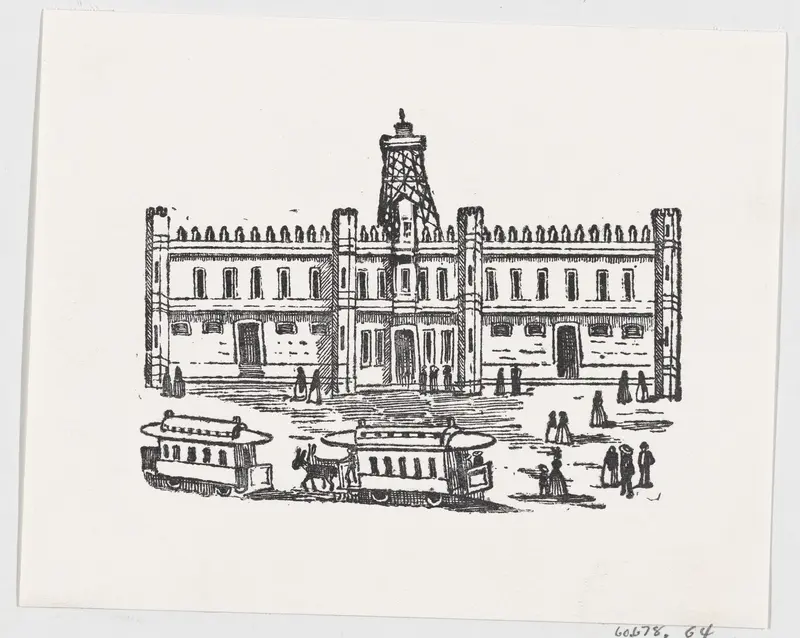
A Scene in the Town Square
José Guadalupe Posada
More Genre Scene Art

Banquet of the Officers of the St George Civic Guard
Frans Hals

Rembrandt and Saskia in the Scene of the Prodigal Son
Rembrandt van Rijn

Bal du moulin de la Galette
Pierre-Auguste Renoir

Quadrille at the Moulin Rouge
Henri de Toulouse-Lautrec

A Burial at Ornans
Gustave Courbet

When Will You Marry?
Paul Gauguin