
A Man Before Three Monuments — History & Facts
A man stands before three monuments, his posture caught between reverence and uncertainty, as if he is both visitor and actor in a silent ritual. The print’s stark black lines carve out a small, walled cemetery, where two kneeling figures flank a central tomb crowned by a veiled statue. The man’s outstretched arm draws your eye to the heart of the composition, inviting speculation—does he mourn, accuse, or simply bear witness? The shadows etched into the ground and the arches behind him deepen the sense of enclosure, while the trees beyond hint at a world outside this scene of memory and loss. Created by José Guadalupe Posada sometime between 1890 and 1910, this print belongs to a world where death was both spectacle and everyday companion.
Posada’s images, often published in broadsides and cheap prints, gave visual form to the anxieties and rituals of late nineteenth-century Mexico—a society negotiating modernity, revolution, and the persistence of folk beliefs. Such prints were affordable, widely circulated, and meant to be read as much as viewed, their stark contrasts and direct symbolism accessible to all. Now held in the collection of the Metropolitan Museum of Art, this work stands as a fragment of that wider visual culture, inviting us to read its mysteries in the language of woodcut and shadow.
More Artworks by José Guadalupe Posada

La Calavera Catrina
José Guadalupe Posada

The Rich Man Turning Away the Poor
José Guadalupe Posada

A Child Tipping a Table
José Guadalupe Posada

A Holy Procession
José Guadalupe Posada

A Soldier's Standoff
José Guadalupe Posada

A Toy Vendor
José Guadalupe Posada

Woman Carrying a Child on Her Back
José Guadalupe Posada

Firefighters with a New Engine
José Guadalupe Posada

A Saint with Angels and Skeletons
José Guadalupe Posada
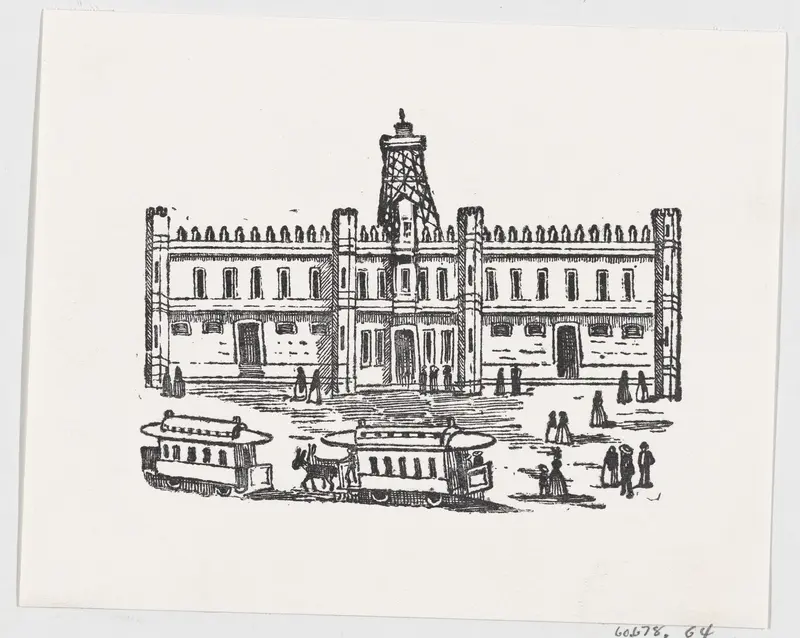
A Scene in the Town Square
José Guadalupe Posada



