A southern landscape with travellers in front of a fortified town — History & Facts
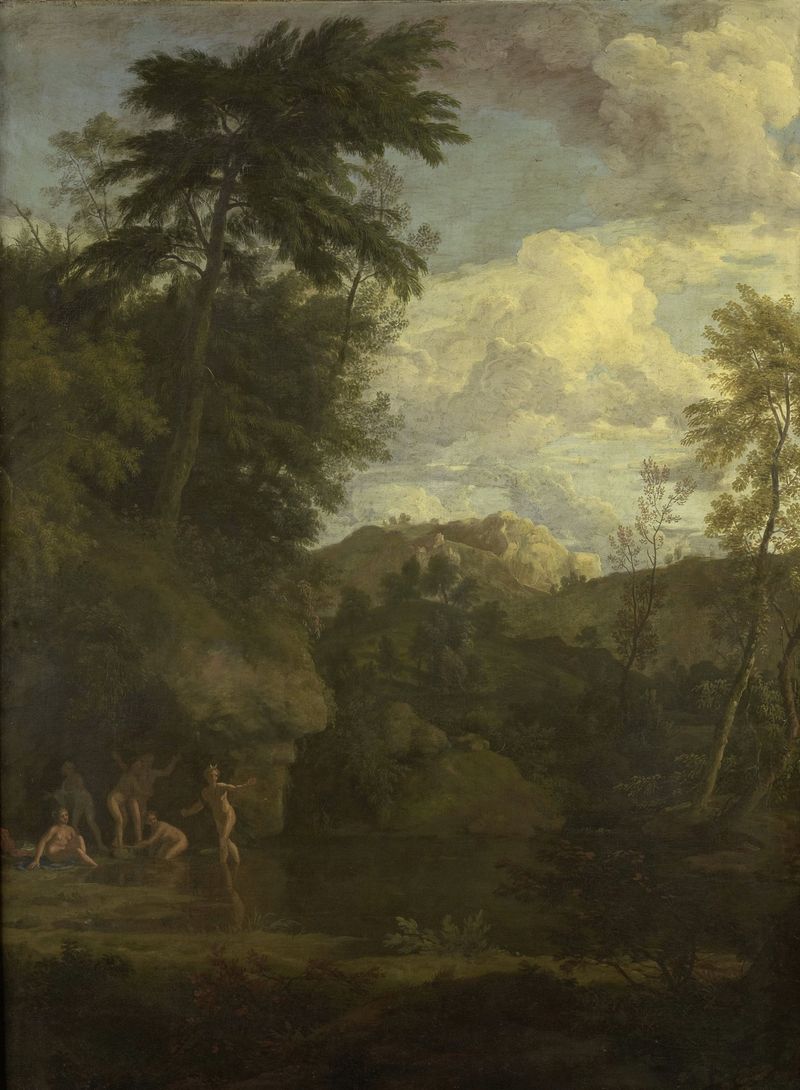
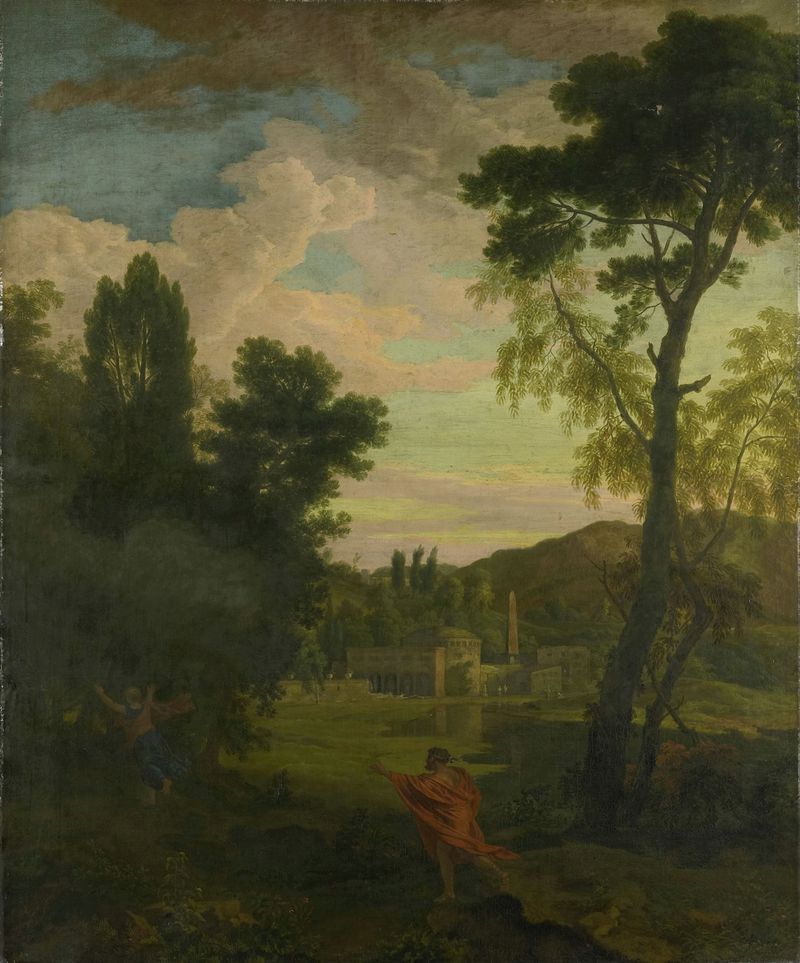
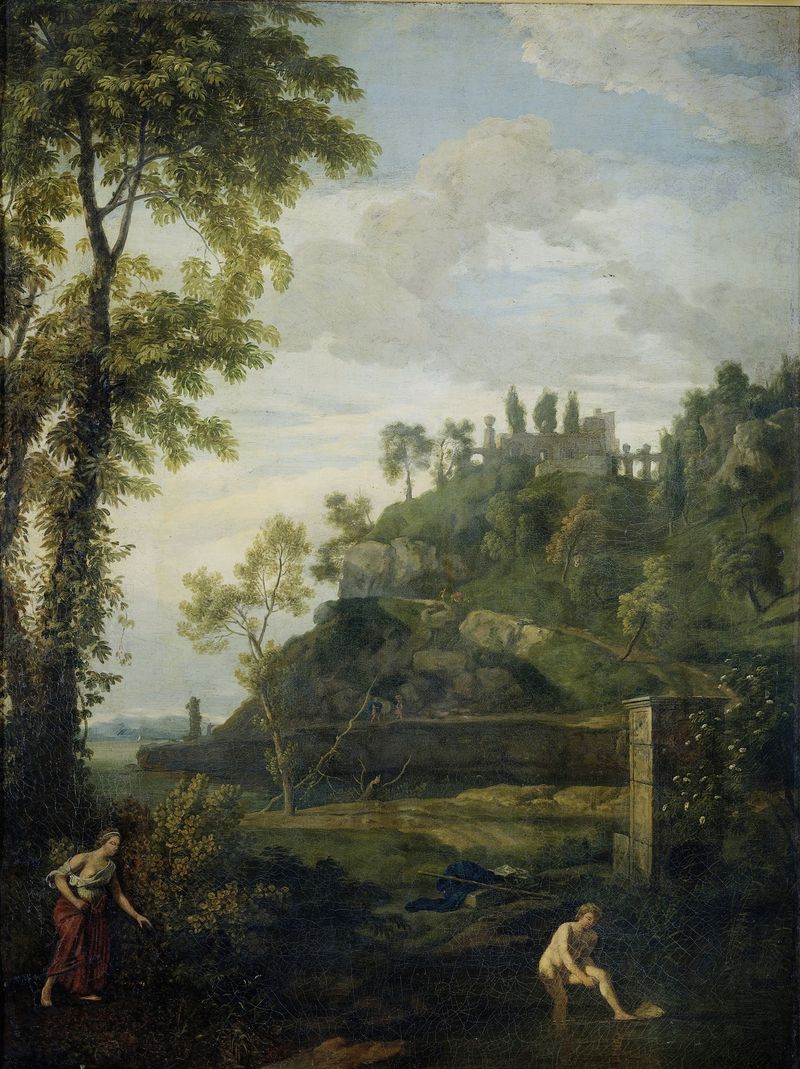
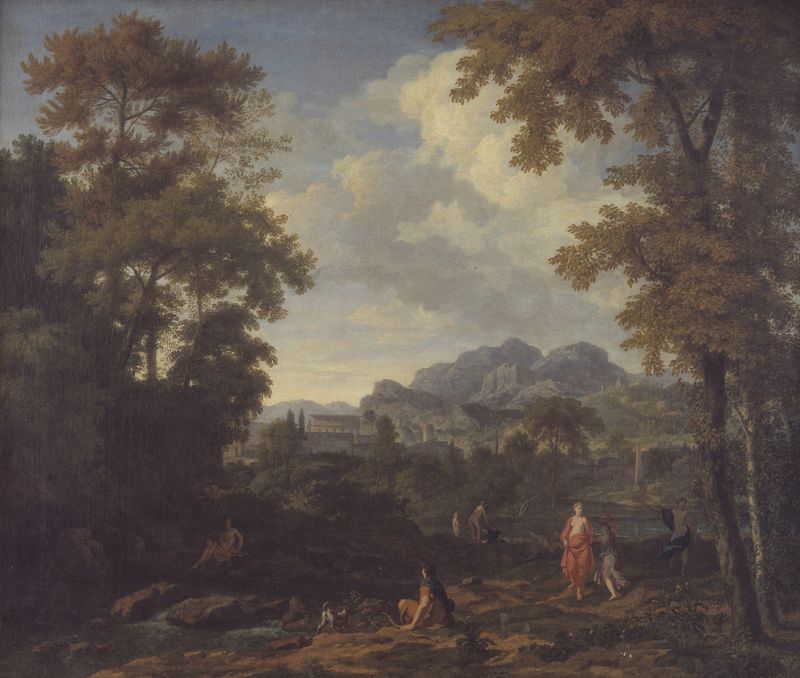
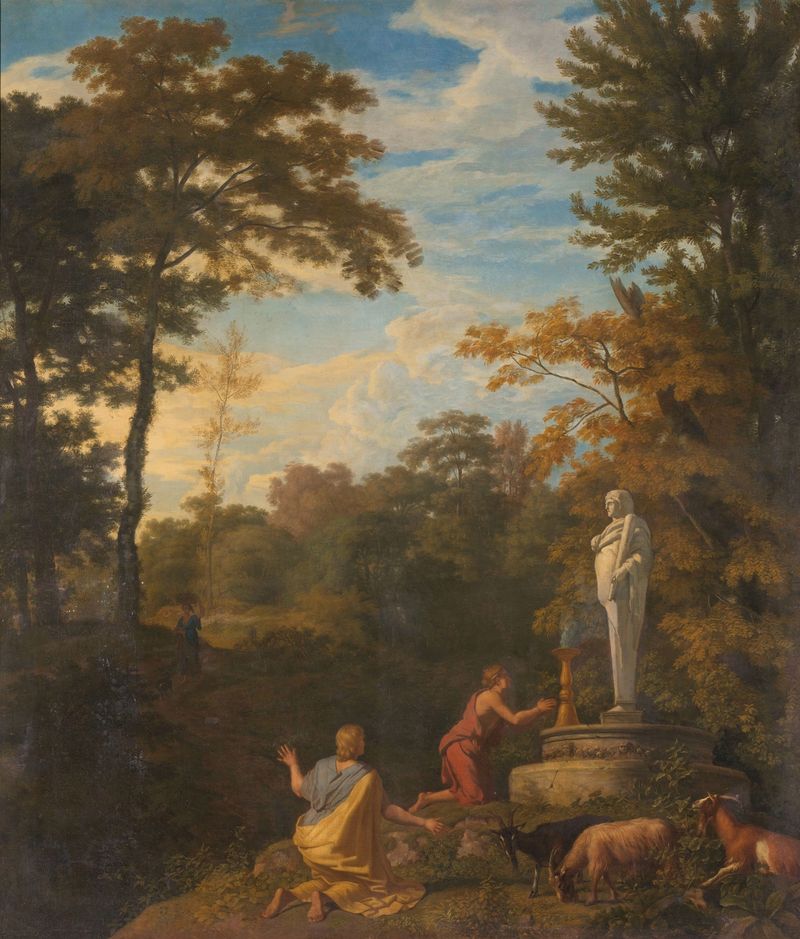
In this vast southern landscape, loneliness drapes itself like a heavy fog, whispering untold stories of journeys taken and dreams deferred. The emptiness resonates, encouraging us to reflect on our own paths, the miles traversed, and the quiet spaces between voices. Look to the horizon, where the fortified town stands stoically against a backdrop of expansive sky. The earthy tones of the landscape draw the eye in a gentle sweep towards the distant silhouettes, each traveler a solitary figure amid rolling hills.
The artist employs a muted palette, with shades of brown and green softly blending, evoking a sense of stillness and contemplation. The light captures the contours of the land, creating a shimmering effect that adds depth while enhancing the sense of isolation. Delve deeper, and you'll notice the contrast between the vibrancy of the landscape and the muted tones of the travelers, who appear almost spectral against their surroundings. Their weary stance hints at the burdens they carry, both physical and emotional.
Each figure, while part of a collective journey, embodies a personal narrative of solitude. The fortified town looms in the background, a reminder of protection that feels both comforting and confining, accentuating the tension between safety and the call of the open road. Johannes Glauber created this piece during a period in which the art world was grappling with themes of exploration and nature's vastness. While the exact date is uncertain, his work reflects the influences of 17th-century landscape painting, a time when artists began to embrace the emotional resonance of the natural world.
Living in a changing Europe, Glauber was both a participant in and observer of the shifting dynamics of society, often translating these experiences onto canvas.