Arcadian Landscape with Salmacis and Hermaphroditus — History & Facts
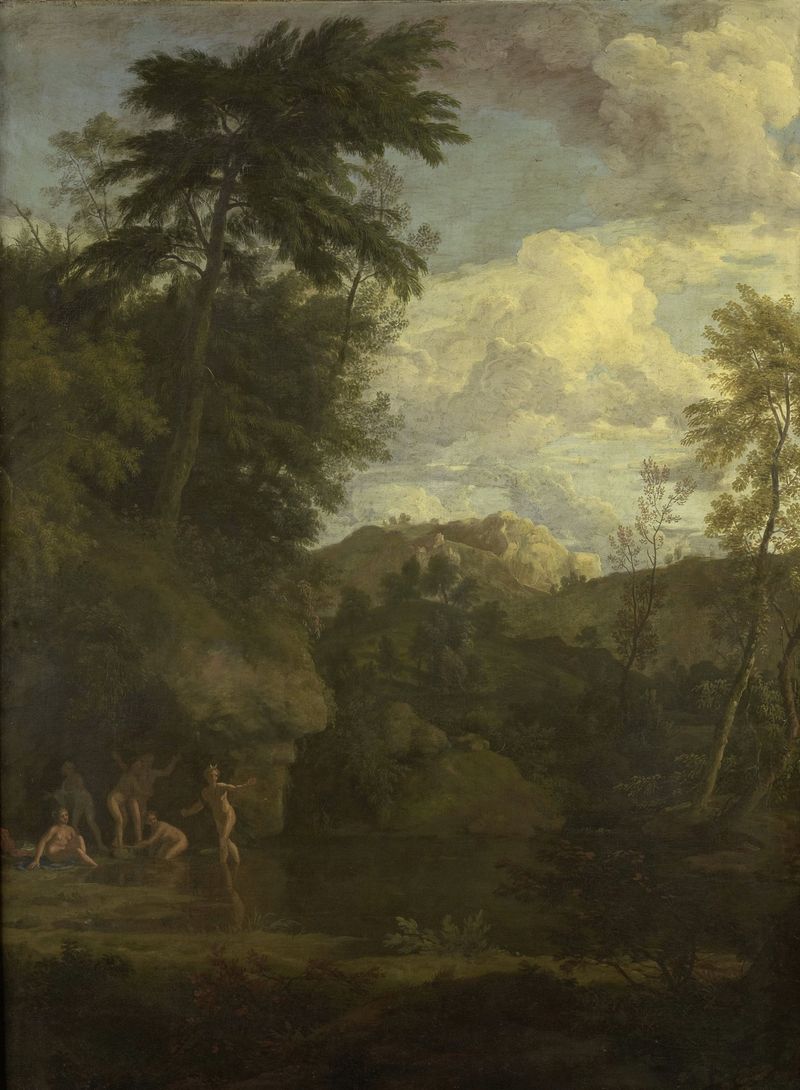
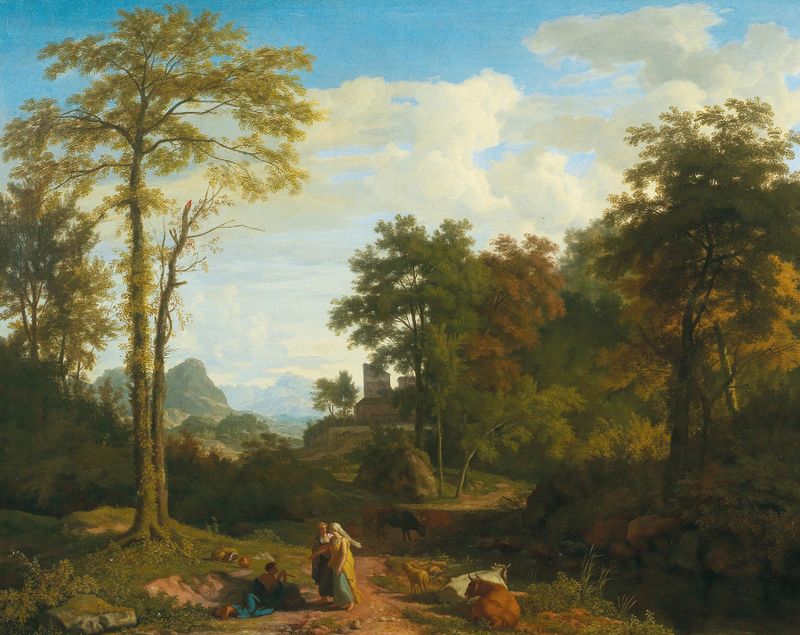
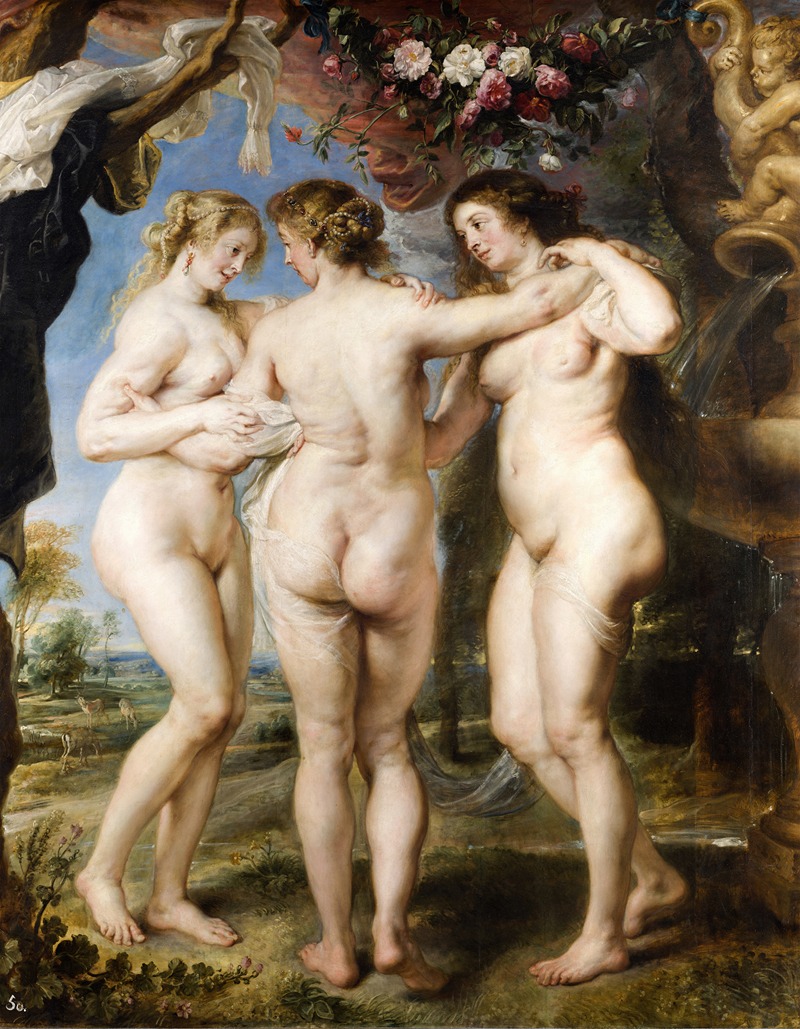
In the serene expanse of an Arcadian landscape, chaos teeters on the edge of tranquility, inviting us to explore the delicate interplay between stillness and discord. Look to the left at the lush greenery that envelops the figures, a vibrant tapestry of life contrasting with the subdued tones of the sky. Notice how the sunlight filters through the foliage, casting playful shadows that dance around the intertwined forms of Salmacis and Hermaphroditus. The composition is meticulously balanced, drawing the eye toward the central encounter, where the vibrant hues of nature cradle this moment of intimacy.
The gentle curves of their bodies echo the soft undulation of the hills, creating a visual harmony that belies the underlying tensions of their mythological narrative. Within this idyllic scene lies a profound exploration of identity and desire. The fluidity of the figures evokes the complexity of love and transformation, hinting at the chaos that arises in the blending of boundaries—gender, emotion, and the natural world. The contrasting elements of the tranquil landscape and the charged interaction between the figures reflect the duality inherent in existence, reminding us that beauty often coexists with conflict. Created during the early 18th century, this work emerged when the artist was settled in Amsterdam, a hub of artistic innovation.
Glauber found inspiration within the rich tapestry of Baroque art, but he also entered a period of personal turmoil. The reflections of myth and beauty in the painting mirror the complex societal shifts of the time, as Enlightenment ideas began to challenge traditional notions of identity, inviting viewers to ponder their own place within the unfolding narrative of humanity.