Classical Landscape with Diana and her Nymphs — History & Facts
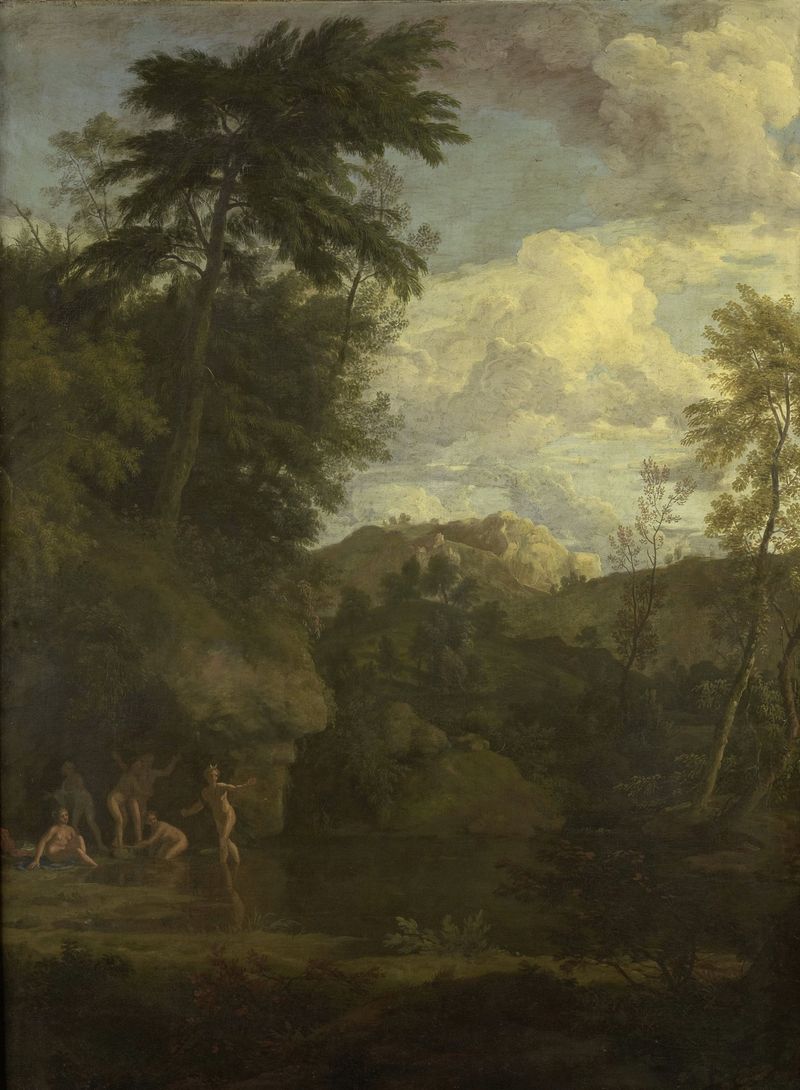
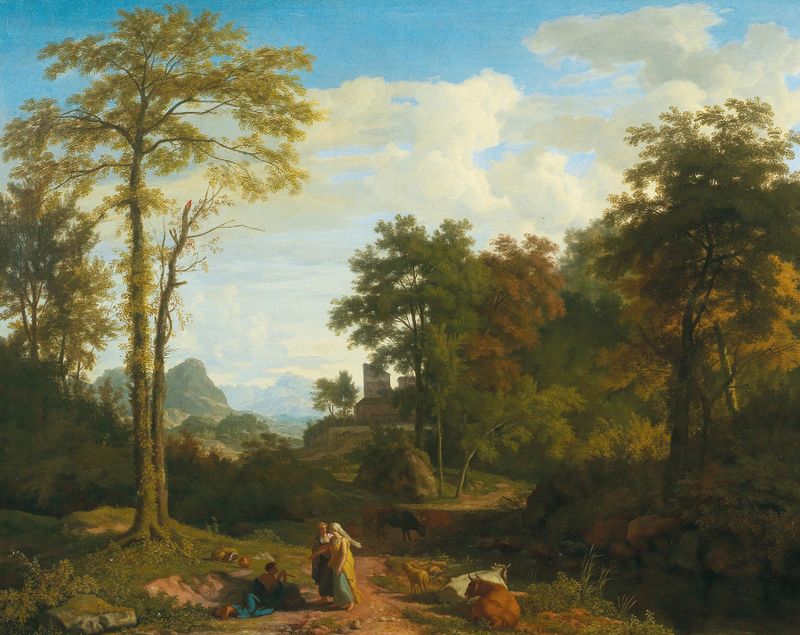
What secret hides in the quiet of the canvas? In the serene expanse of nature, the stillness echoes the unspoken sorrow of loss, inviting contemplation of life's fleeting moments. Focus first on the lush greenery sprawling across the canvas, where delicate brushstrokes create a tapestry of vibrant life. Notice how the dappled sunlight filters through the trees, casting gentle shadows that dance upon the soft terrain. Just beyond the foreground, the figures of Diana and her nymphs emerge, their graceful forms harmonizing with the surrounding landscape.
The cool blue sky stretches overhead, while the rich greens and earthy browns ground the scene, presenting a vivid contrast that speaks to both the beauty and impermanence of existence. Hidden within the tranquility lies a deeper narrative of abandonment and longing. The placement of the nymphs, clustered together in their playful camaraderie, hints at a companionship that may soon dissipate. Meanwhile, Diana stands slightly apart, her posture imbued with a sense of contemplation, perhaps mourning the fleeting nature of youth and joy.
The overall atmosphere captures a delicate balance between the joyous celebration of life and the inevitable shadow of loss that looms silently in the background. Created between 1661 and 1726, this piece reflects Glauber's engagement with the Baroque movement, a time when the interplay of light and shadow was becoming a defining characteristic of the era. Living in the Dutch Golden Age, the artist was influenced by naturalism and the exploration of emotional depth through landscape. At this point in his career, Glauber was honing his skills and establishing his identity, navigating the dynamic art scene that sought to evoke both beauty and profound reflection.