
Arcadian Landscape — History & Facts
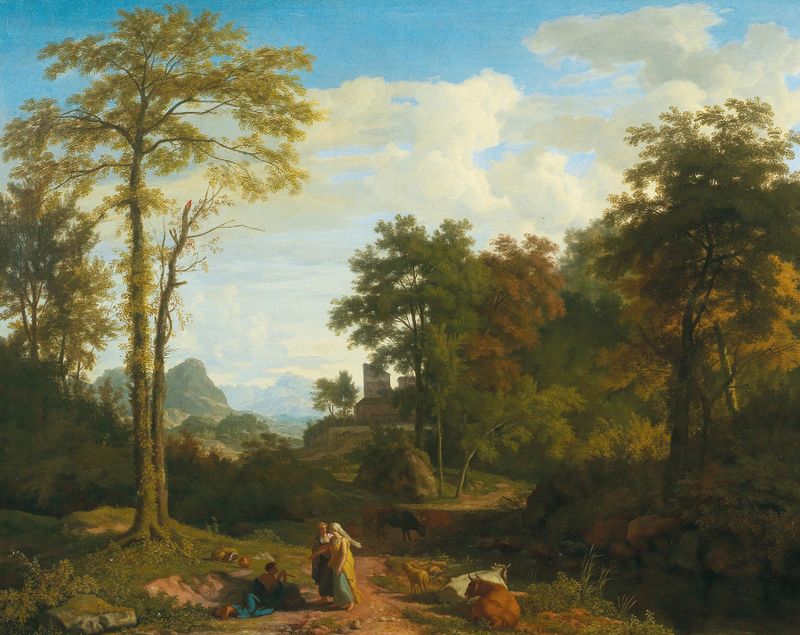
In the stillness of nature, madness whispers between the trees, hidden yet palpable, waiting to be unraveled. Look to the center of the canvas, where harmonious hills rise gently beneath a serene sky painted in soft blues and whites. The lush greenery, dotted with a playful arrangement of wildflowers, immediately draws the eye, evoking a sense of peace, yet a closer look reveals a tension that lingers just beneath the surface. The delicate brushstrokes signify both beauty and fragility, while the contrast of light and shadow plays a crucial role in shaping the emotional landscape, suggesting a duality of calmness and undercurrents of chaos. As you explore further, notice the way the trees lean slightly, as if they too are drawn into the quiet madness of the scene, creating an unsettling asymmetry.
The intimate placement of a solitary figure, almost lost in reverie, hints at isolation amidst the paradise, embodying feelings of introspection and melancholy. This composition of serenity and latent turmoil invites viewers to ponder the complexities of existence, reflecting both the idyllic and the haunting aspects of nature. Johannes Glauber created Arcadian Landscape during a prolific period between 1680 and 1726, at a time when Europe was navigating the tensions of political and social change. His work reflects the Baroque fascination with nature and its representation, as artists sought to depict not just beauty, but the intricate layers of human emotion intertwined with the natural world.
This painting stands as a testament to that exploration, capturing a moment filled with quiet yet profound implications.
More Artworks by Johannes Glauber
Browse all →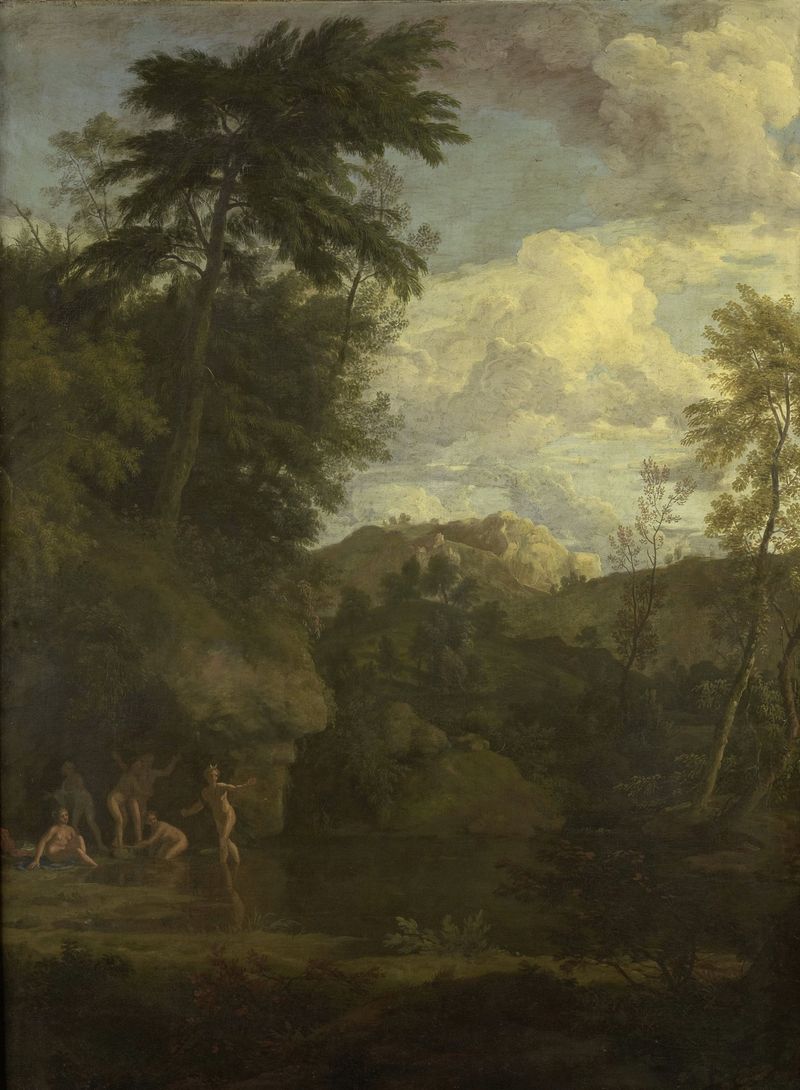
Arcadian Landscape with Diana Bathing
Johannes Glauber
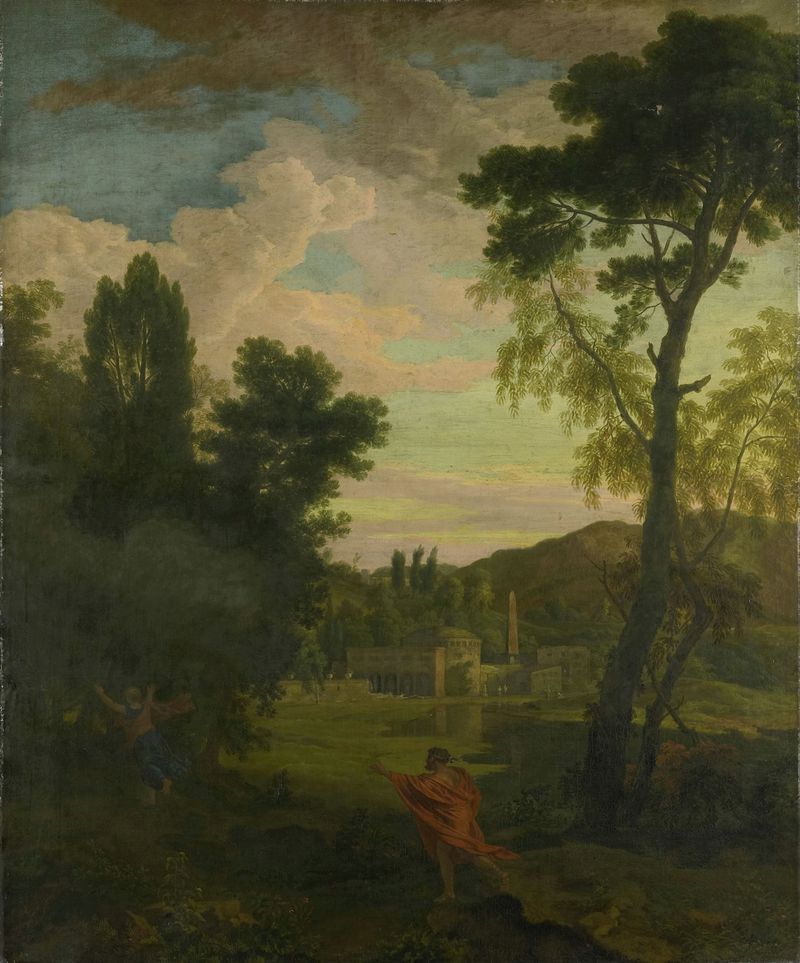
Arcadian Landscape with Jupiter and Io
Johannes Glauber
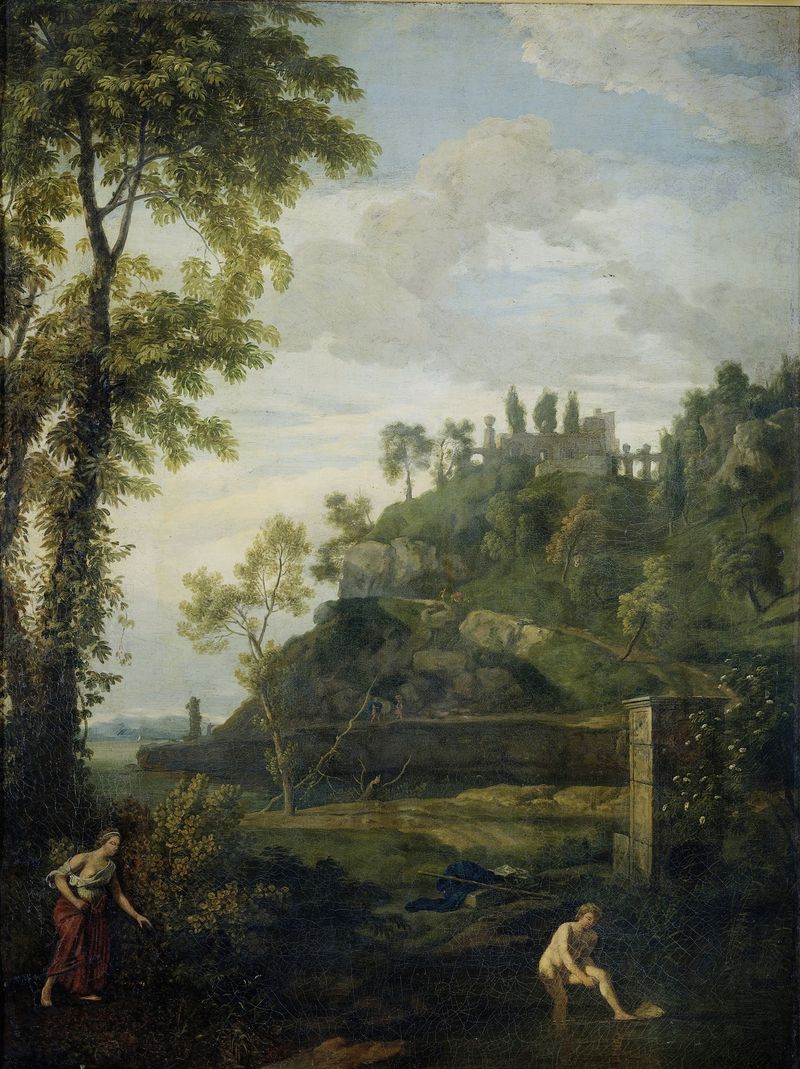
Arcadian Landscape with Salmacis and Hermaphroditus
Johannes Glauber
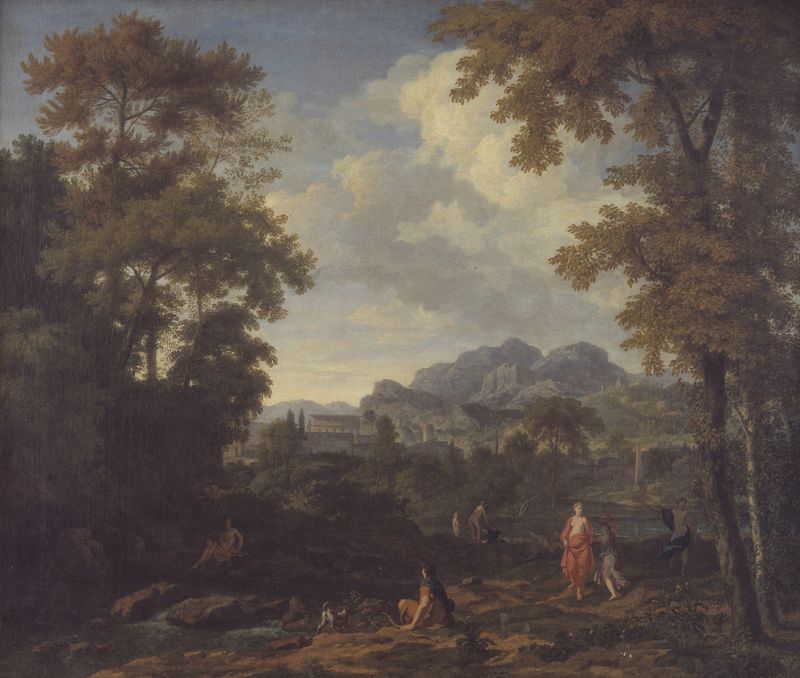
Classical Landscape with Diana and her Nymphs
Johannes Glauber
A southern landscape with travellers in front of a fortified town
Johannes Glauber





