Arcadian Landscape with Diana Bathing — History & Facts
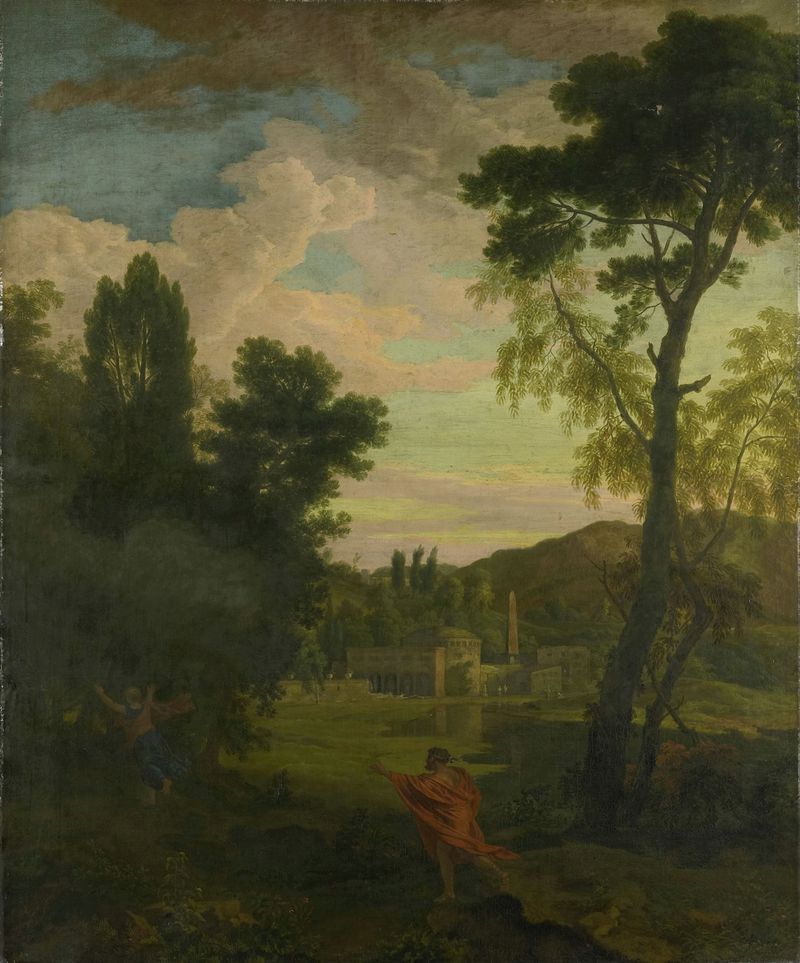
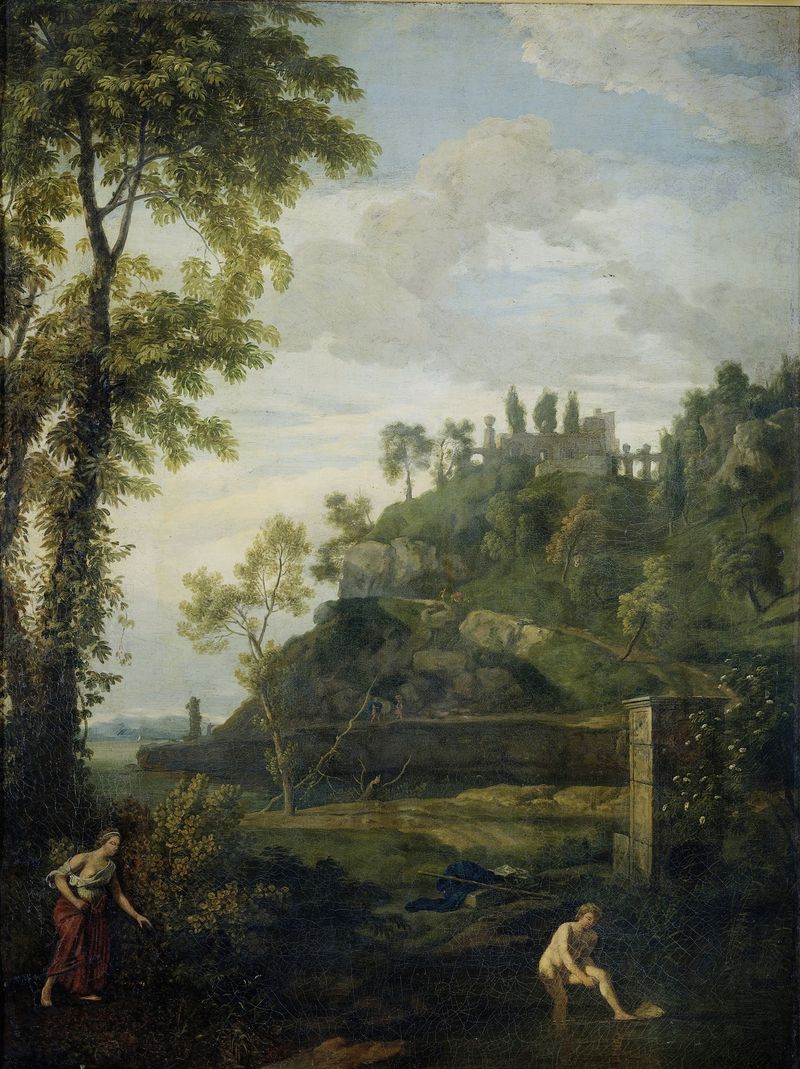
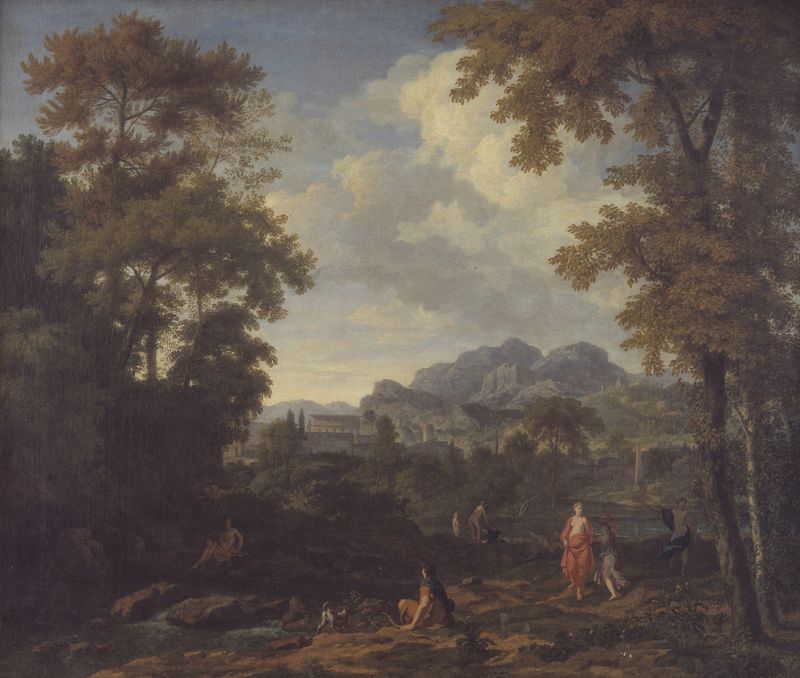
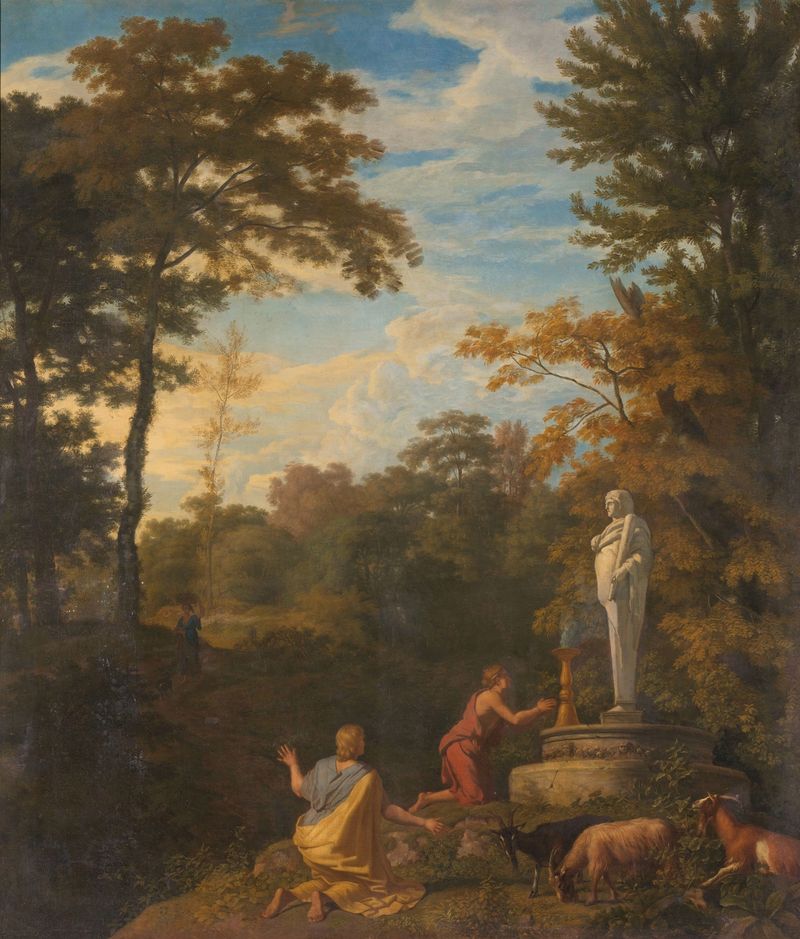
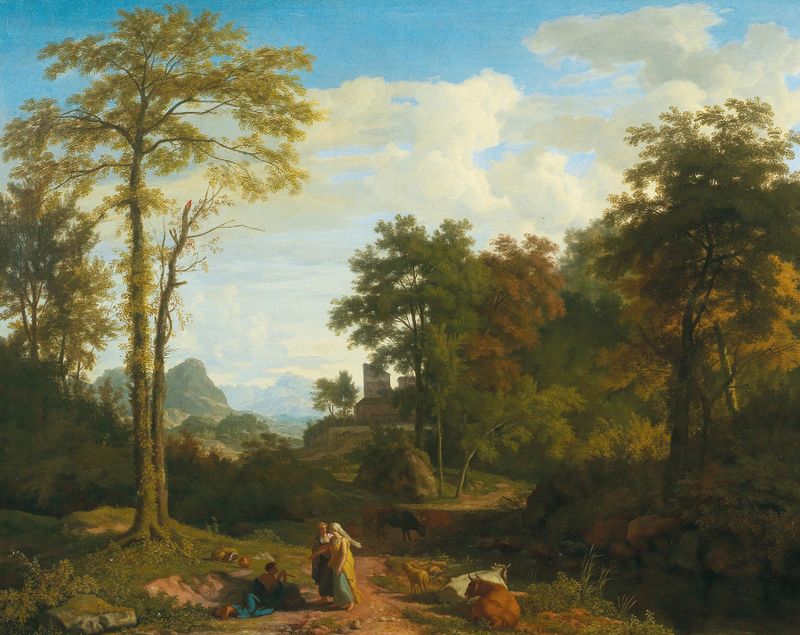
In the quiet realms of dreams, we often seek solace in the beauty of untouched landscapes. Look to the center of the canvas, where a serene pool glimmers under a gentle sun. The rich greens of the foliage frame the scene, inviting your gaze to wander through the delicate interplay of light and shadow. Notice how the azure sky above reflects the tranquility below, while soft contours of hills rise and fall in the background, creating an inviting harmony.
Each color breathes life into the setting, channeling the essence of an idyllic escape. Yet, as the goddess Diana bathes, there exists a tension between the purity of nature and the watchful eyes hidden in the underbrush. The delicate figures depicted whisper stories of voyeurism, innocence, and nature's duality. Each leaf, every ripple in the water, speaks to the fleeting moments between dream and reality, evoking a sense of longing for a world both enchanting and elusive.
The gentle luminosity envelops the scene, suggesting a balance between the known and the unknown. During the period between 1680 and 1726, when this piece was crafted, Johannes Glauber found himself deeply immersed in the intricate balance of classicism and emerging Baroque influences. Having established himself in the artistic circles of Amsterdam, he captured the essence of mythological themes while also reflecting the contemporary human experience. The tranquil yet charged atmosphere of his work resonates with a society grappling with the tension between rationalism and emotional depth.