Arcadian Landscape with Jupiter and Io — History & Facts
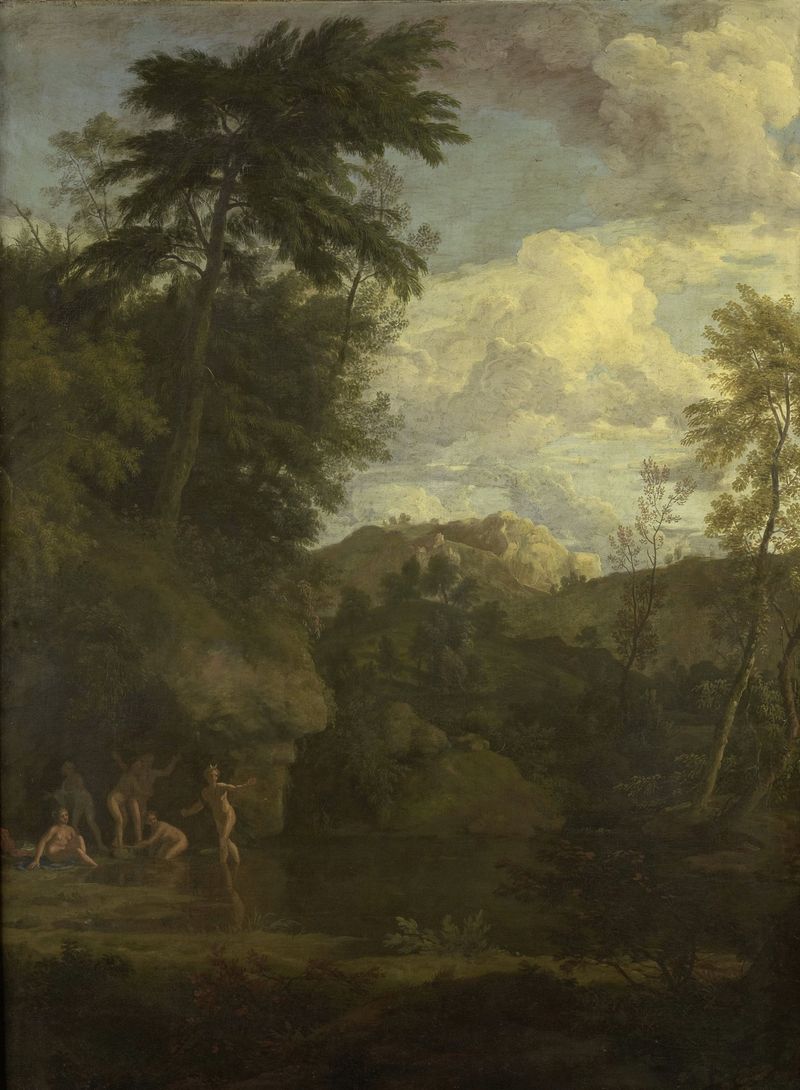
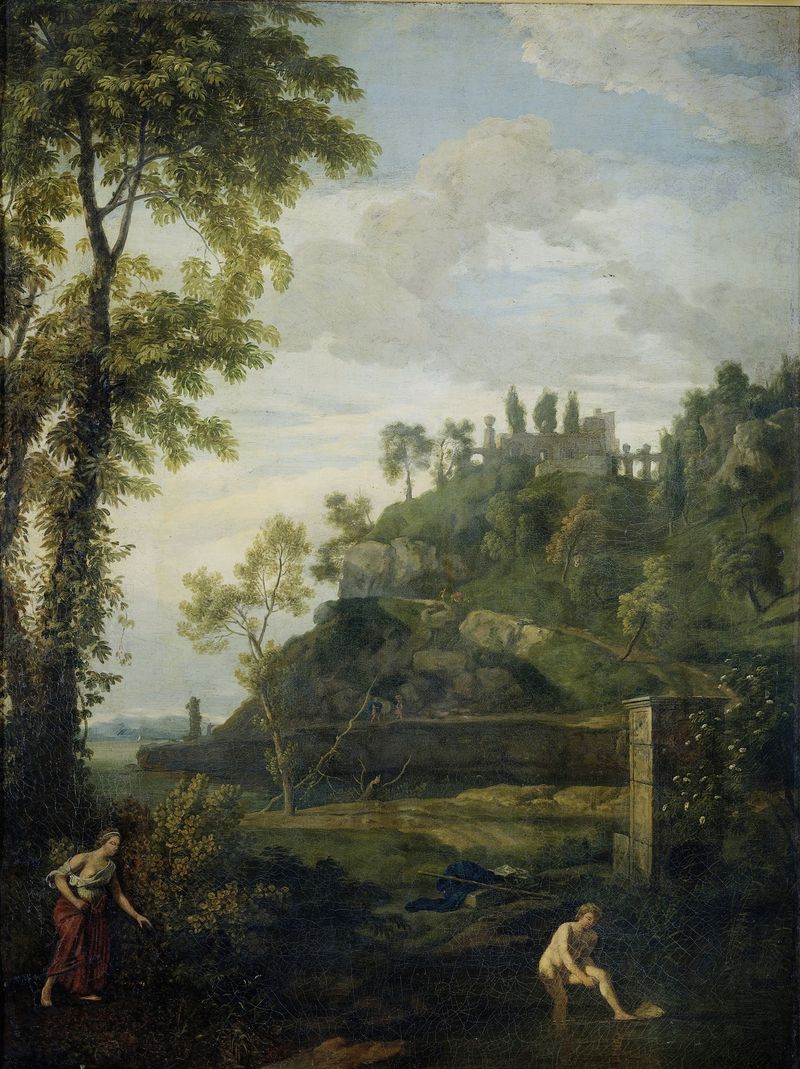
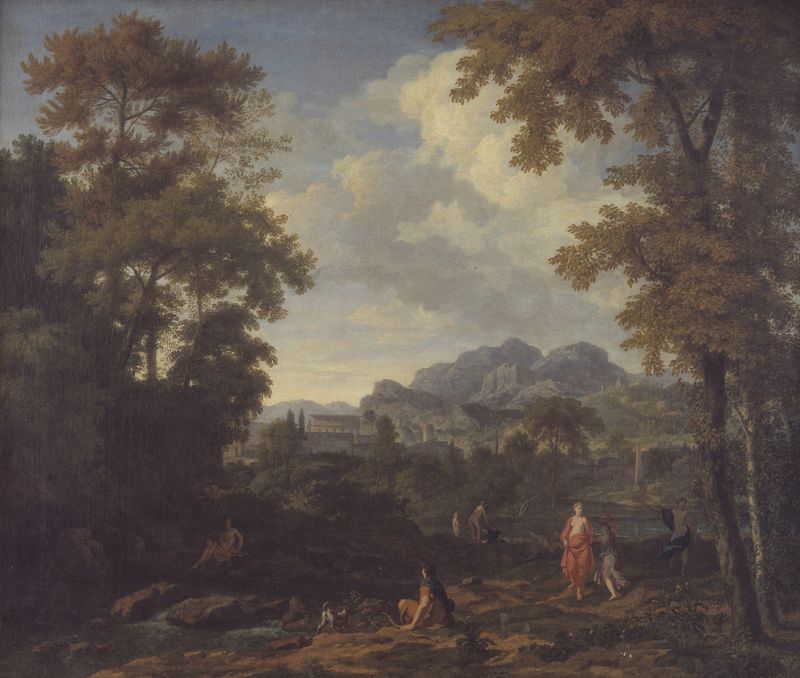
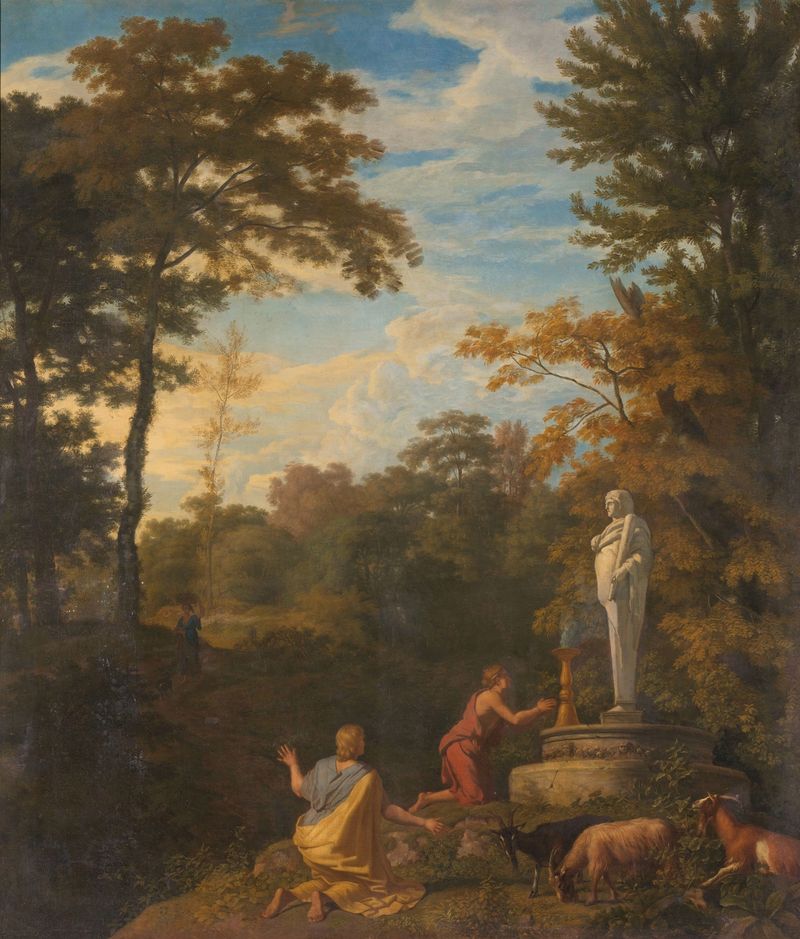
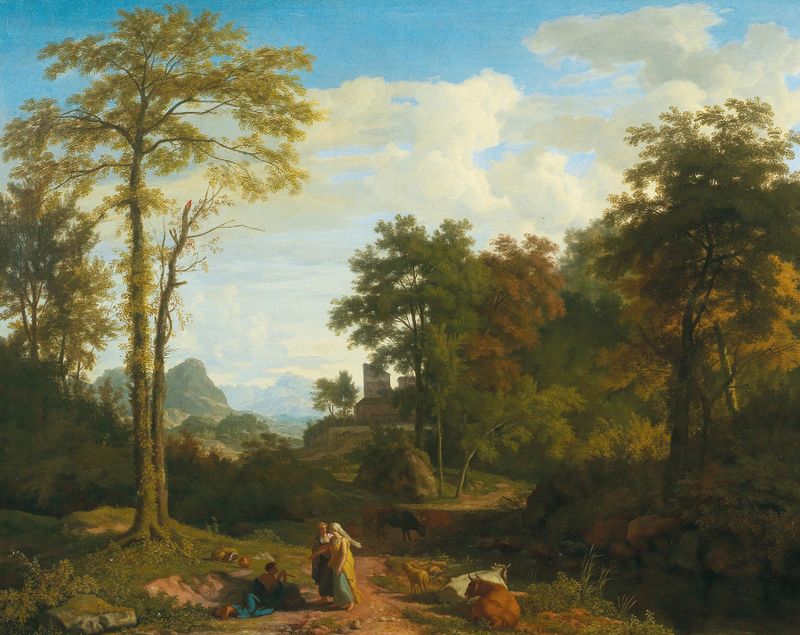
Where does light end, and longing begin? This question resonates deeply in the serene depths of the canvas, where a pastoral paradise unfolds before our eyes. Look to the left, where soft golden hues emanate from the sun, filtering through wispy clouds to illuminate the lush greenery below. The gentle undulations of the land cradle a tranquil river, its surface mirroring the sublime sky. Notice how the figures of Jupiter and Io, subtly positioned at the center, draw the viewer’s gaze.
Their postures are relaxed yet laden with an unspoken tension, inviting contemplation of their shared narrative within this idyllic setting. The contrast between the vibrant foliage and the muted earthy tones of the figures enhances the emotional gravity of this moment. Each brushstroke captures the essence of pastoral life, while the silence that envelops them speaks volumes. The juxtaposition of light and shadow serves not only to highlight the beauty of the landscape but also to echo the complexities of desire and destiny that linger in the air around the couple – a silent longing that transcends their immediate reality. Johannes Glauber painted this piece in the early 18th century, during a period marked by a blossoming interest in mythology intertwined with everyday life.
Living in the Netherlands, he navigated a thriving art scene where Baroque influences were giving way to a more tranquil, harmonic approach. This work reflects both personal and societal transitions, capturing a moment that ponders the intersection of human experience and the natural world.