
A Street Scene with a Blacksmith at Work — History & Facts
Who listens when art speaks of silence? In A Street Scene with a Blacksmith at Work, the viewer is invited into a world that transcends the bustle of daily life, where the quiet strength of labor speaks volumes. Look to the left at the blacksmith, his muscular arms raised, hammer poised mid-air, ready to strike against the glowing metal. The warm, fiery hues of orange and yellow from the forge contrast sharply with the cool blues and greens of the surrounding buildings, creating a dynamic tension. The composition draws the eye along the cobbled street, where figures engaged in conversation lean against the walls, their postures relaxed yet alert, capturing a moment of community amidst the industrious scene. Beneath its surface, the painting reveals deeper narratives: the blacksmith as a symbol of resilience, labor's dignity, and the transformative power of craftsmanship.
The interplay of light and shadow amplifies the emotional weight of the moment, as if the air vibrates with the anticipation of creation. The onlookers, seemingly absorbed in conversation, are juxtaposed against the singular focus of the blacksmith, highlighting a contrast between the communal and the solitary. Created in 1844, this artwork emerged during a time of significant industrial change in the Netherlands. Cornelis Springer, known for his detailed cityscapes and ability to capture everyday life, was painting with a growing interest in capturing not just the physical but also the social landscapes of his time.
This piece reflects both the charm of local industry and a poignant moment of personal dedication against the backdrop of an evolving society.
More Artworks by Cornelis Springer
Browse all →
The Royal Palace and the Nieuwe Kerk on the Dam, Amsterdam
Cornelis Springer
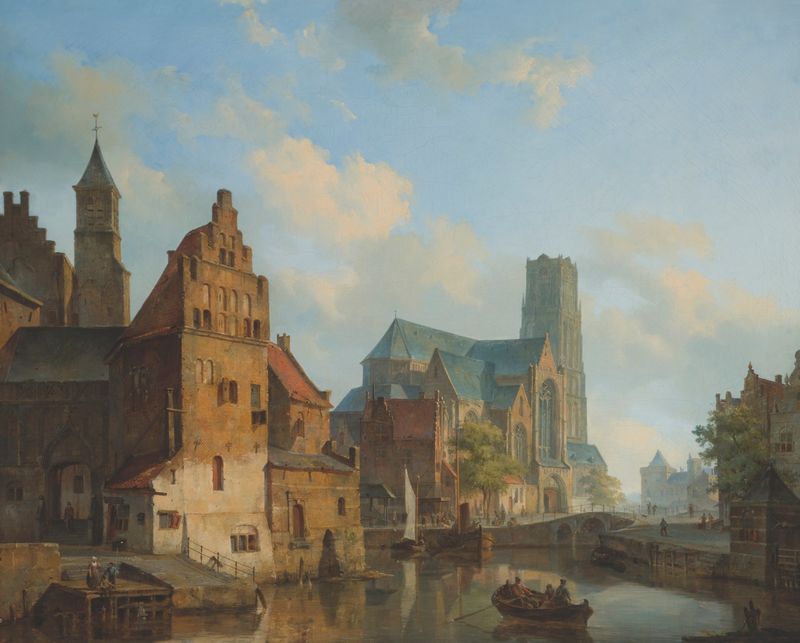
A View Of The Delftse Vaart And St Laurens Church, Rotterdam
Cornelis Springer

The Kerkgracht In Leiden
Cornelis Springer
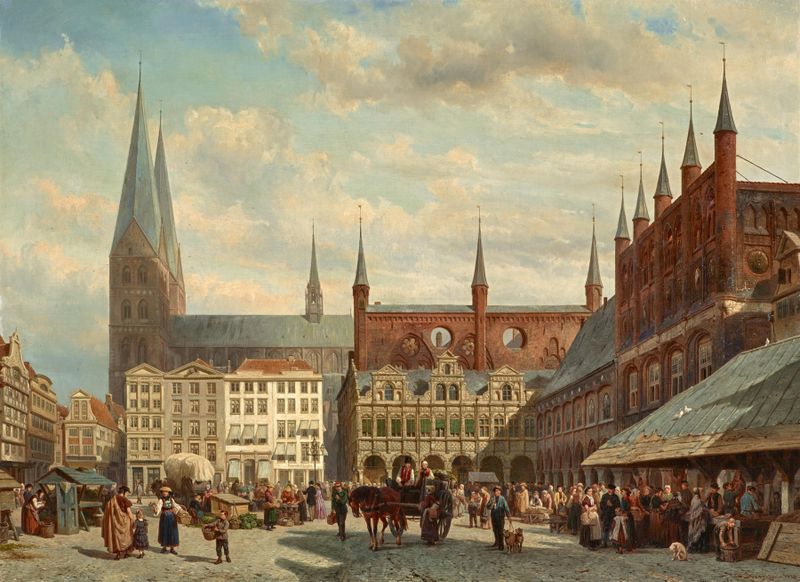
Ansicht des Lübecker Marktes
Cornelis Springer

View of The Hague
Cornelis Springer
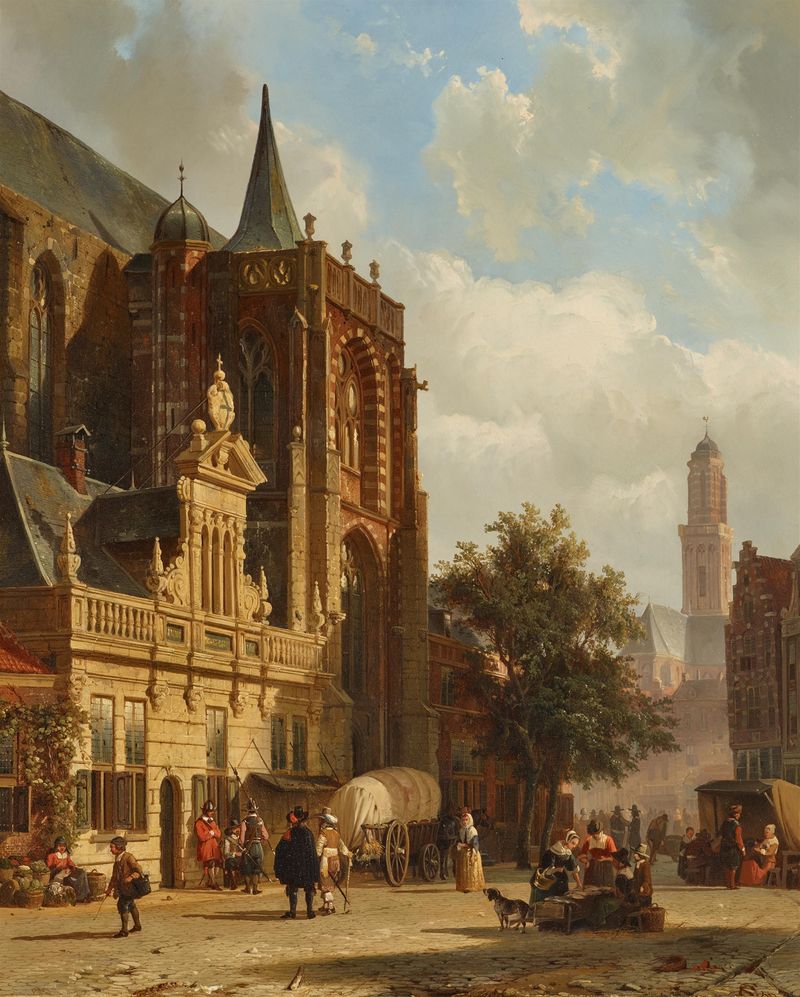
Der Grote Markt in Zwolle
Cornelis Springer
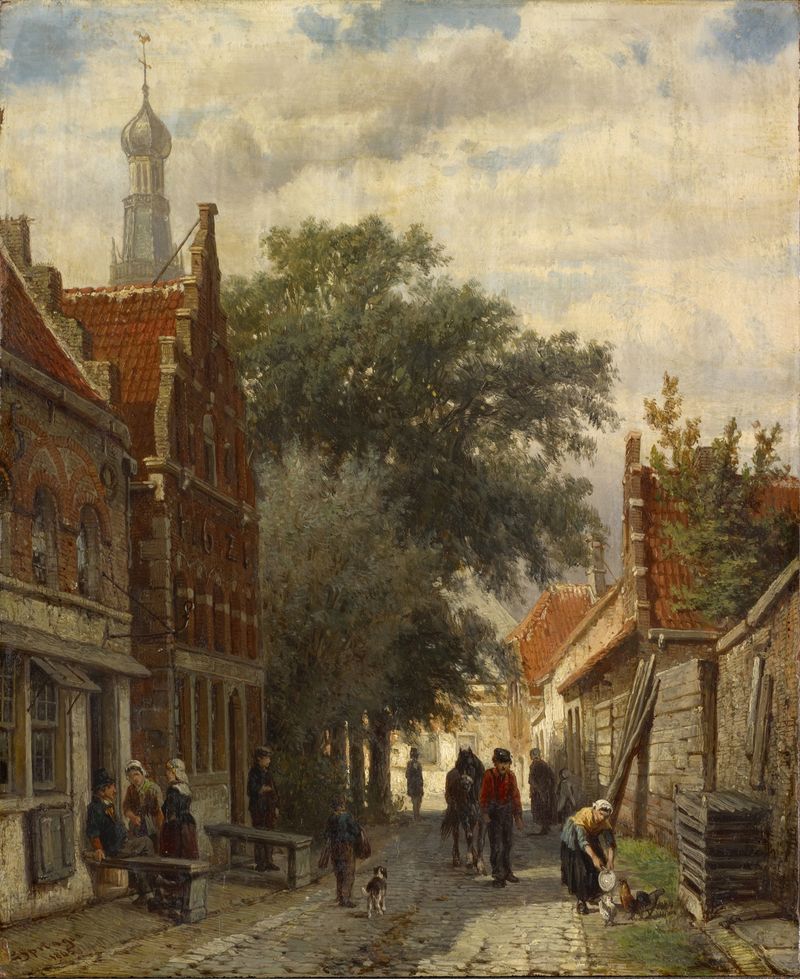
Street in Enkhuizen
Cornelis Springer

View of The Hague from the Delftse Vaart in the Seventeenth Century
Cornelis Springer
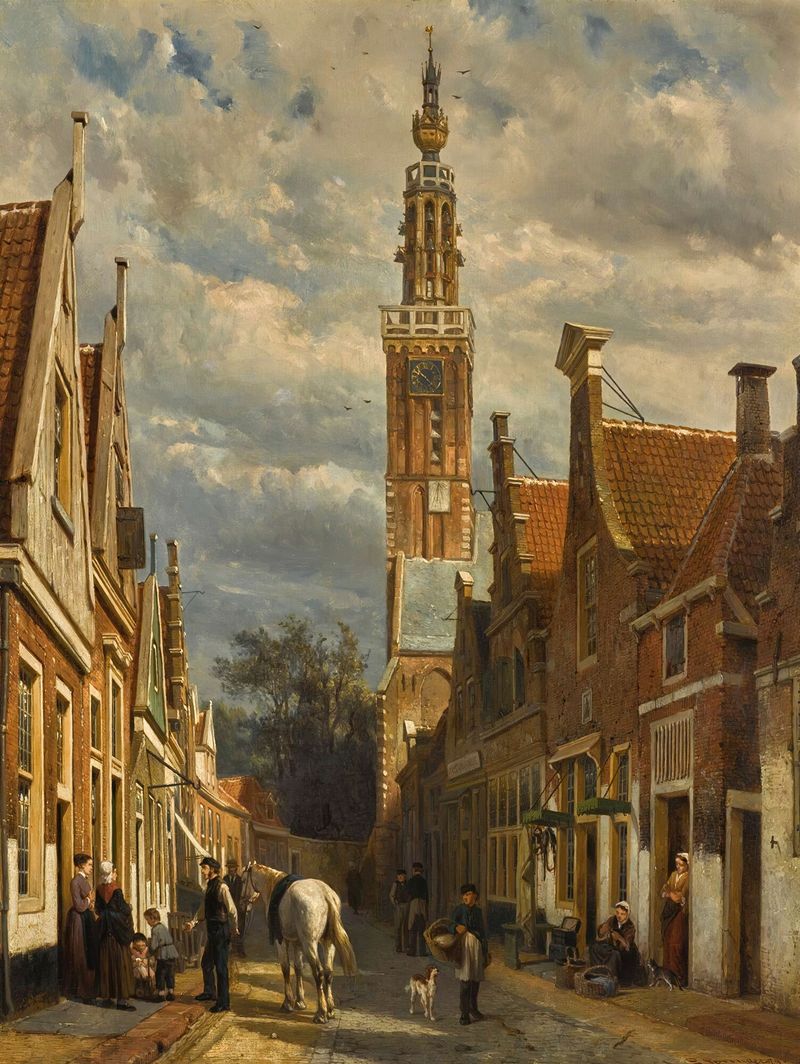
The carillon tower in Edam
Cornelis Springer
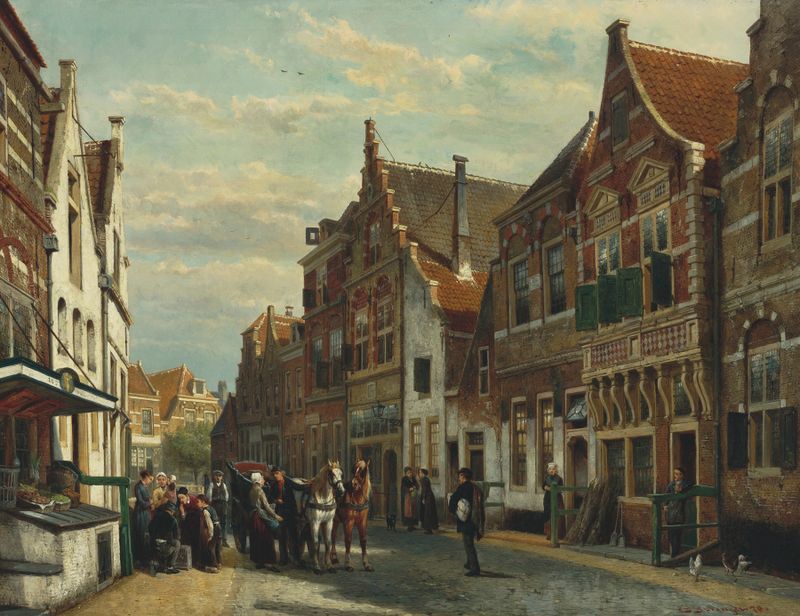
The Wijdstraat, Oudewater, in summer
Cornelis Springer





