
A Summer Night — History & Facts
What first seizes the eye in A Summer Night is the hush of a private world, where four women are caught in a moment that seems both ritual and reverie. The painter, Albert Joseph Moore, arranges his figures in a frieze-like sequence, their pale skin luminous against a tapestry of golden drapery and garlanded flowers. Each gesture is deliberate: one woman gazes outward, anchoring the viewer; another twists her hair, her back a study in sculptural grace; the third lies in repose, lost in her own thoughts; the fourth adjusts a ribbon, her eyes lowered in concentration.
The setting is at once classical and dreamlike, with the distant shimmer of water and the intricate architectural screen lending depth and enclosure. Moore’s palette of golds, creams, and silvers bathes the scene in a gentle, nocturnal glow, inviting the viewer to linger in its stillness. Created around 1887, this painting belongs to a moment in late Victorian Britain when artists like Moore turned to the antique not for narrative, but for atmosphere and beauty. Such works, often called Aesthetic, were prized by collectors who sought escape from the industrial world in scenes of imagined antiquity and sensual calm.
The women here are not mythic heroines but emblems of repose and harmony, their world untouched by time or trouble. While A Summer Night is not among the most famous of Moore’s works, its presence in the digital collection (wQHns_Vyx6foyQ at Google Cultural Institute) allows us to see how the late 19th century’s fascination with Greece and Rome was filtered through a modern longing for serenity. The painting asks us to slow down, to follow the line of an arm or the fall of drapery, and to imagine the cool air and quiet conversation of a night long past.
More Artworks by Albert Joseph Moore

Study for "Blossoms"
Albert Joseph Moore
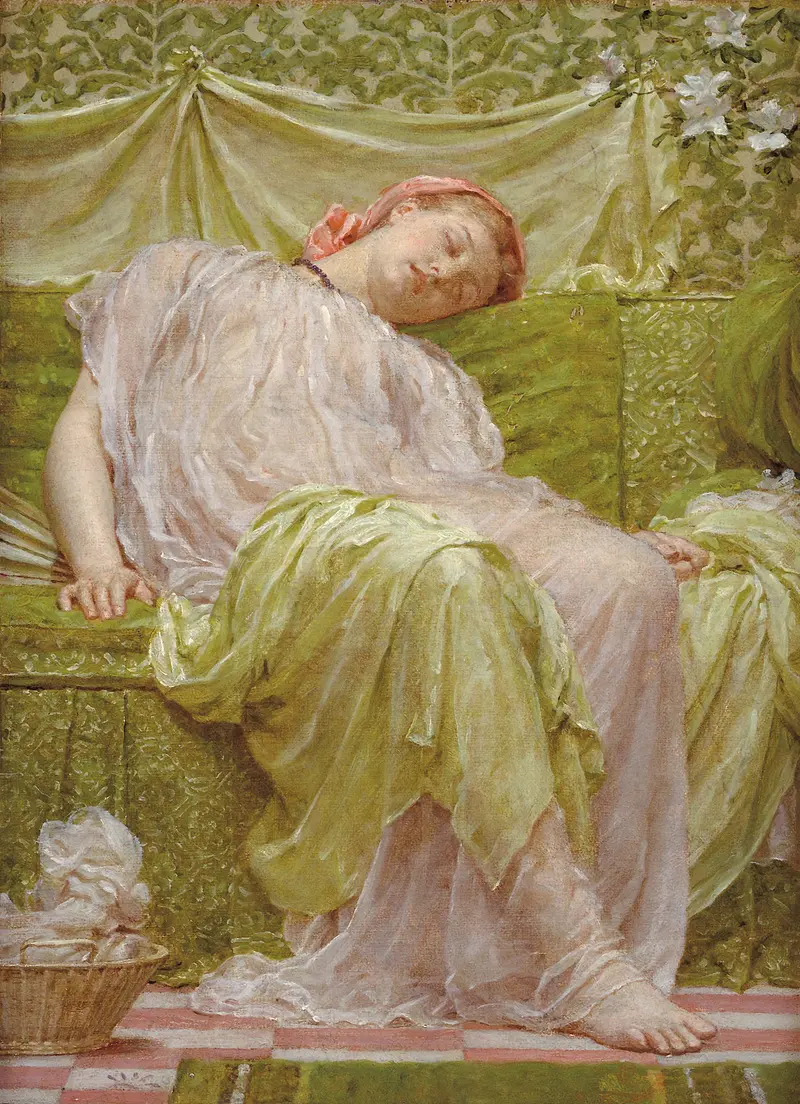
A workbasket
Albert Joseph Moore
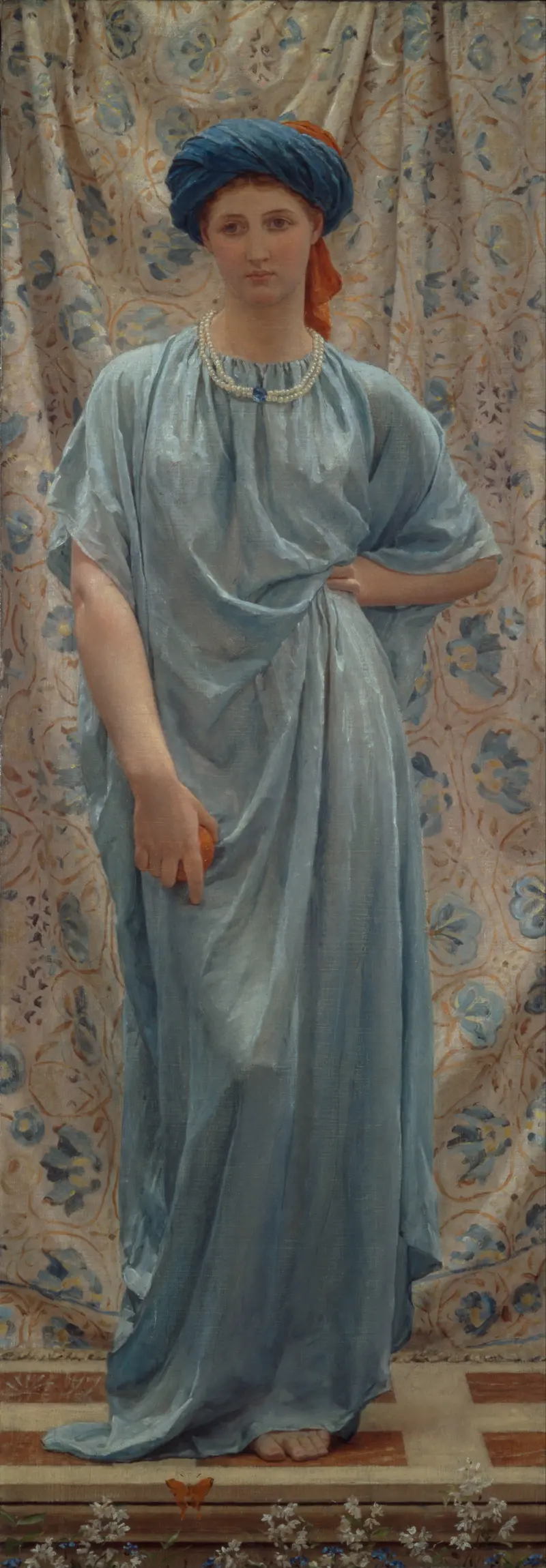
Sapphires
Albert Joseph Moore
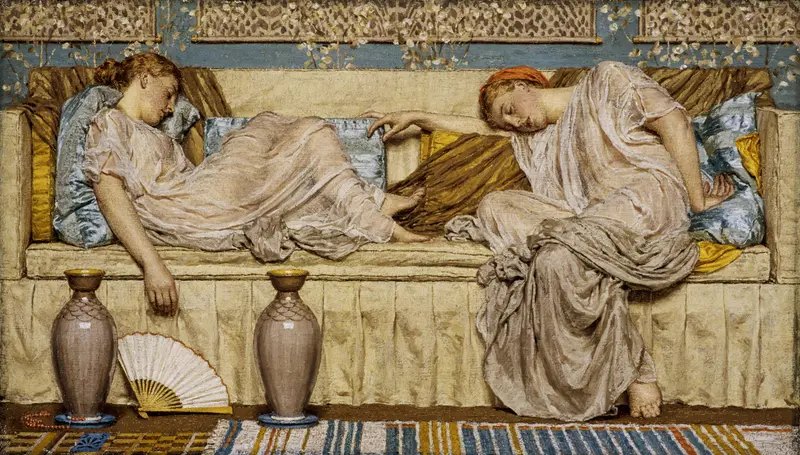
Beads
Albert Joseph Moore
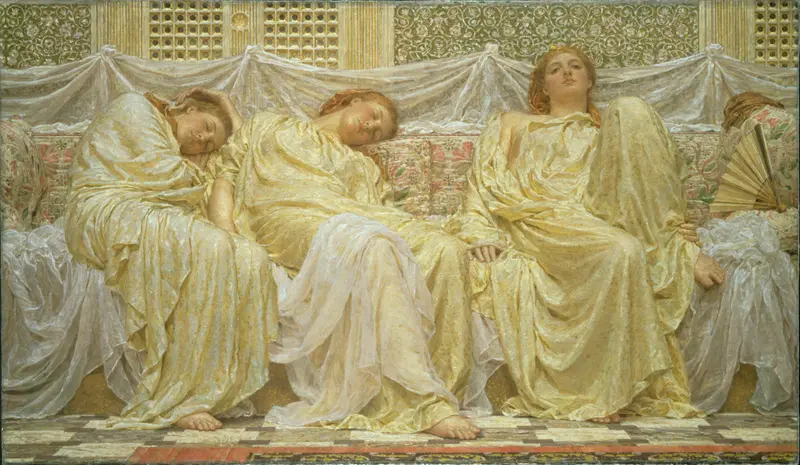
Dreamers
Albert Joseph Moore
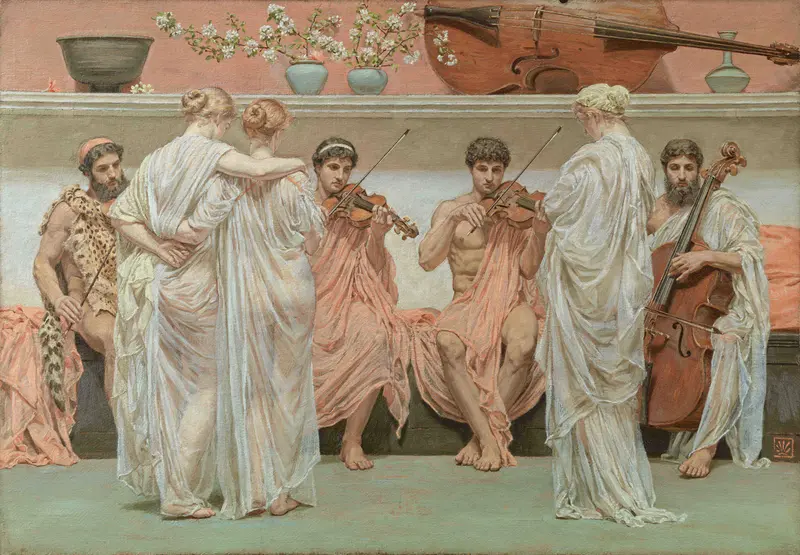
The Quartet, a Painters Tribute to Music
Albert Joseph Moore
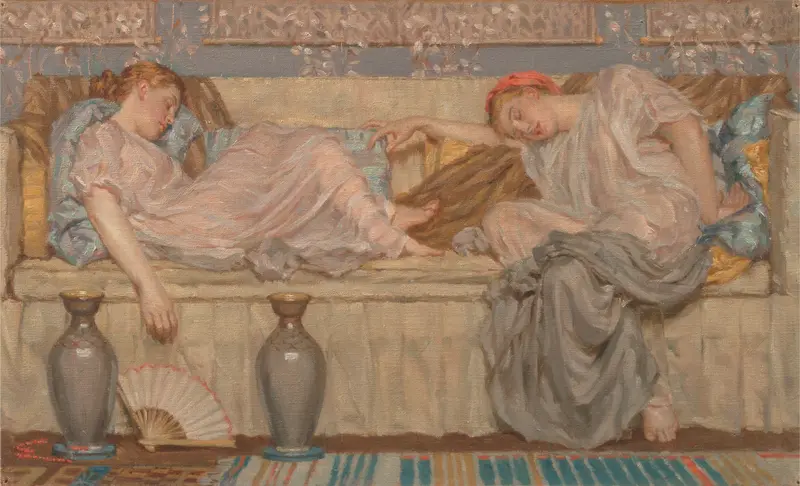
Beads (study)
Albert Joseph Moore
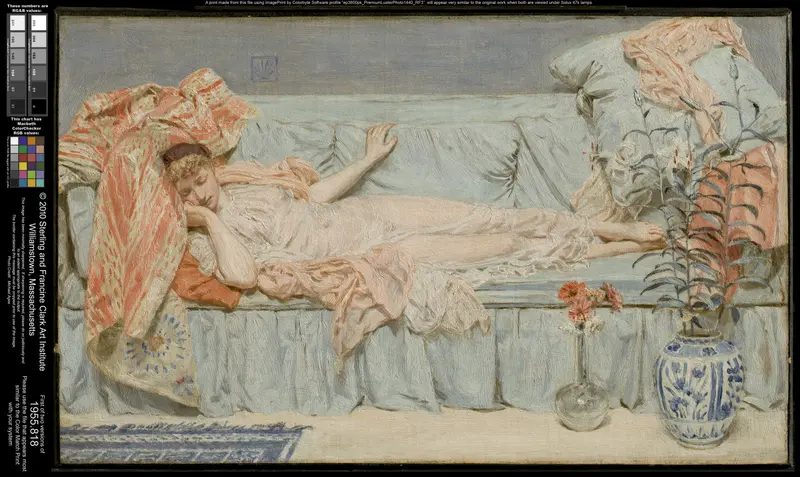
Lilies
Albert Joseph Moore
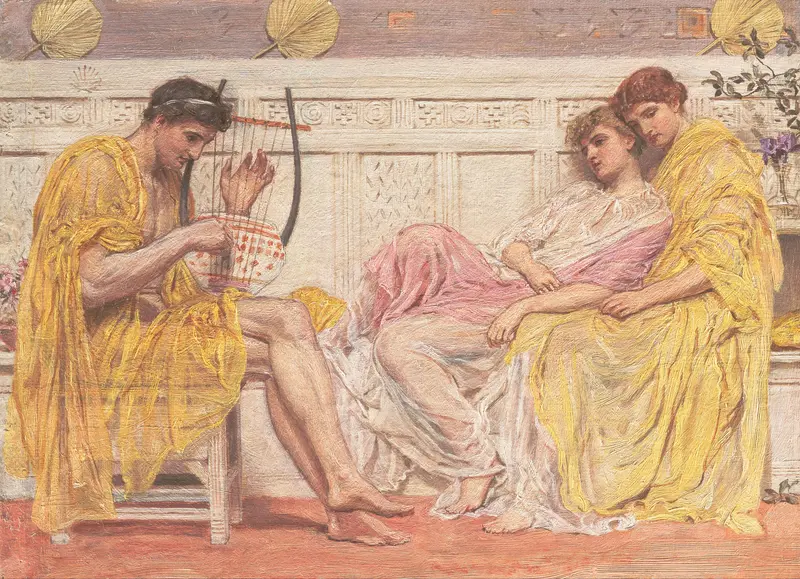
A Musician
Albert Joseph Moore
The Umpire
Albert Joseph Moore



