
The Umpire — History & Facts
A figure stands, statuesque and self-contained, swathed in folds of pale drapery that seem to catch every flicker of garden light. The eye is drawn first to the upright rod of red, a vivid line that slices through the gentle palette and hints at a role or authority—perhaps the umpire’s staff of the title. Her gaze is calm, almost distant, inviting speculation rather than offering answers.
The red necklace, echoing the staff, adds a note of ritual or ceremony, while her bare feet root her in the soft grass, blurring the line between the classical and the everyday. Moore’s brushwork lingers on the textures: the marble-like smoothness of skin, the restless shimmer of fabric, the leafy coolness of the garden wall behind. Painted in 1888, The Umpire belongs to a late Victorian world entranced by antiquity and the idealized calm of ancient Greece. Artists like Albert Joseph Moore found in these subjects a way to escape the industrial present, creating scenes that were neither strictly historical nor wholly imagined.
Such works were often collected by the new urban elite, eager to display taste and learning through art that whispered of lost civilizations. Today, the painting resides in a UK collection, its precise journey through history less well documented than its style—yet the quiet authority of its subject, and the painter’s devotion to surface and mood, continue to invite viewers into a suspended moment, where judgment and beauty are one.
More Artworks by Albert Joseph Moore

Study for "Blossoms"
Albert Joseph Moore
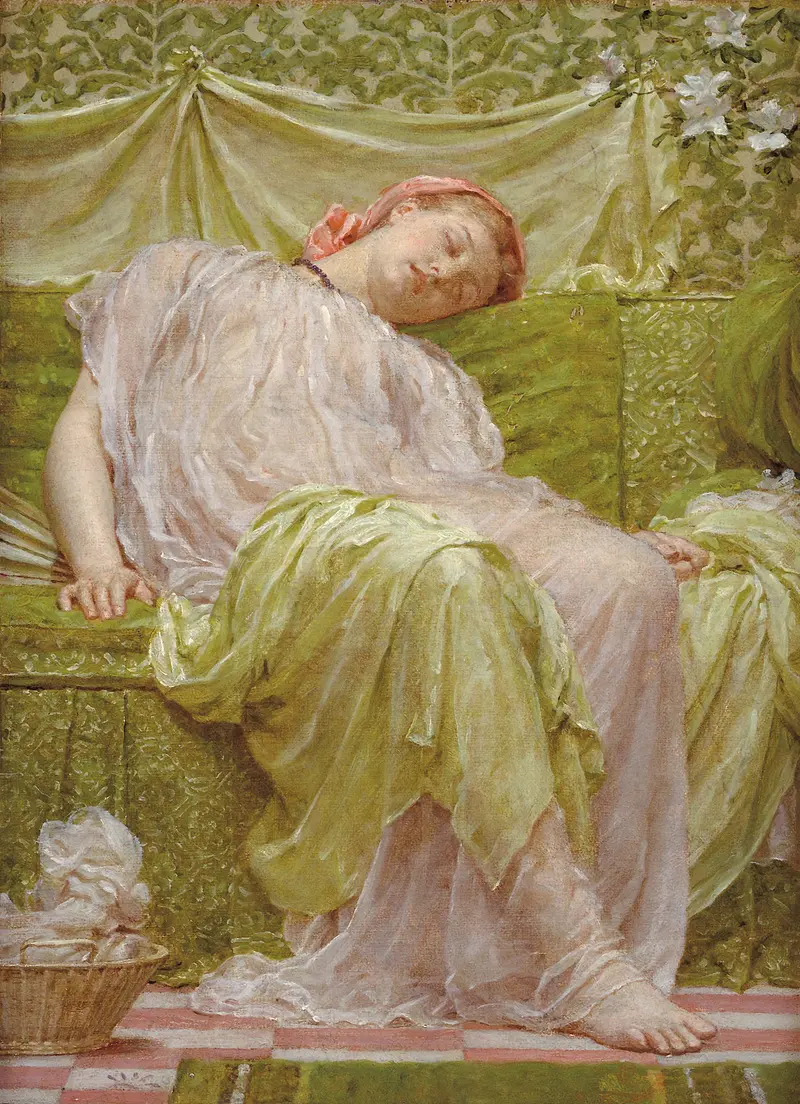
A workbasket
Albert Joseph Moore
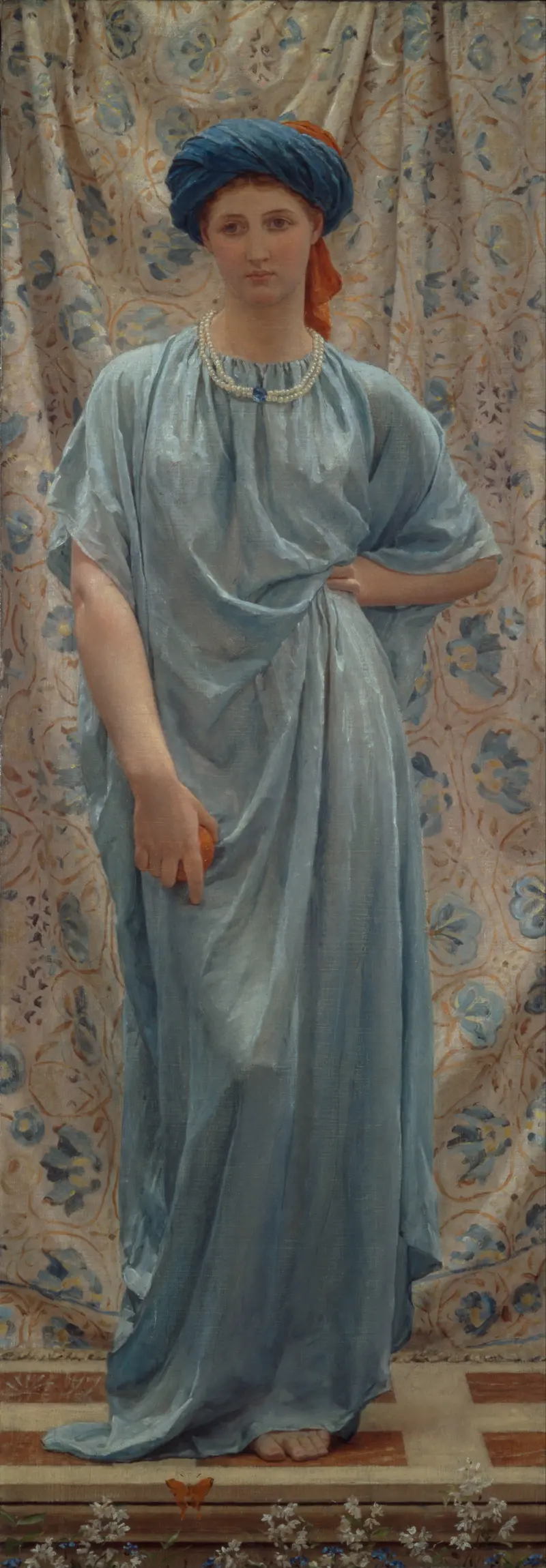
Sapphires
Albert Joseph Moore
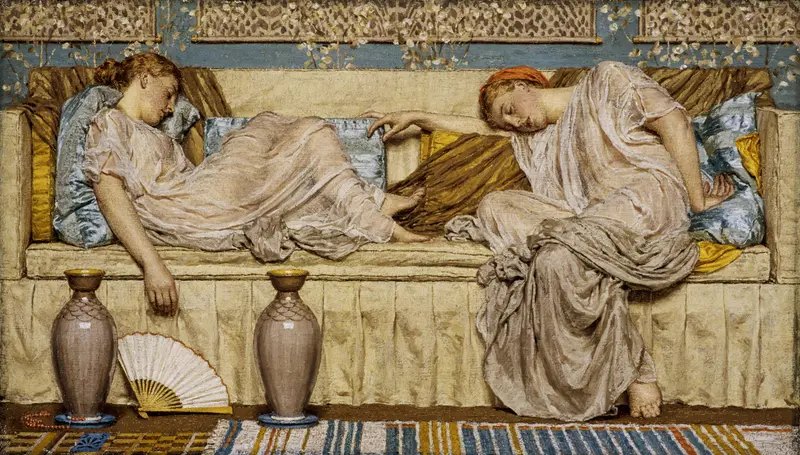
Beads
Albert Joseph Moore
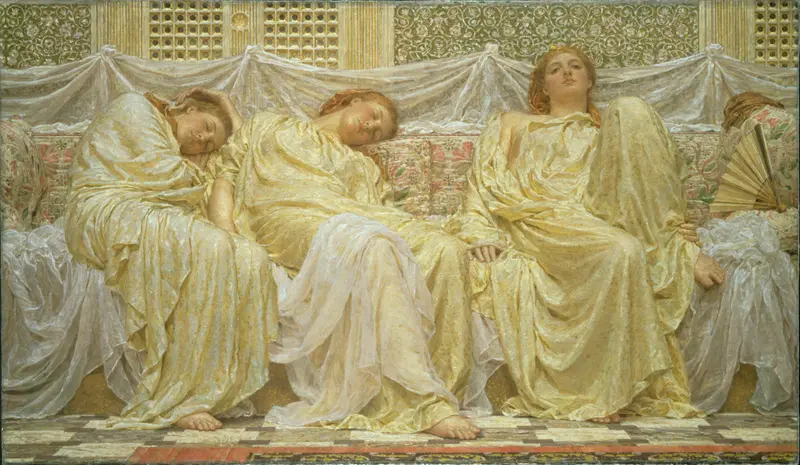
Dreamers
Albert Joseph Moore
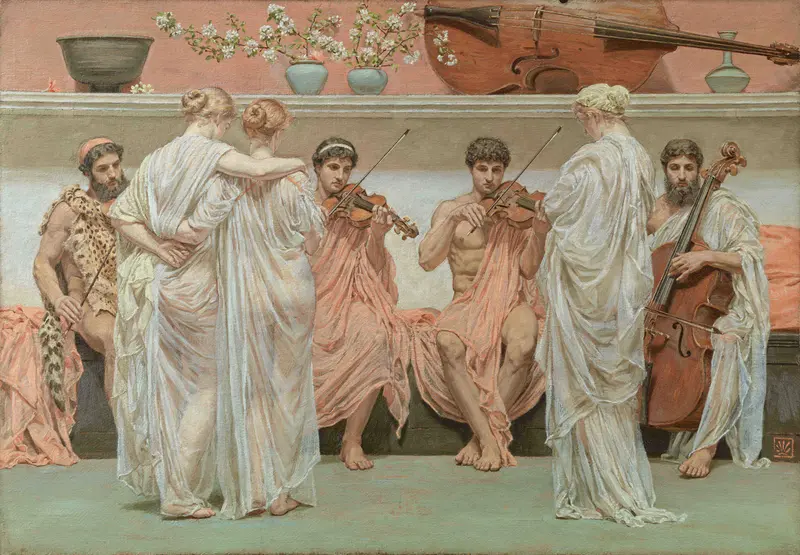
The Quartet, a Painters Tribute to Music
Albert Joseph Moore
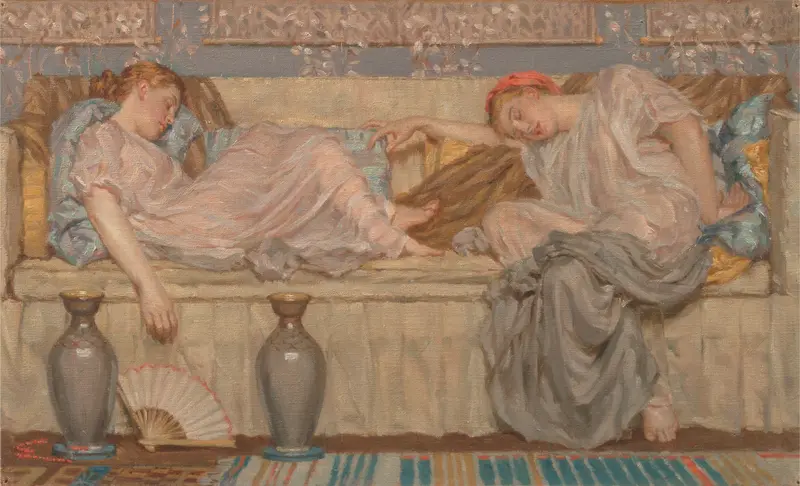
Beads (study)
Albert Joseph Moore
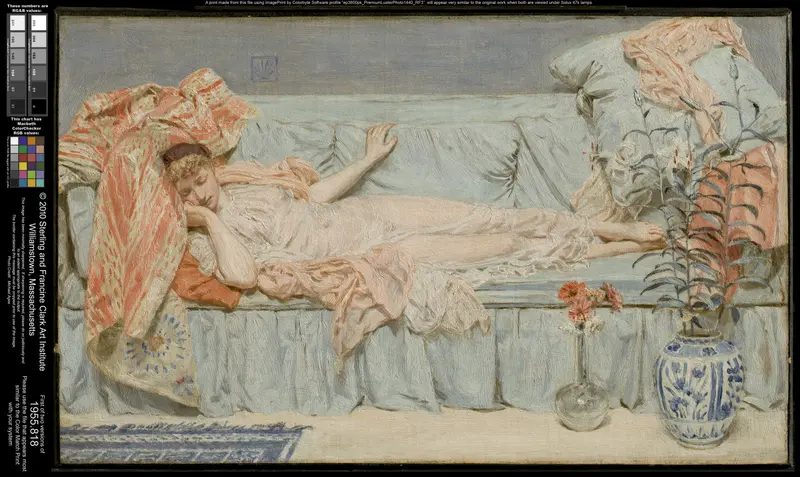
Lilies
Albert Joseph Moore
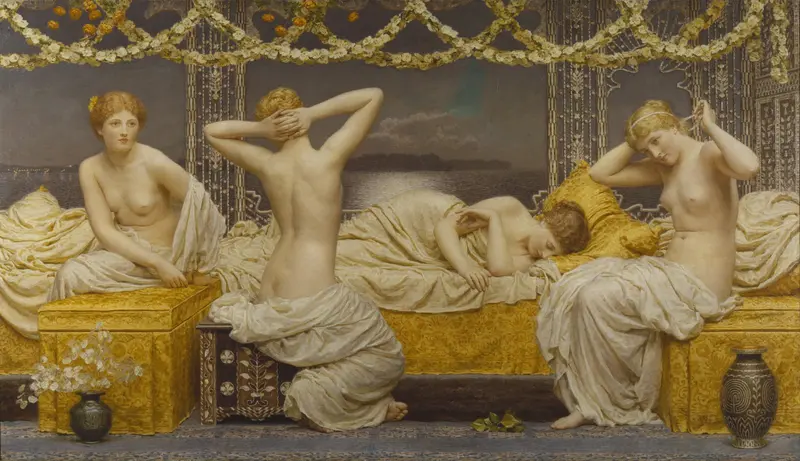
A Summer Night
Albert Joseph Moore
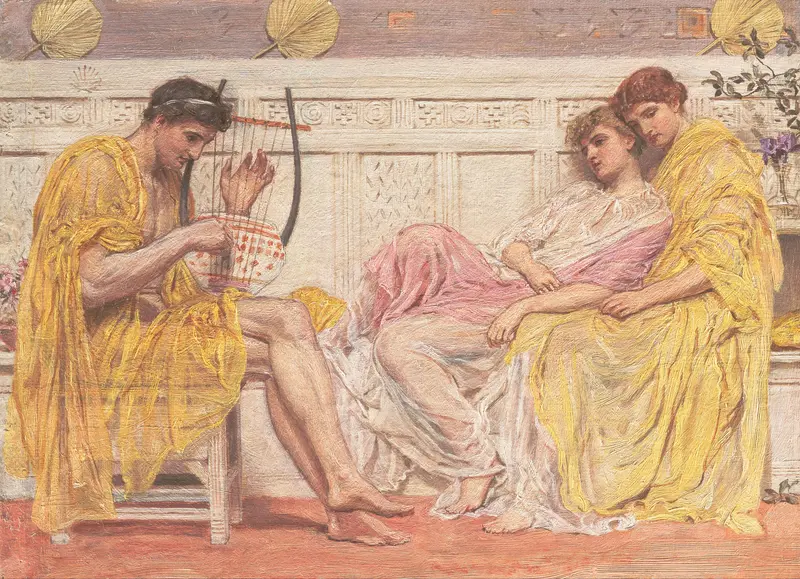
A Musician
Albert Joseph Moore



