
A Musician — History & Facts
The first thing to catch the eye in A Musician is the hush that seems to linger in the air, as if the music has just faded and the figures are caught in its afterglow. The musician, draped in a luminous yellow garment, leans intently over his lyre, fingers poised mid-note, while the two listeners recline in languid ease against a marble bench. Their bodies are loosely entwined, the soft folds of their robes echoing the gentle rhythm of the scene.
Every detail—the delicate pinks and golds of the fabrics, the stylized fans on the wall, the careful arrangement of limbs—serves to heighten a sense of suspended time, inviting the viewer to imagine the melody that binds these three together. Painted circa 1867, A Musician belongs to a world fascinated by the antique, when artists like Albert Joseph Moore found inspiration in the imagined leisure of ancient Greece and Rome. Such works, often commissioned for private homes or collectors, offered a vision of cultured idleness and refined beauty, reflecting both the aspirations and anxieties of Victorian society. Moore’s contemporaries in the Aesthetic Movement shared his devotion to harmony of color and line, seeking pleasure in art for its own sake.
While little is recorded about this particular painting’s early journey, its presence in a digital collection today lets us linger over every brushstroke, still searching for the silent music within.
More Artworks by Albert Joseph Moore

Study for "Blossoms"
Albert Joseph Moore
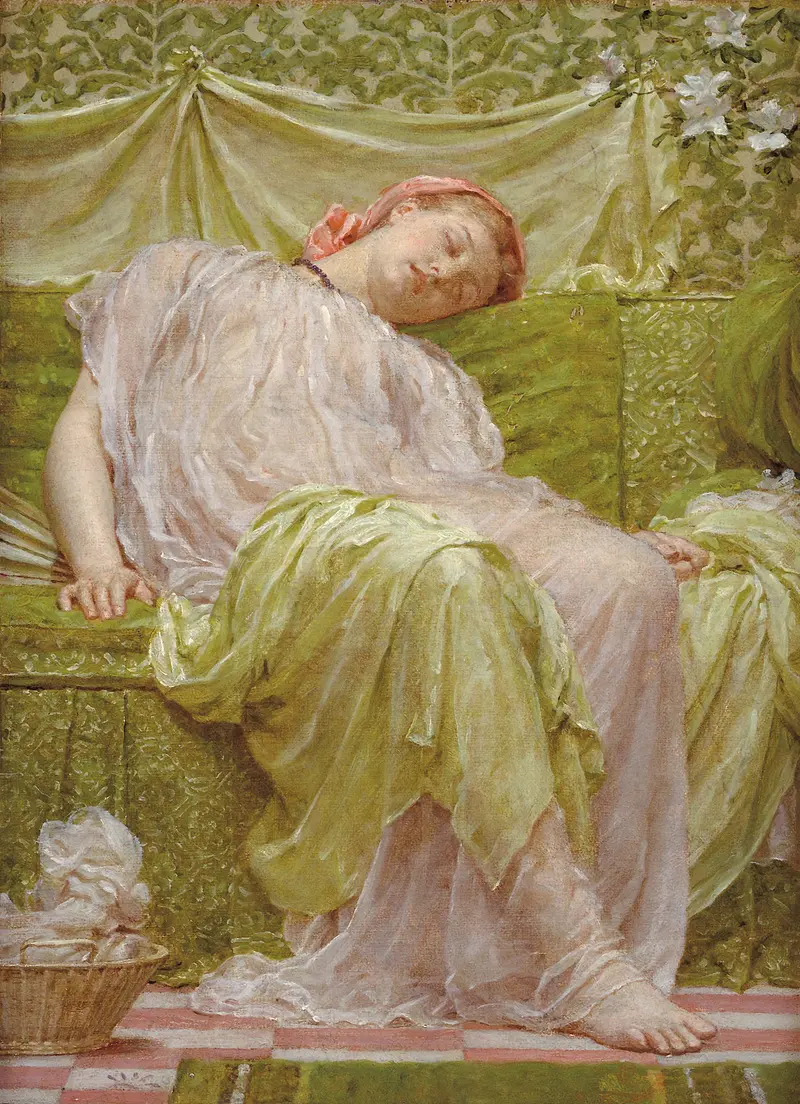
A workbasket
Albert Joseph Moore
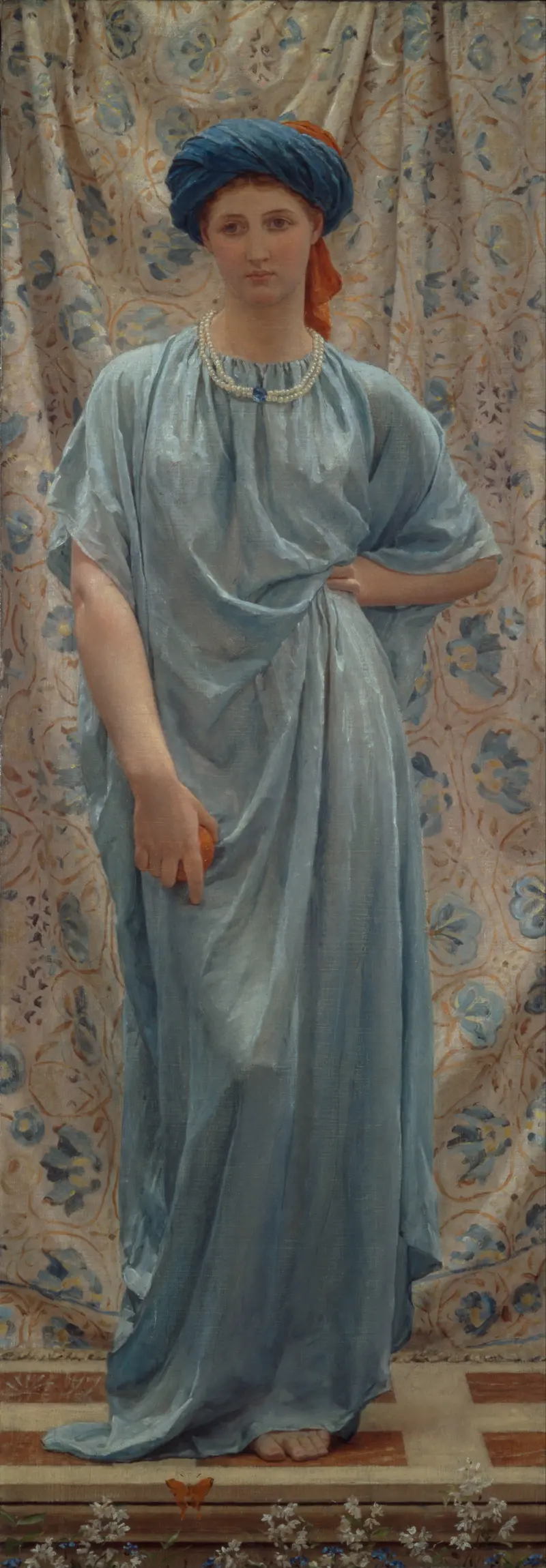
Sapphires
Albert Joseph Moore
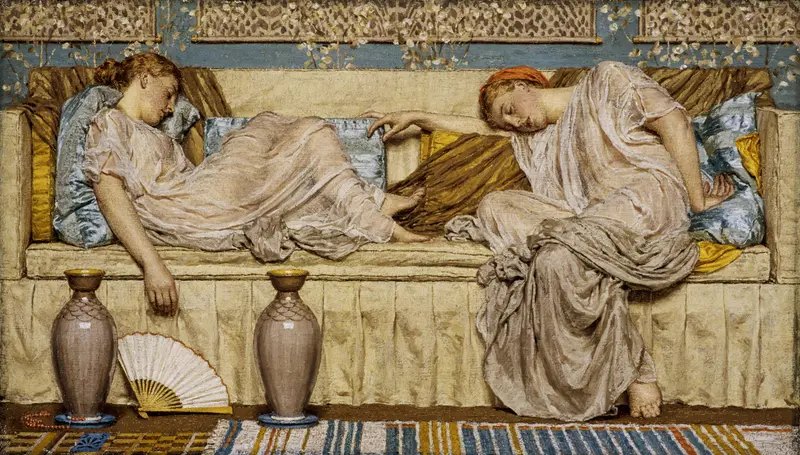
Beads
Albert Joseph Moore
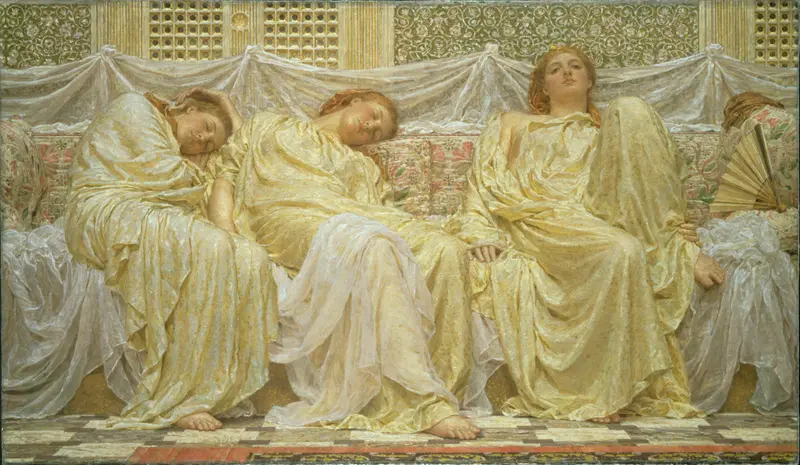
Dreamers
Albert Joseph Moore
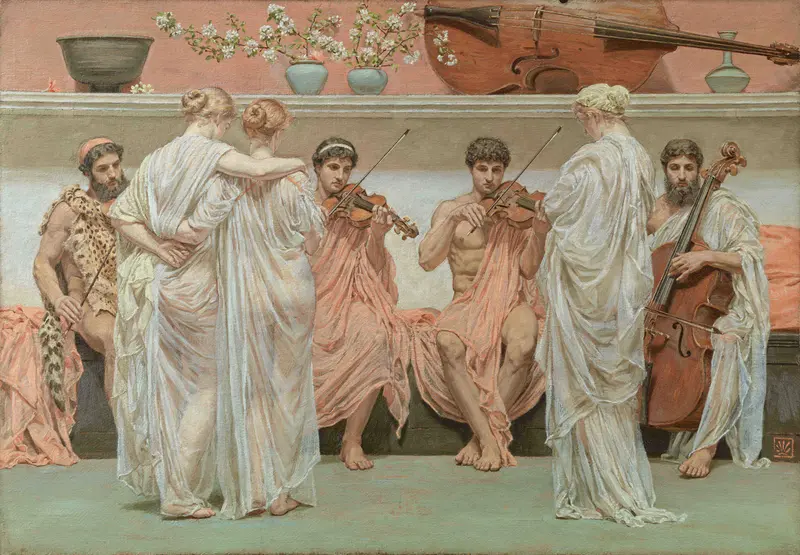
The Quartet, a Painters Tribute to Music
Albert Joseph Moore
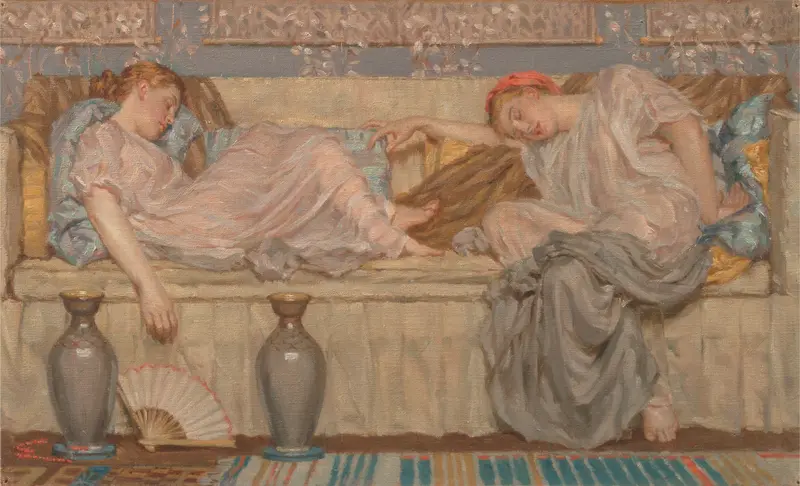
Beads (study)
Albert Joseph Moore
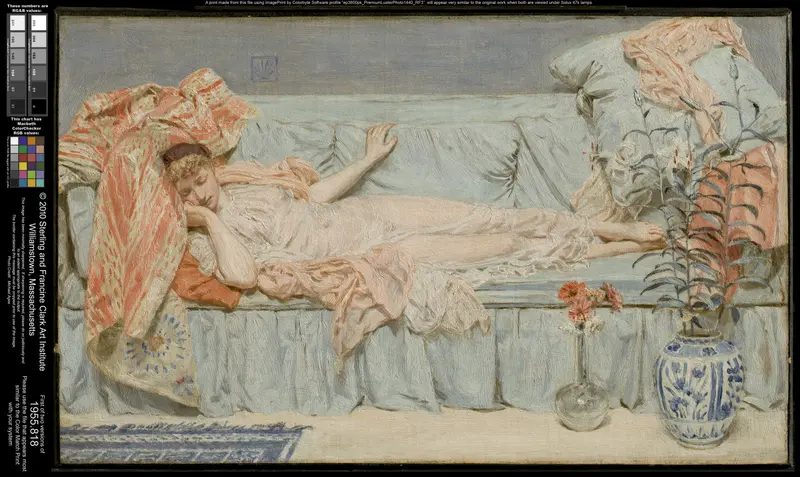
Lilies
Albert Joseph Moore
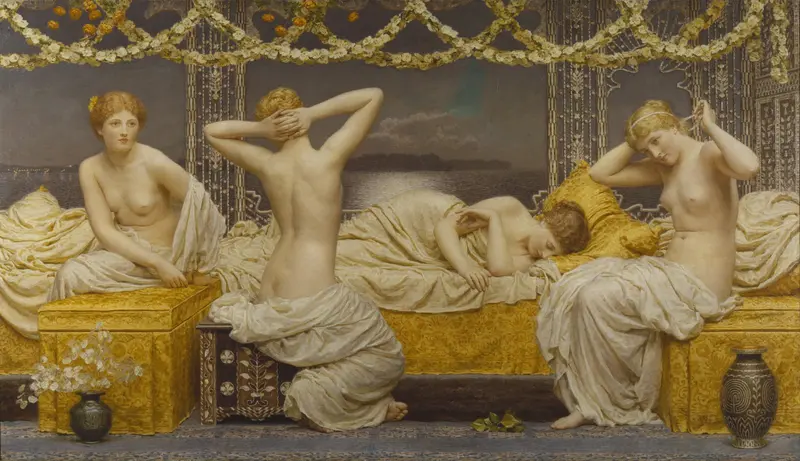
A Summer Night
Albert Joseph Moore
The Umpire
Albert Joseph Moore
More Genre Scene Art

Banquet of the Officers of the St George Civic Guard
Frans Hals

Rembrandt and Saskia in the Scene of the Prodigal Son
Rembrandt van Rijn

Bal du moulin de la Galette
Pierre-Auguste Renoir

Quadrille at the Moulin Rouge
Henri de Toulouse-Lautrec

A Burial at Ornans
Gustave Courbet

When Will You Marry?
Paul Gauguin