
A sunlit inlet. — History & Facts
What first draws the eye in A sunlit inlet is the hush of the moment: a wide, tranquil expanse where the water and sky nearly merge, interrupted only by the faintest golden shimmer along the horizon. The artist, Albert Edvard Wang, guides us with a gentle hand—the inlet curves inward, pulling our gaze from the sandy foreground into the luminous distance. The sunlight, diffused by a veil of clouds, radiates in subtle streaks, softening every edge and bathing the land in a pale, almost silvery glow.
A line of trees anchors the right, their dark foliage a quiet counterpoint to the open sky, while the delicate brushwork in the grasses suggests a breeze that never quite stirs the water. In this stillness, every detail—the muted palette, the low horizon, the careful gradations of light—works together to evoke a sense of waiting, as if the scene itself is holding its breath. Painted in 1908, this work belongs to a period when Scandinavian artists were increasingly drawn to the contemplative possibilities of landscape. Rather than grand vistas or dramatic weather, painters like Wang often focused on the subtle play of light and the quiet rhythms of nature, reflecting a broader European fascination with mood and atmosphere at the turn of the century.
Such paintings were rarely made for grand salons; more often, they were commissioned or collected by those who sought a moment of peace for their homes, a window onto the familiar beauty of their own coasts and fields. Little is recorded about the journey of this particular painting, now found in the collection of bruun-rasmussen.dk, but its quiet presence speaks to a world in transition—one foot in the age of Romantic longing, the other in the modern search for stillness. Let your eye return to the horizon, and see how the light lingers there.
More Artworks by Albert Edvard Wang
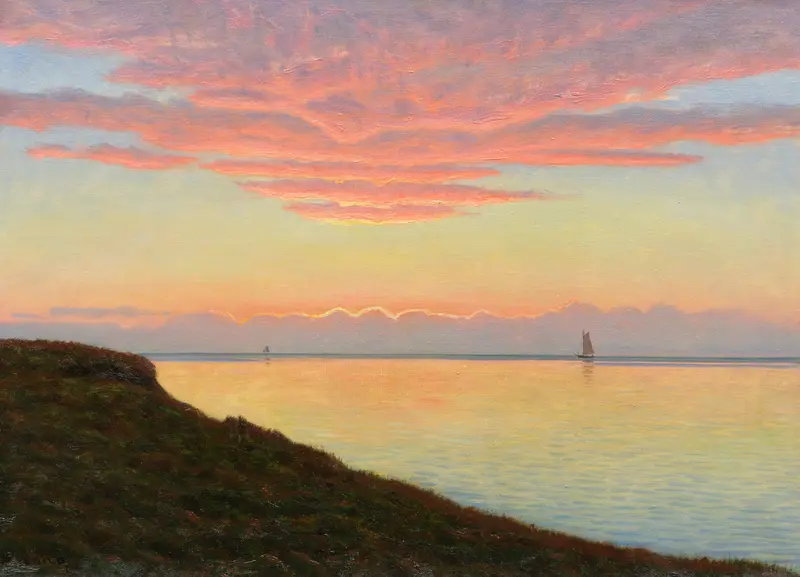
Küstenlandschaft im Abendrot
Albert Edvard Wang

Abendstimmung an der dänischen Küste
Albert Edvard Wang
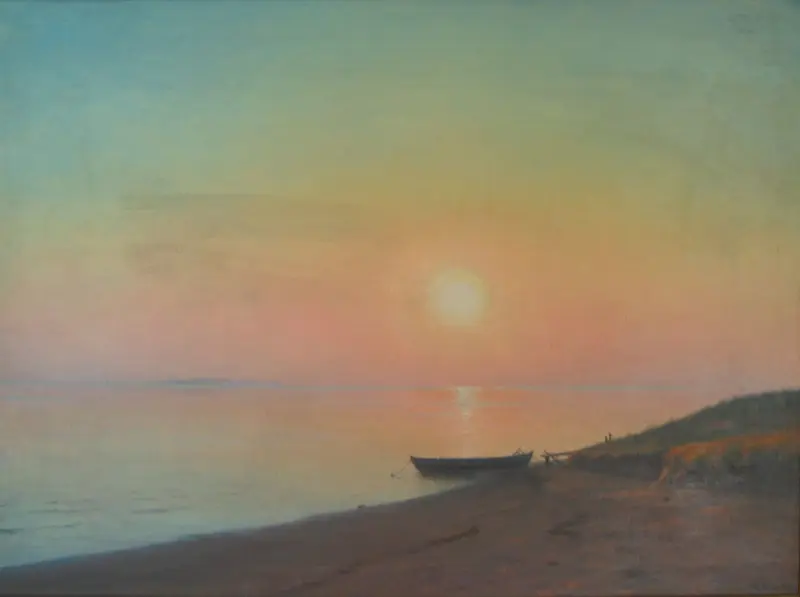
Morning at the Sound with the Swedish island of Ven in the distance.
Albert Edvard Wang
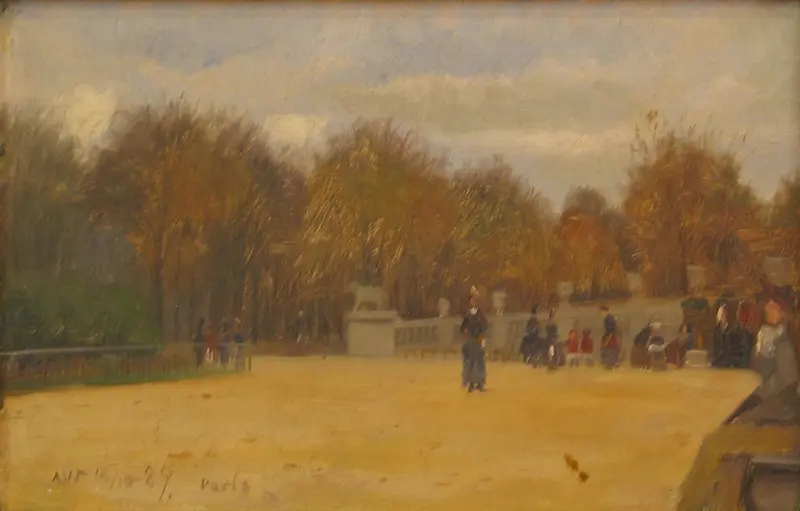
Scene from Paris.
Albert Edvard Wang
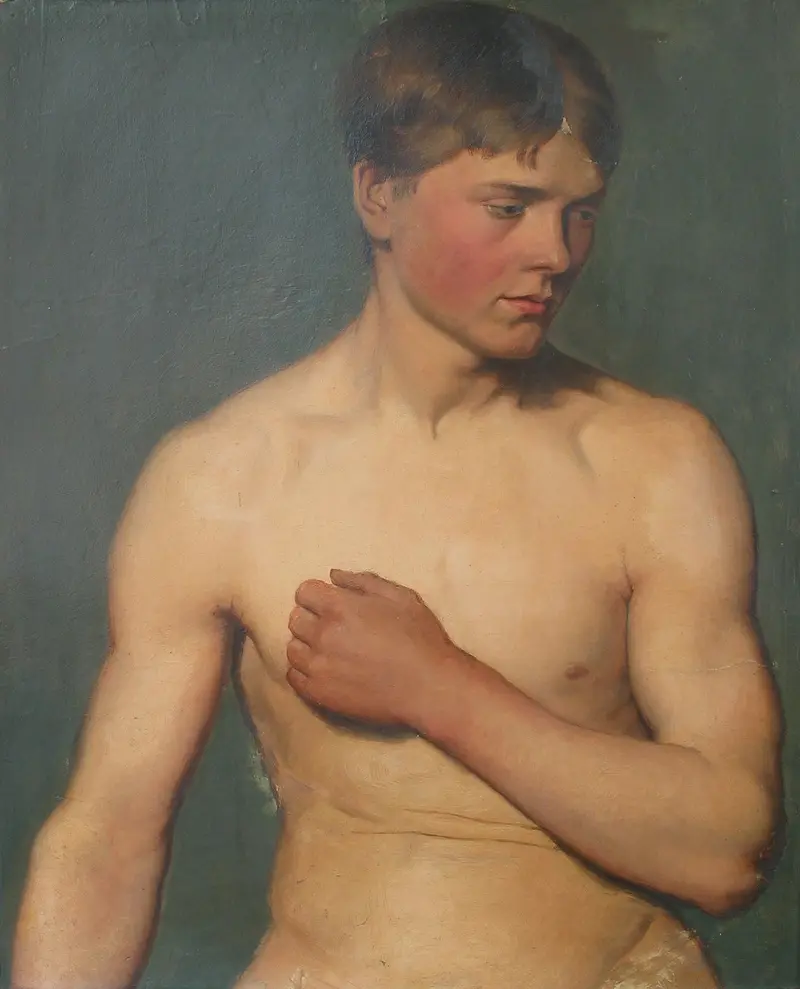
Study of a young man.
Albert Edvard Wang
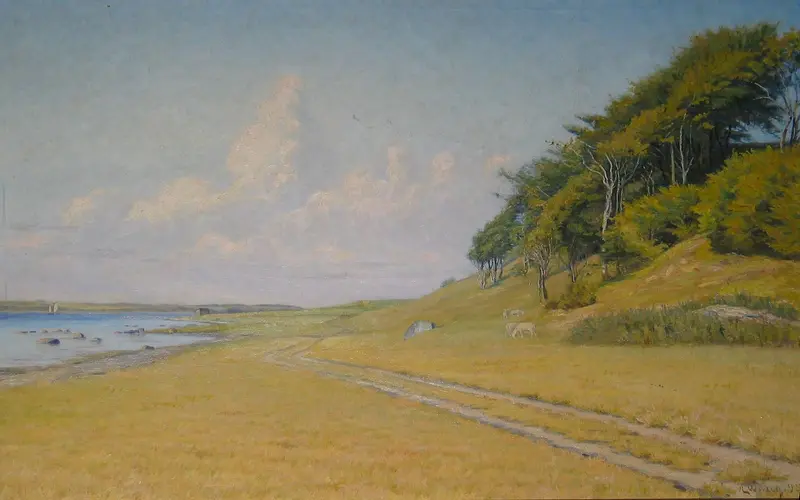
View at Mariager Fjord. Denmark.
Albert Edvard Wang
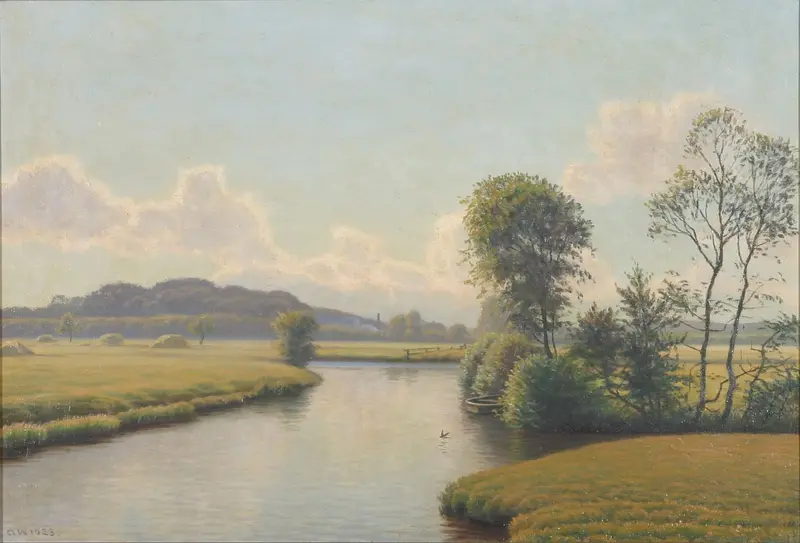
Landscape.
Albert Edvard Wang
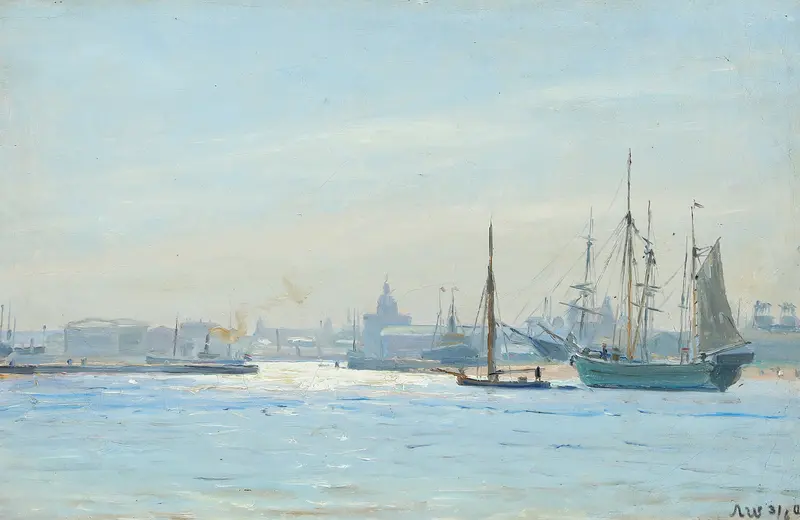
Indsejlingen til Københavns Havn
Albert Edvard Wang
More Landscape Art

The Starry Night
Vincent van Gogh

View of Delft
Johannes Vermeer

Water Lilies
Claude Monet

The Grand Canal, Venice, looking north-west from the Ca' Corner to the Ca' Contarini degli Scrigni, with the campanile of Santa Maria della Carità
Canaletto

Windsor Castle
Canaletto

The Grand Canal looking North-East from the Palazzo Dolfin-Manin to the Rialto Bridge
Canaletto