Abendstimmung an der dänischen Küste — History & Facts
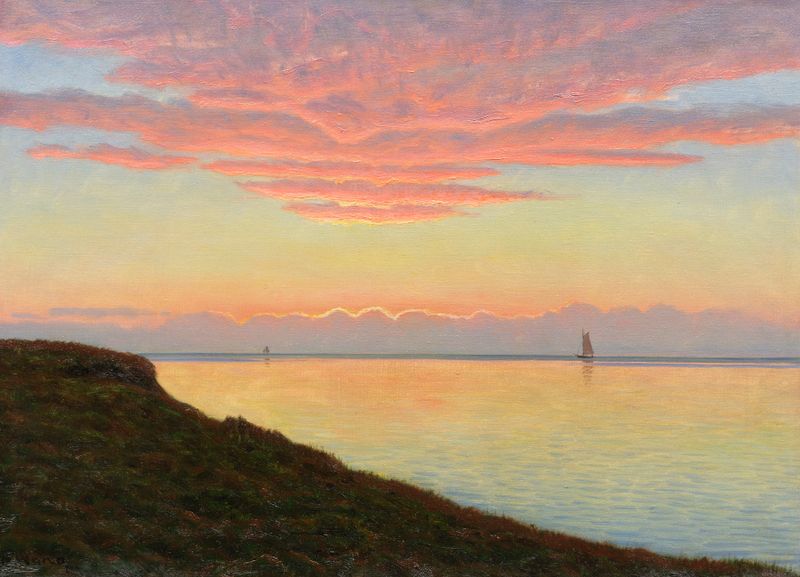
Did the painter know this moment would outlive them? As the sun dips below the horizon, its soft embrace of color transforms the landscape, capturing an ephemeral beauty that transcends time. Focus on the interplay of colors that dominate the canvas. The warm hues of oranges and pinks intermingle with the cooler blues and greens of the sea, creating a striking contrast that draws the eye. Look to the left, where the gentle waves kiss the shoreline; the brushstrokes are fluid and rhythmic, evoking a sense of calm.
Notice the long shadows cast by the distant cliffs, accentuating the depth and richness of the scene while inviting contemplation. Within this tranquil moment lies a tension between tranquility and transience. The fading light symbolizes the inevitable passage of time, a reminder of both life's beauty and its fleeting nature. The artist’s careful balance of saturation and softness conveys an emotional depth, inviting viewers to reflect on their own experiences of quiet sunset moments.
Here, nature’s majesty juxtaposes the ephemeral, suggesting that even the most ordinary scenes harbor profound significance. In 1920, Wang painted this piece amidst a post-war Europe, where artists were exploring new expressions and techniques. Living in Denmark, he was influenced by the natural beauty around him, at a time when the world was seeking solace in art after the turmoil of conflict. This painting, with its serene yet vibrant colors, captures a pivotal moment in both Wang’s own life and the broader narrative of artistic evolution.