A Tug Leaving the Port of Ostend — History & Analysis
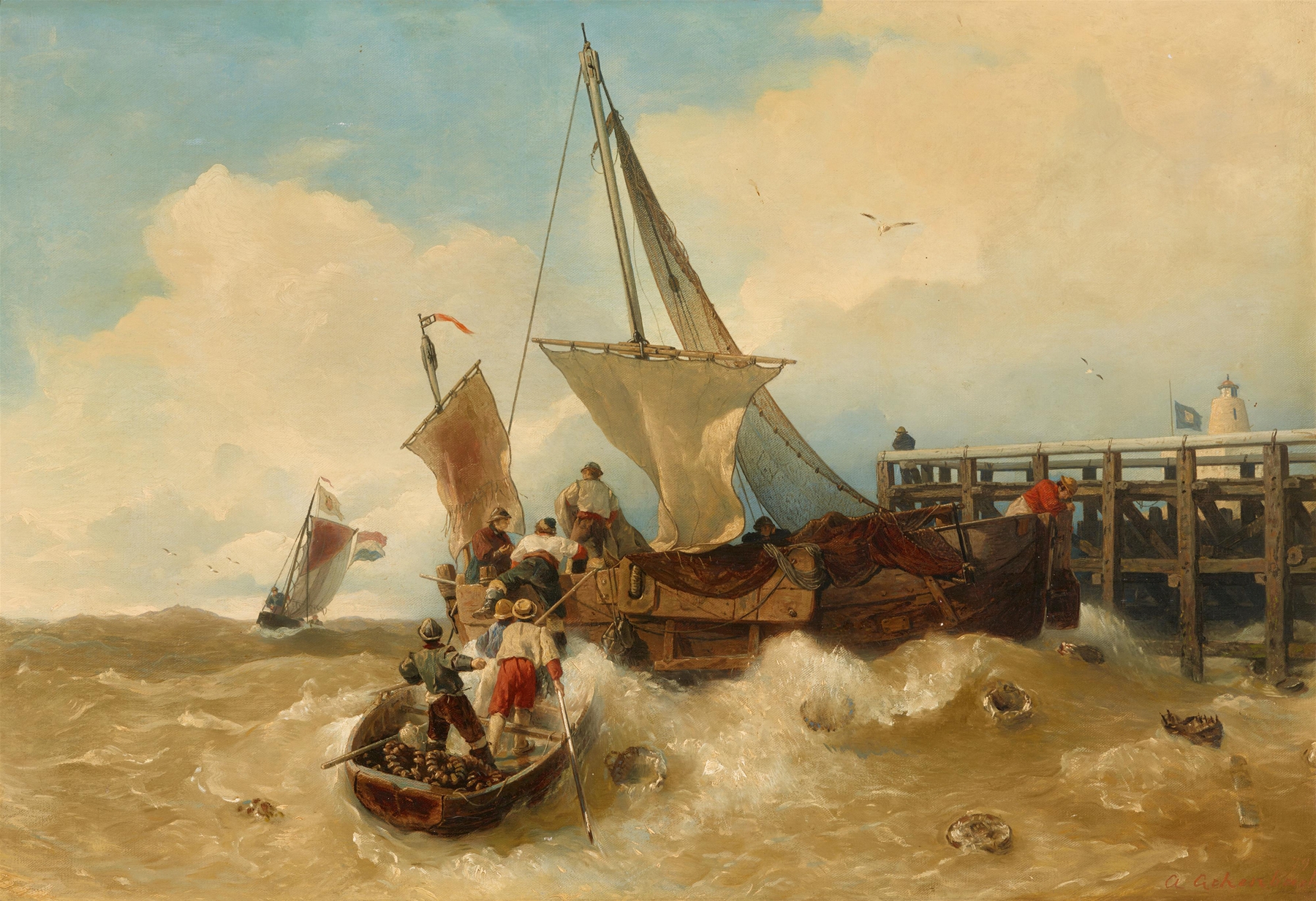
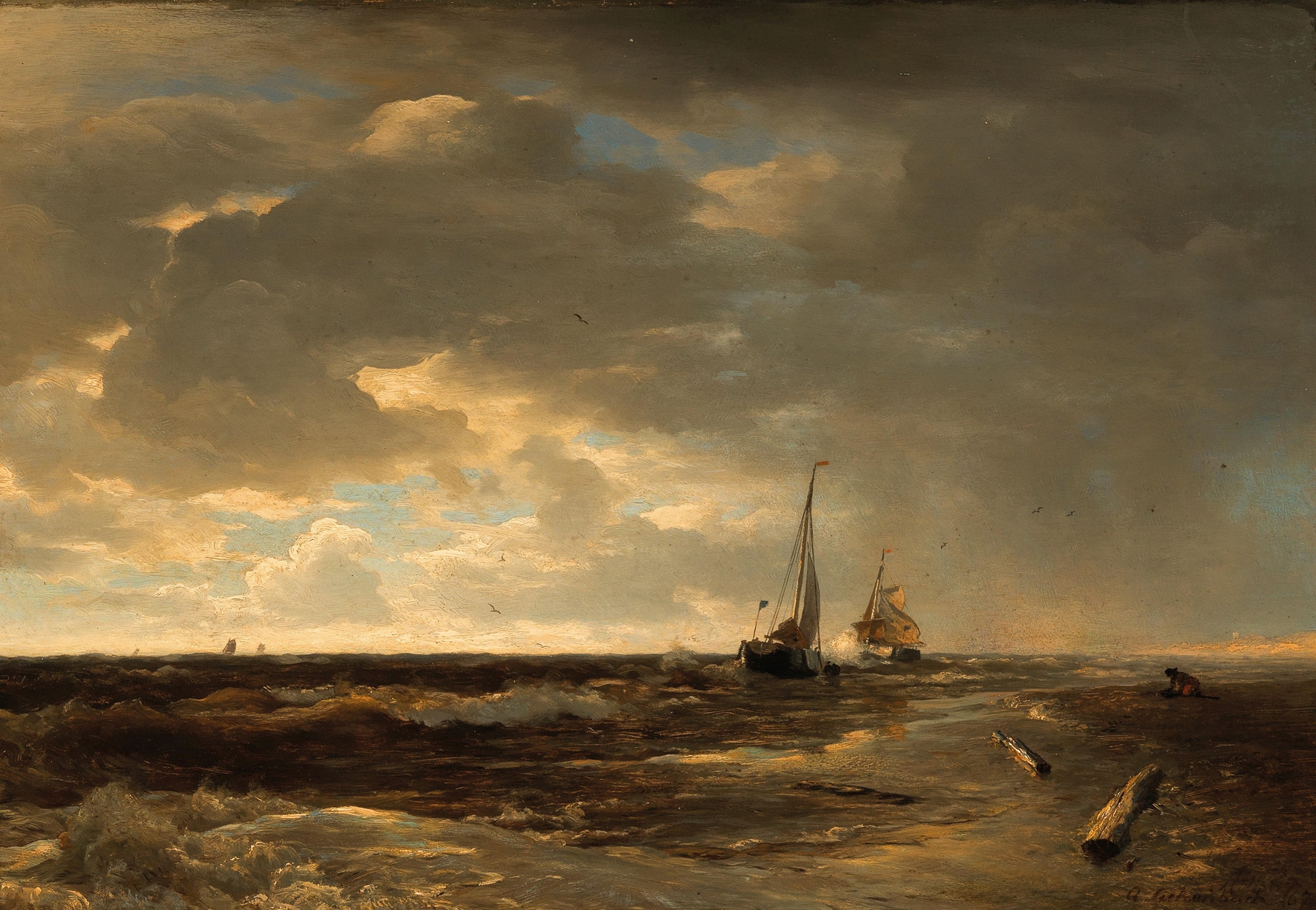
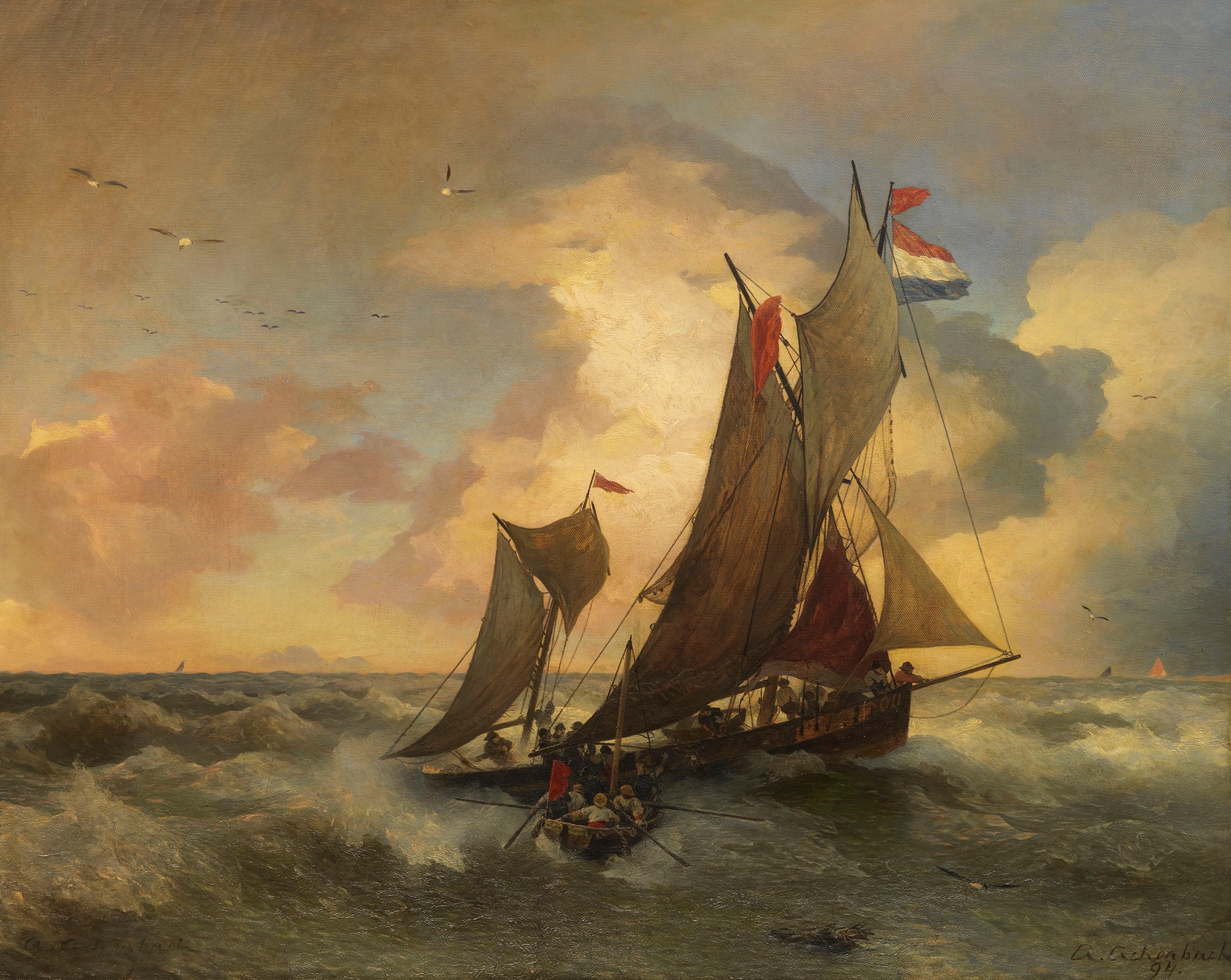
Can beauty exist without sorrow? In the delicate balance of light and shadow, where solitude often whispers the loudest, A Tug Leaving the Port of Ostend invites the viewer into a poignant contemplation of loneliness amidst grandeur. Look to the center of the canvas, where the tugboat strains against the waves, its powerful silhouette stark against the fading daylight. The horizon blushes with the soft hues of twilight, enveloping the scene in a melancholic embrace.
Notice how the ripples of the water capture glimmers of golden light, reflecting not just the sun's descent but also an emotional weight that seems to linger in the air, almost palpable. Achenbach’s meticulous brushwork reveals textures that breathe life into the scene, while the composition draws the eye toward the vanishing point, suggesting an inevitable journey into the unknown. The tug's sturdy form contrasts sharply with the expansive, empty sea, symbolizing the human struggle against nature's vastness and the isolation that accompanies ambition. The muted palette evokes a sense of nostalgia, inviting viewers to reflect on the moments when beauty and sorrow coexist, reminding us that solitude can be both a refuge and a burden.
Each detail, from the waving flags to the distant horizon, intertwines to express a deeper narrative of longing and the bittersweet nature of departure. Created in 1878, this piece emerged during a period of introspection for Andreas Achenbach, who was exploring themes of nature's majesty and human vulnerability. Living in Düsseldorf, he witnessed dramatic shifts in the art world, as Romanticism gave way to new movements, yet he remained steadfast in his dedication to capturing the emotional resonance of landscapes. This work reflects not only his technical skill but also his profound understanding of the complexities of human experience.