Norwegische Wassermühle — History & Analysis
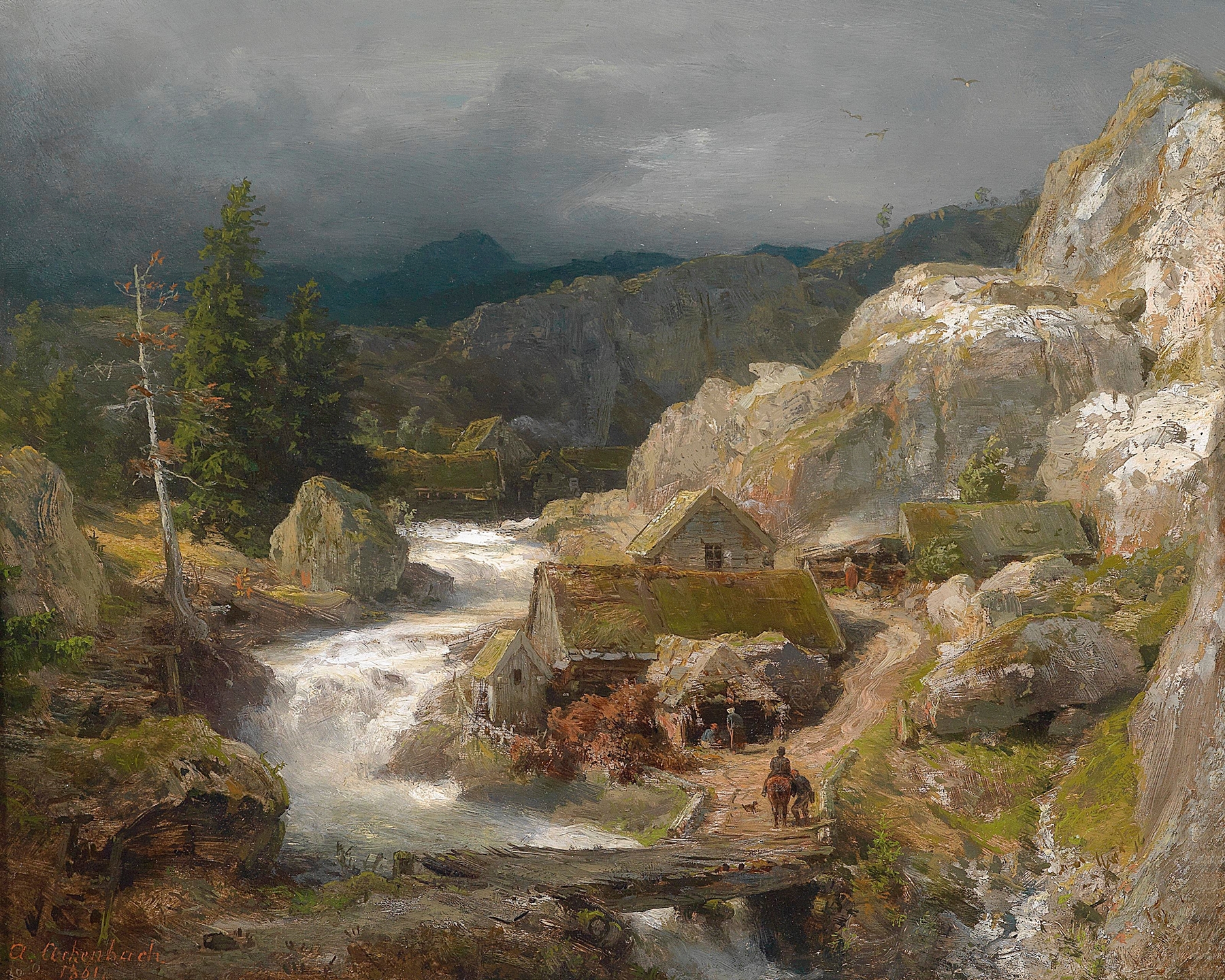
“Every silence here is a confession.” In the tranquil embrace of nature, stillness carries the weight of creation, inviting reflection and reverence. Look to the foreground of the painting, where a quaint watermill stands resolute against the backdrop of a rugged Norwegian landscape. The gentle cascade of water is captured with meticulous detail, each droplet sparkling as it catches the light. Notice how the artist employs a palette of earthy tones, harmonizing the mill’s wooden structure with the surrounding foliage, while the soft blue of the sky hints at a fleeting dusk, suggesting both peace and transience.
Delve into the contrasts present in the artwork: the juxtaposition of human craftsmanship against the wild, untamed beauty of nature speaks to the resilience of both man and environment. The watermill, an emblem of industriousness, stands in serene dialogue with the vibrant wilderness, its presence a reminder of the delicate balance between creation and the natural world. The shadows cast by the setting sun evoke a sense of nostalgia, encouraging viewers to ponder the passage of time and the legacies we leave behind.
Andreas Achenbach painted this piece in 1878 during a pivotal moment in his career, while he was deeply engaged in the Romantic movement. Residing in Düsseldorf, he sought to capture the majestic beauty of landscapes, influenced by the ideals of a changing Europe. This period was marked by a burgeoning appreciation for nature, as well as a desire to convey emotional depth through the natural world, a sentiment that resonates profoundly within this artwork.