
A View of Fez — History & Facts
In every brushstroke lies a yearning, an expression of desire that transcends mere observation. It is an invitation to explore the depths of human experience, evoking a sense of longing for places unseen and moments unspoken. Focus on the vibrant hues that fill the canvas, particularly the warm ochres and deep blues that draw the eye toward the horizon. Notice how the buildings of Fez, with their intricate architecture, rise majestically against the expansive sky.
The varied brushwork creates a sense of texture, inviting viewers to imagine the coolness of the stones and the warmth of the sun. The composition, with its balanced distribution of shapes and colors, guides your gaze through the lively scene, establishing a rhythm that mirrors the pulse of the city. Delve into the contrasts within the painting: the bustling life symbolized by the arcades and market spaces juxtaposed against the calm of the distant hills. This duality speaks to the artist’s own internal conflicts and aspirations.
Each figure, whether a solitary passerby or a group animatedly conversing, embodies the collective desire of the people to connect, to thrive amid the vibrant culture of their surroundings. In 1919, as Lavery painted this work, he was living in London, reflecting on his travels and the shifting landscapes of Europe post-World War I. The art world was moving towards modernism, yet he remained deeply rooted in a love for impressionistic detail. This period marked a time of personal growth and exploration for the artist, allowing him to blend his desire for authenticity with the evolving artistic expressions of his time.
More Artworks by Sir John Lavery
Browse all →
On The Sands
Sir John Lavery

The Beach, Tangier
Sir John Lavery

Evening, The Bay Of Tunis
Sir John Lavery

Tangier bay at night
Sir John Lavery
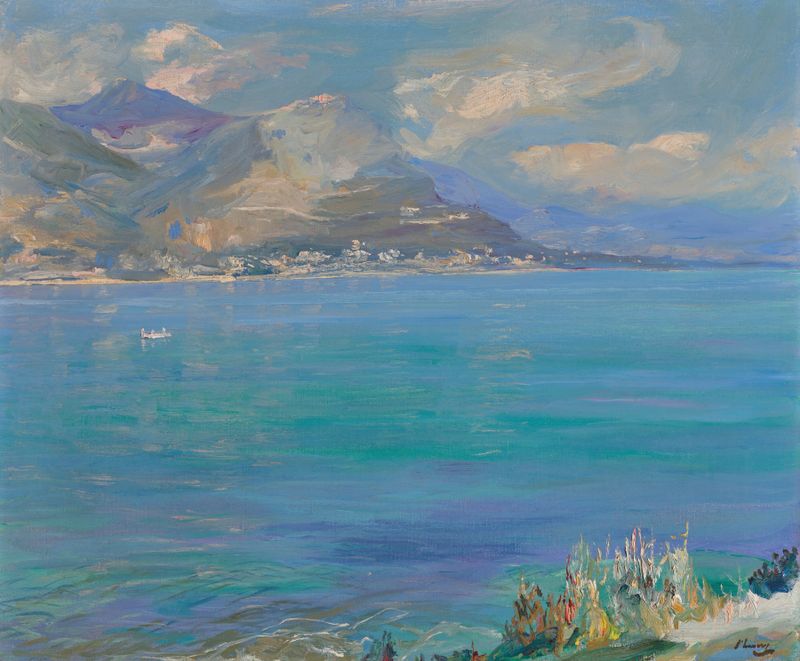
Beaulieu
Sir John Lavery
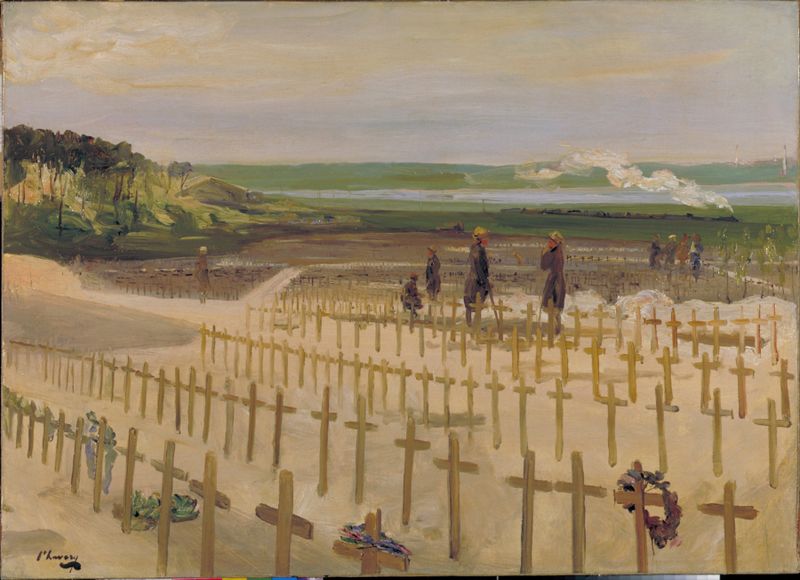
The Cemetery, Etaples, 1919
Sir John Lavery
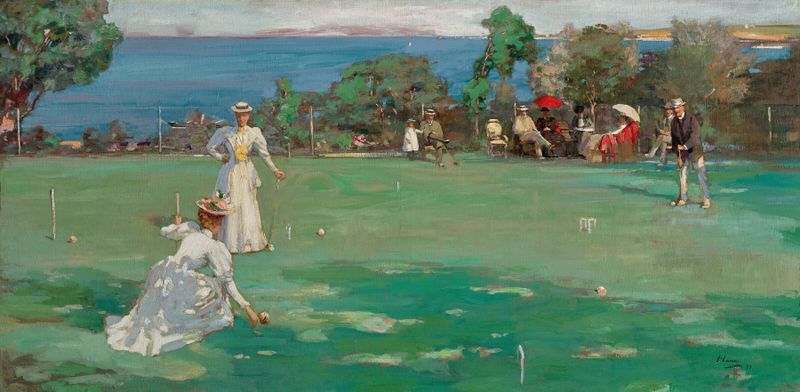
The Croquet Party
Sir John Lavery
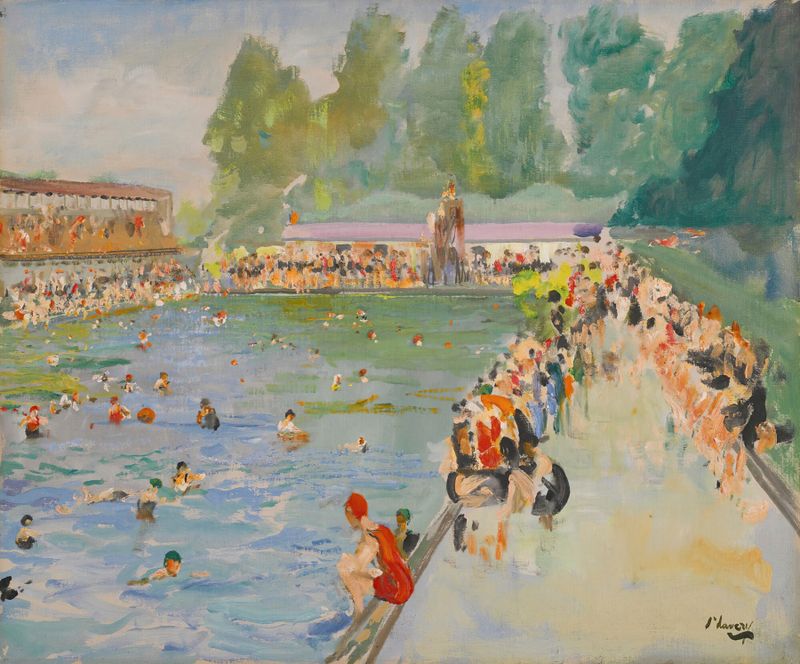
Chiswick Baths
Sir John Lavery

Hounslow
Sir John Lavery

The Little White Boats, Cap Ferrat
Sir John Lavery





