
Evening, The Bay Of Tunis — History & Facts
In the gentle embrace of twilight, the world rests on the cusp of transformation. The fading sunlight caresses the horizon, hinting at both the end of day and the promise of rebirth that night brings. Here, in this serene moment, we are reminded that beauty often emerges just as light begins to wane. Look to the left at the soft, shifting colors of the sky, where delicate pinks and golds blend seamlessly into the deeper blues of the evening.
The bay reflects this palette, a shimmering mirror that captures the last glimmers of daylight. Each brushstroke waves like a whisper, inviting you to venture closer to the horizon, where boats rest quietly, their outlines softened by dusk. Lavery’s use of light not only defines the scene but also elicits an emotional response, evoking a sense of calm and anticipation. In this artwork, contrasts unfold — the peaceful stillness of the water juxtaposed with the dynamic energy of the clouds overhead.
The boats, seemingly anchored in time, symbolize tranquility amidst the impending night. One could interpret this scene as a metaphor for transition, a reminder that endings are merely beginnings cloaked in darkness. The tender interplay between light and shadow mirrors life's cyclical nature, urging viewers to embrace change as part of existence. Created in 1919, this piece reflects Sir John Lavery’s growing reputation as a master of light and atmosphere, developed during his time in London and his frequent travels to Tunisia.
After World War I, the world was seeking solace, and artists turned to nature for inspiration and healing. Lavery’s exploration of color and light captures a moment of peace, reflective of a society striving for renewal in the aftermath of chaos.
More Artworks by Sir John Lavery
Browse all →
On The Sands
Sir John Lavery

The Beach, Tangier
Sir John Lavery

Tangier bay at night
Sir John Lavery
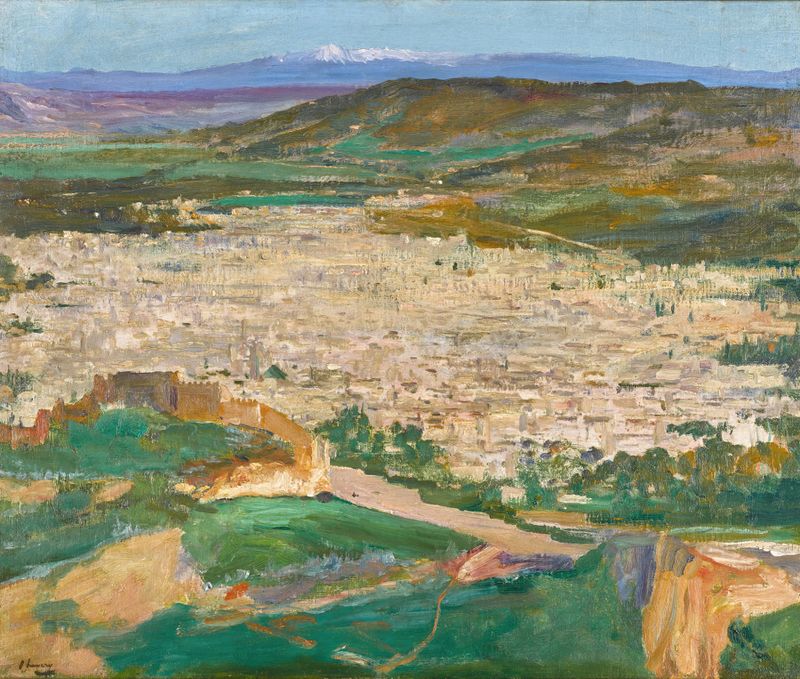
A View of Fez
Sir John Lavery
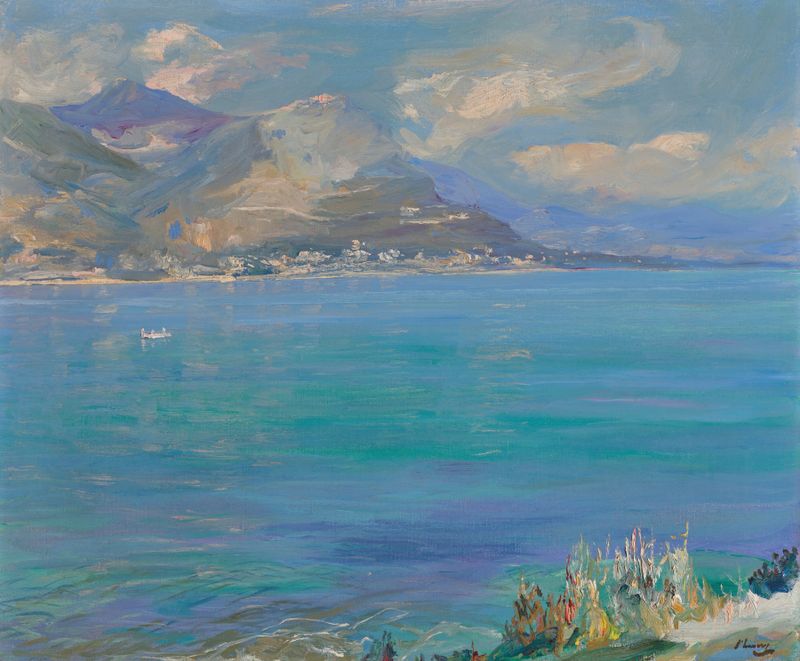
Beaulieu
Sir John Lavery
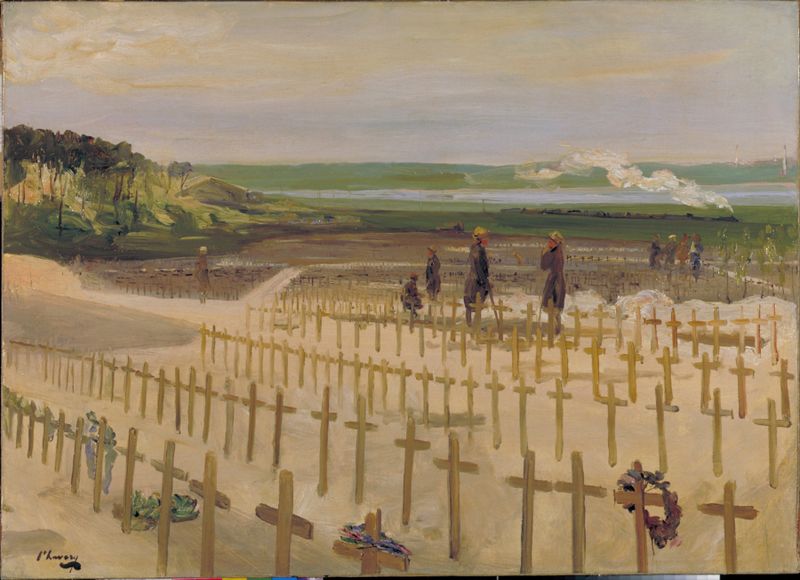
The Cemetery, Etaples, 1919
Sir John Lavery
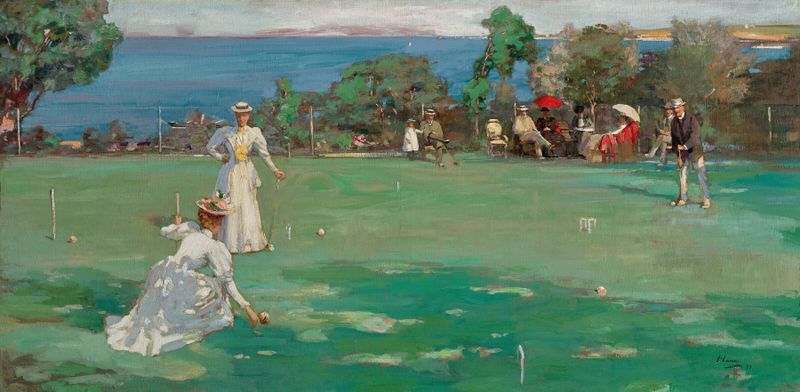
The Croquet Party
Sir John Lavery
Chiswick Baths
Sir John Lavery

Hounslow
Sir John Lavery

The Little White Boats, Cap Ferrat
Sir John Lavery





