
A village by the river — History & Facts
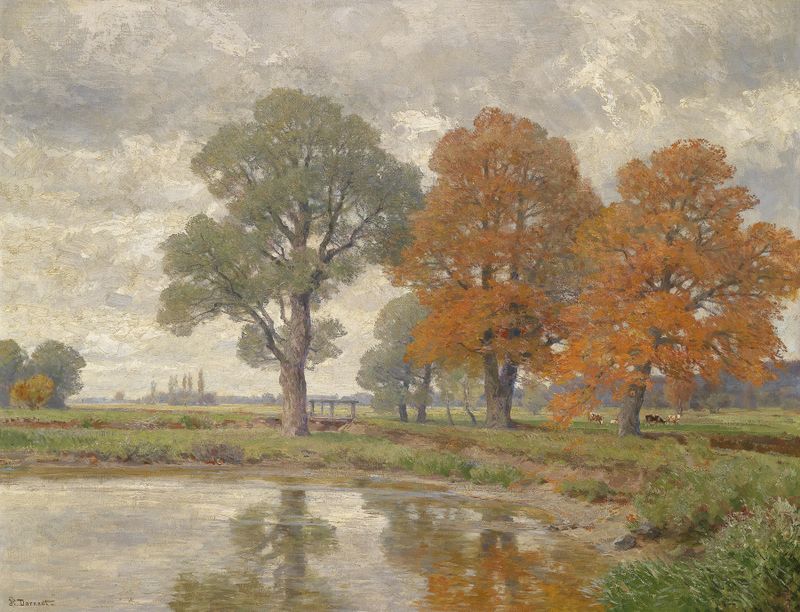
In the quiet yearning echoed within the strokes of paint, one finds the essence of longing captured in a single moment. Focus on the elegant curves of the river that bisects the village, leading your eye toward the soft horizon. Notice the gentle blending of greens and browns that envelop the rustic homes, creating a harmonious balance with the tranquil water. The brushwork feels alive, as if each stroke breathes the whispers of the villagers who once roamed these banks, their stories intertwining with the landscape. As you delve deeper, consider the interplay of light and shadow that dances across the canvas.
The soft, diffused sunlight hints at a time of day filled with reflection, evoking a sense of nostalgia and unfulfilled dreams. The stillness of the river contrasts with the implied movement of life within the village, suggesting a tension between reality and aspiration, a longing for connections that echo beyond the visible. In creating this work, Hugo Darnaut remained largely obscure, painting during a time when the Impressionists were redefining the boundaries of art. Though the exact date is unknown, it’s believed he worked on this piece in the late 19th to early 20th century, a period marked by a yearning for tranquility and simplicity amidst the rapid changes of modern life.
His exploration of landscape art reflects a deep emotional connection to place, transcending mere representation to evoke deeper sentiments of belonging and loss.
More Artworks by Hugo Darnaut
Browse all →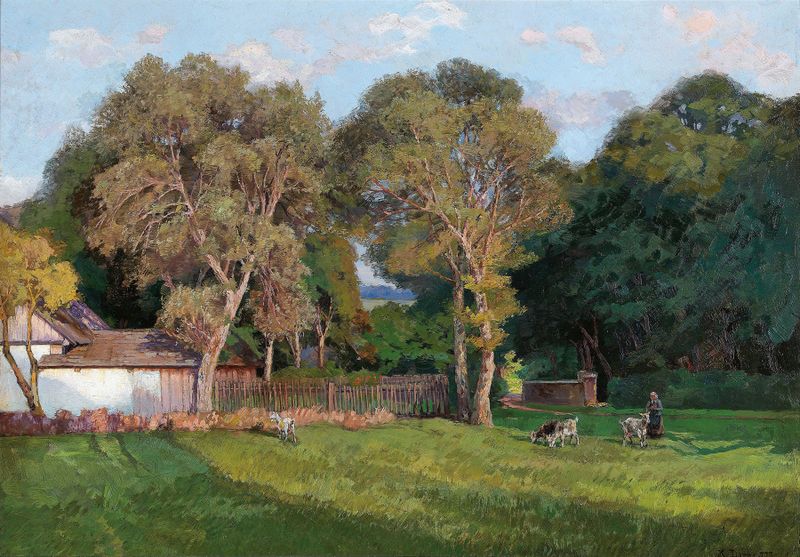
Aus dem Wienerwald
Hugo Darnaut
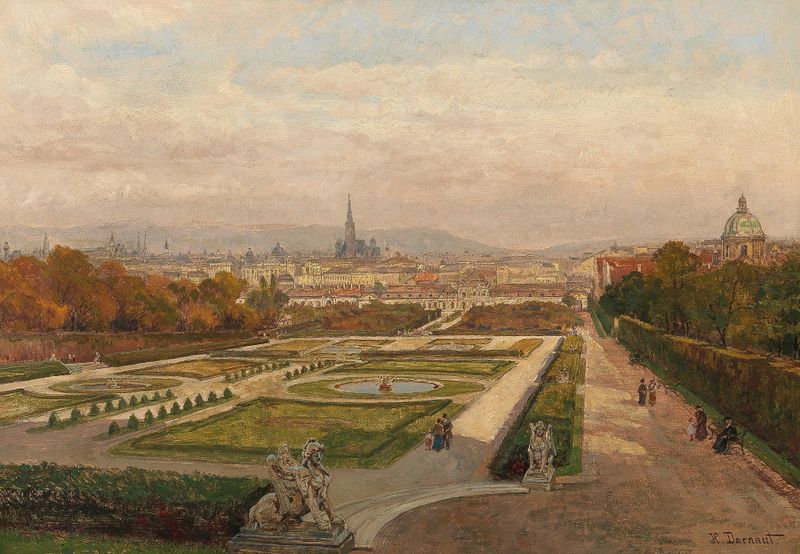
Blick vom Belvedere auf Wien
Hugo Darnaut

Motiv aus Plankenberg
Hugo Darnaut

In einem Wiener Garten (II., Praterstraße 60)
Hugo Darnaut

A Scene at Dusk in Late Autumn
Hugo Darnaut
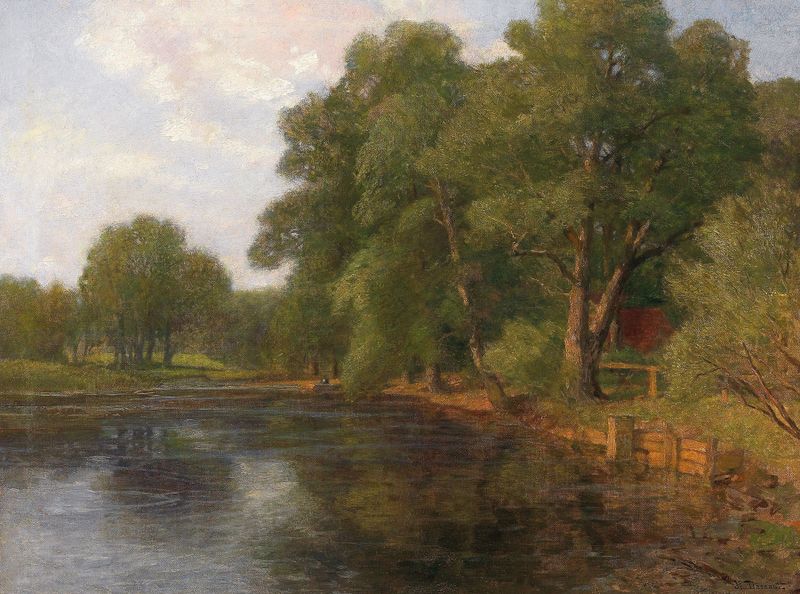
Motiv bei Plankenberg
Hugo Darnaut

Die Ruine Starhemberg im Piestingtal
Hugo Darnaut
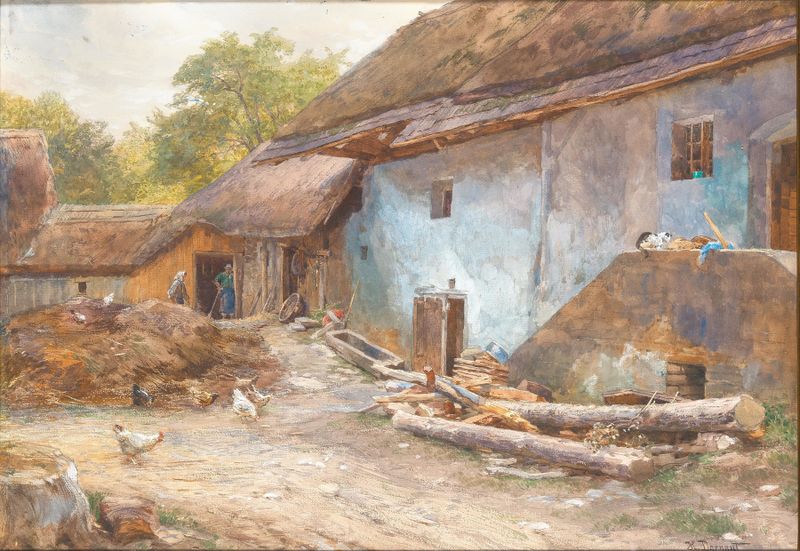
Niederösterreichischer Bauernhof
Hugo Darnaut

River Landscape with Small Herd of Cows and a Village in the background
Hugo Darnaut
Spätherbsttag
Hugo Darnaut





