
A Village Market Beside A Church — History & Facts
Can paint confess what words never could? In A Village Market Beside A Church, the stillness of a quaint gathering breathes life into a dreamlike reverie where reality mingles with the ethereal. Look to the left at the vibrant stalls brimming with fruits and vegetables, their colors singing against the soft earth tones of the surroundings. Notice how the gentle light spills from the sky, casting elongated shadows that dance across the cobblestones, leading the viewer’s eye toward the church, which stands solid and timeless in the background. The arrangement of figures — a blend of bustling vendors and leisurely patrons — creates a rhythm that pulses throughout the scene, inviting a sense of community within the stillness. Yet beneath this picturesque veneer lies a tension between the sacred and the mundane.
The church, a symbol of permanence, contrasts with the transient nature of the market, where goods exchange hands and lives intertwine momentarily. The expressions of the people, caught in laughter or contemplation, hint at stories untold — each face a canvas of dreams and aspirations. The gentle juxtaposition of the material and spiritual suggests a harmony that resonates deeply, elevating the moment from mere observation to a poignant meditation on life itself. Barent Gael painted this work during a time when Dutch genre scenes were gaining popularity, showcasing daily life infused with emotional depth.
The exact date remains unknown, but this piece likely reflects the artist's exploration of ordinary moments elevated to art, during a period of blossoming creativity in the 17th century. Gael’s works often reveal an intimate connection with the world around him, capturing not just what was seen, but also what was felt.
More Artworks by Barent Gael
Browse all →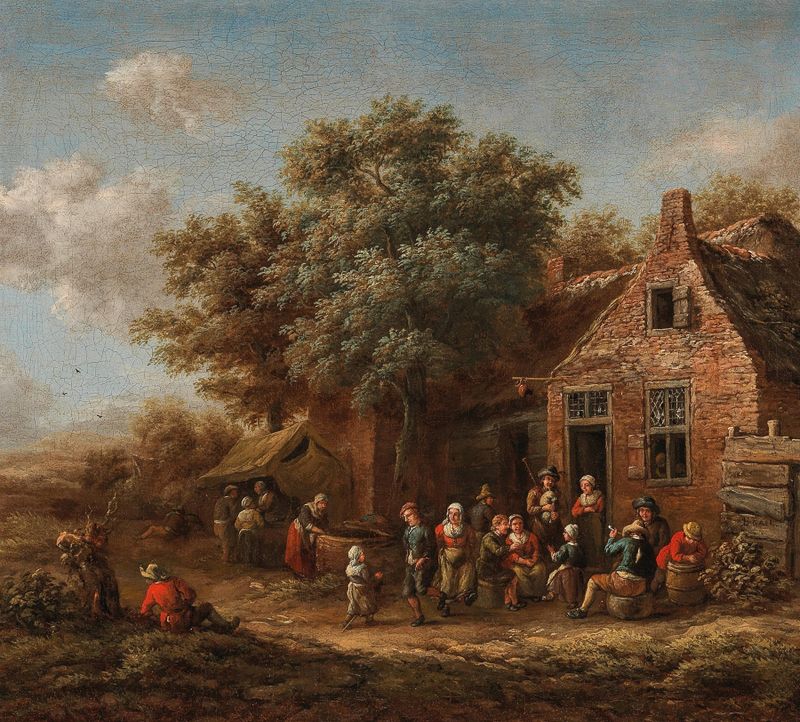
A merry company in front of a village inn
Barent Gael
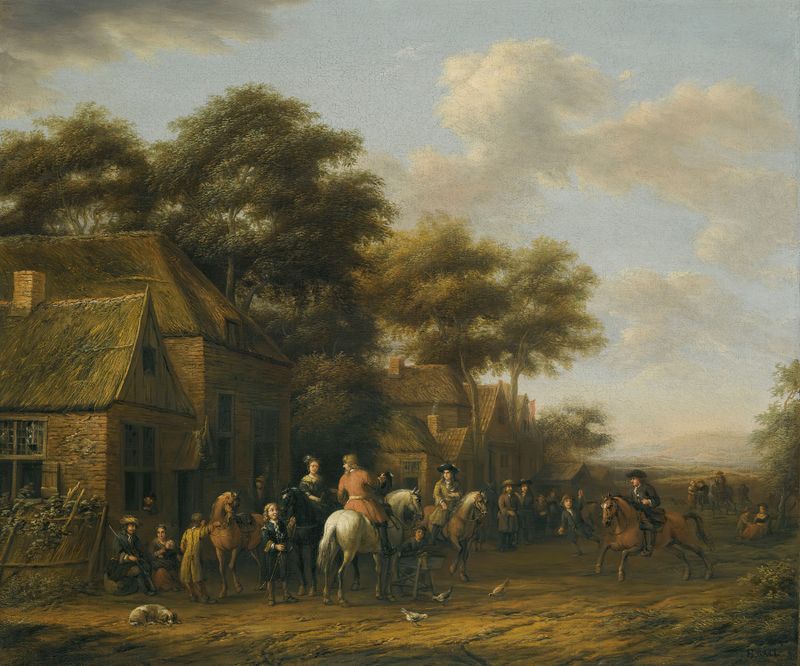
Village Scene With Numerous Figures, Horses And Chickens
Barent Gael
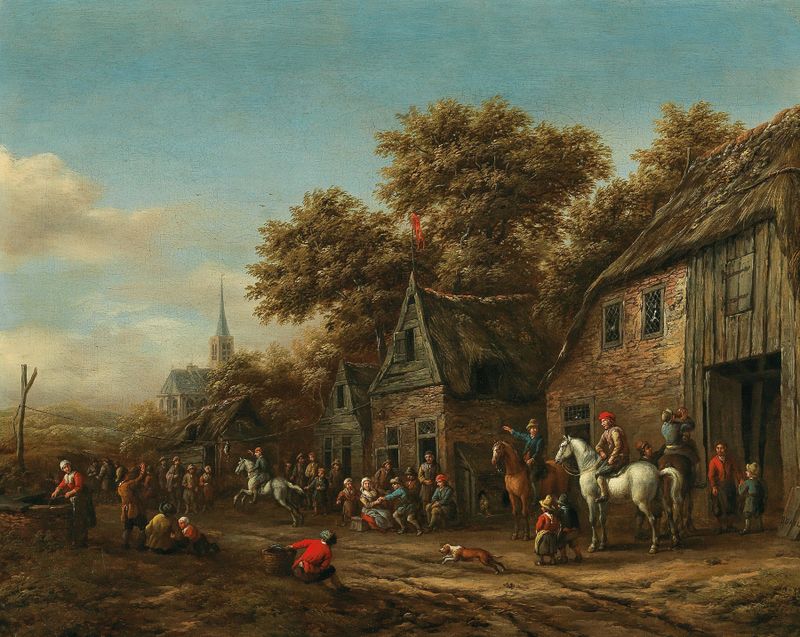
Figures on a road on the outskirts of a town
Barent Gael
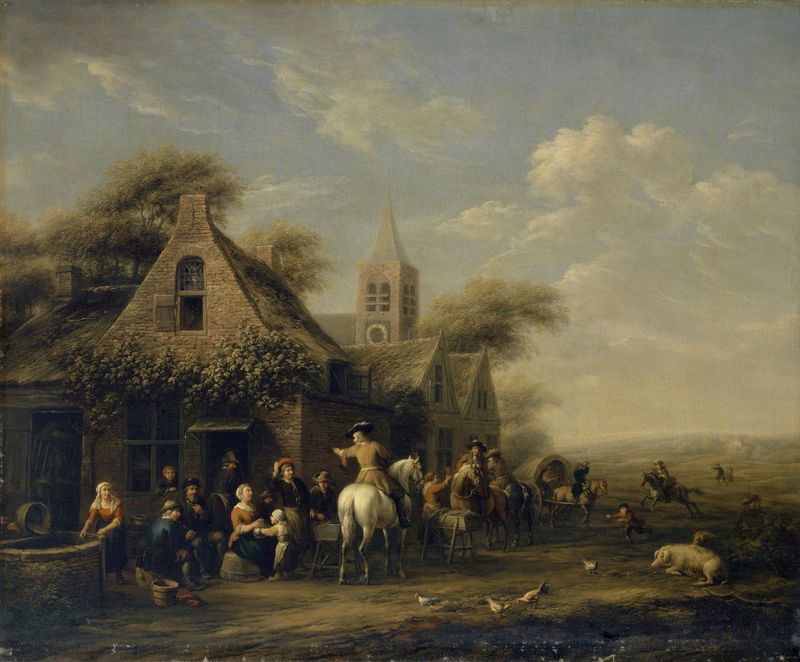
Stop in front of an Inn
Barent Gael
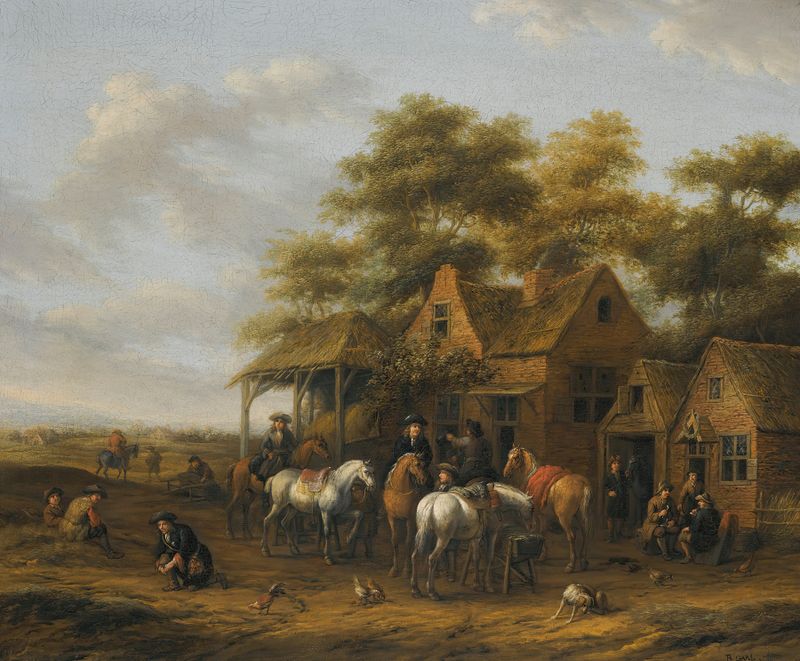
Village Scene With Numerous Figures, Horses And Chickens
Barent Gael
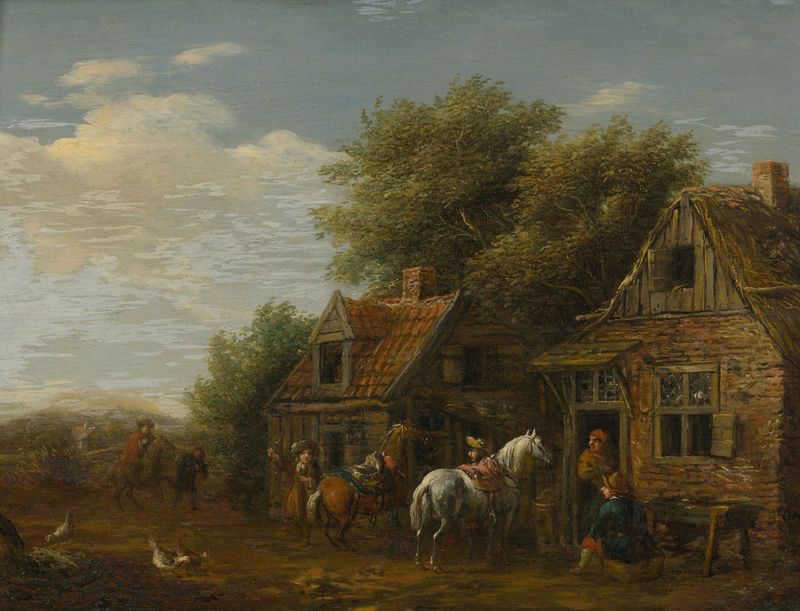
Riders In A Village
Barent Gael





