Village Scene With Numerous Figures, Horses And Chickens — History & Facts
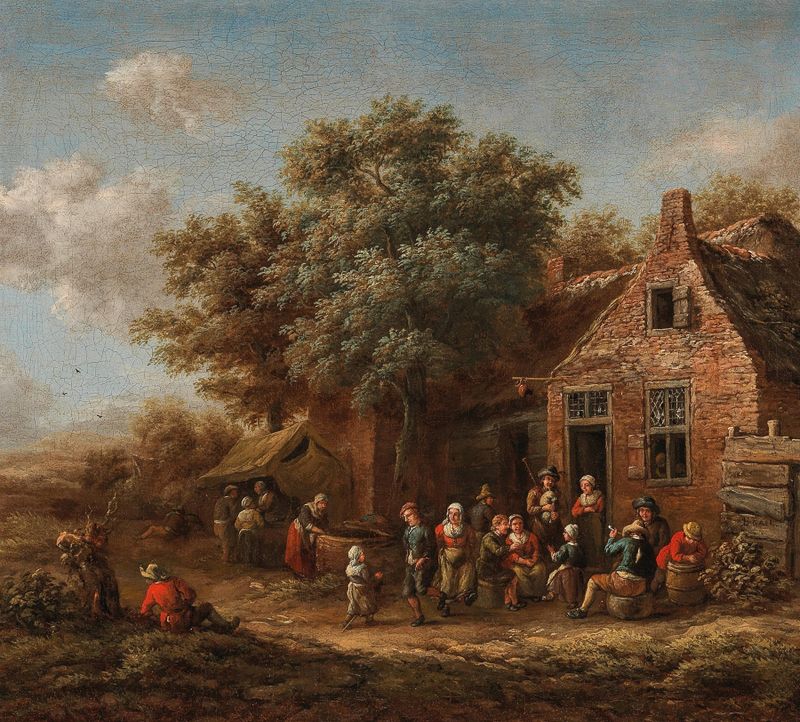
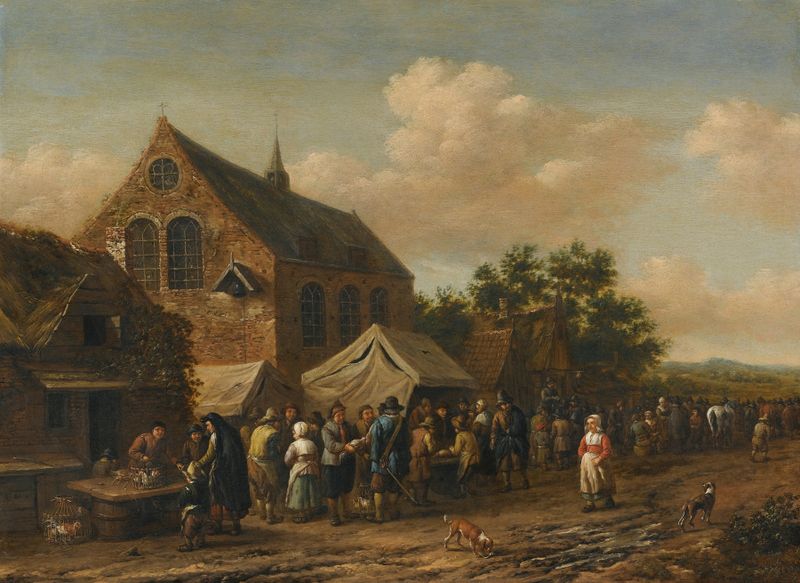
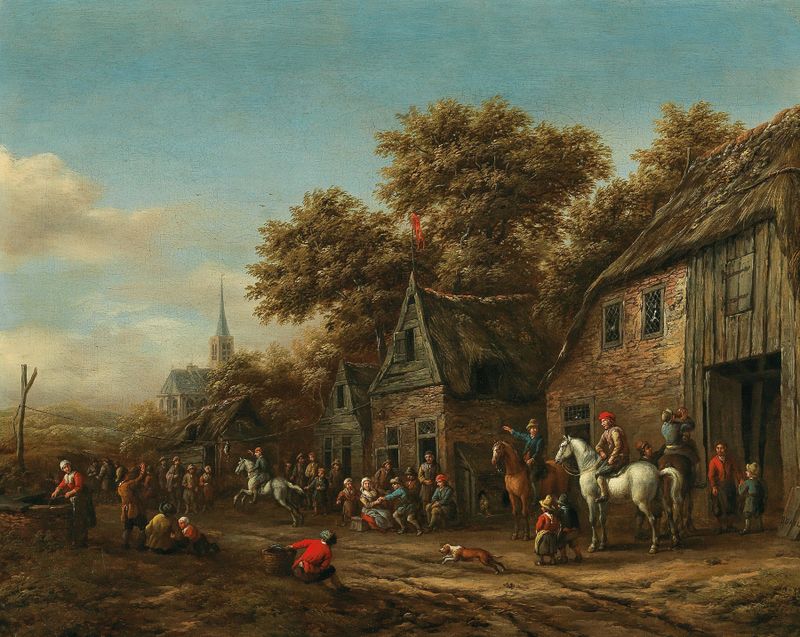
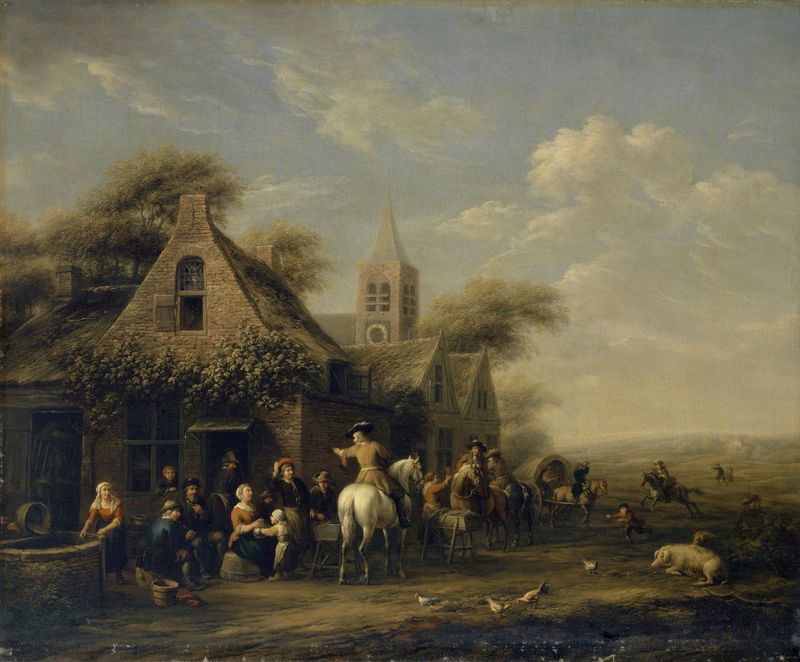
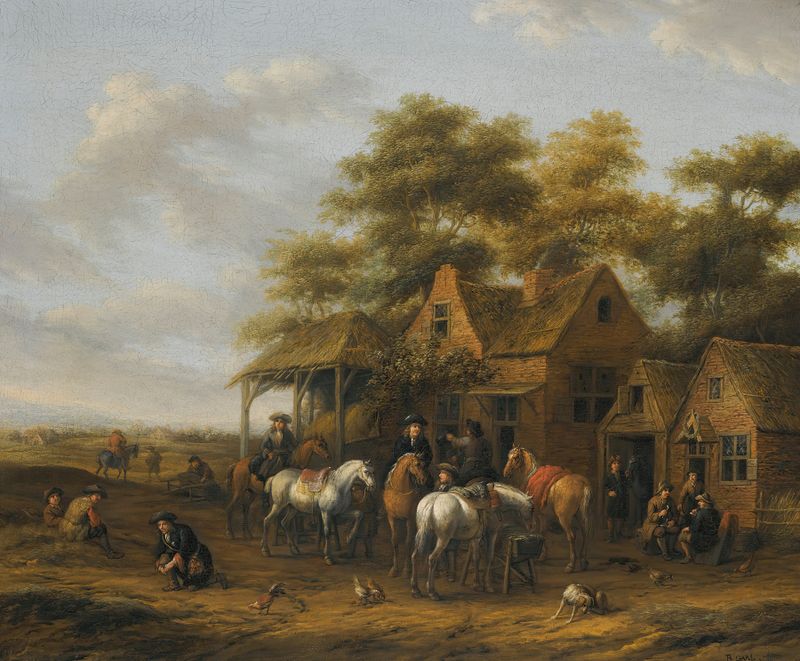
Is this a mirror — or a memory? Within the painter's canvas lies a vivid tapestry of life, woven from the threads of ordinary moments turned extraordinary through the lens of art. Each figure, each animal, and each brushstroke beckons the viewer to explore the beauty of communal existence, where the mundane transforms into the magical. Look to the left, where a cluster of figures huddles together, their gestures animated. Notice how the use of warm earth tones brings a sense of familiarity, as if the viewer is peering into a sunlit afternoon in a quaint village.
The artist's attention to detail is striking — observe the intricate patterns on the chickens’ feathers and the play of shadows cast by the horses, grounding this scene in a palpable reality. The composition flows seamlessly, guiding your gaze across the canvas, revealing the interconnections between people, animals, and the landscape. Yet, beneath the surface lies a deeper layer of meaning. The figures, busy in their daily tasks, reflect a harmony that contrasts sharply with the chaotic world outside their village.
Each character personifies a moment frozen in time, conveying the beauty and fragility of rural life. The juxtaposition of stillness among the lively activity speaks volumes about the shared experiences of joy and toil, inviting contemplation on the nature of community and connection. Barent Gael created this work during a time when Dutch art was transitioning, caught between the old masters and emerging modern influences. Precise dates are elusive, yet this piece likely emerged in a period of exploration, mirroring the burgeoning interest in genre scenes that celebrated everyday life.
The artist’s commitment to realism and detail reflects both personal and artistic evolution, as he sought to capture not just a scene, but the essence of shared humanity.