
Stop in front of an Inn — History & Facts
Can paint confess what words never could? In Stop in front of an Inn, shadows weave a narrative of quiet contemplation, inviting our gaze into a world suspended in time. Look to the left at the inn's weathered façade, each brushstroke a testament to age and character. Notice how light dances across the scene, illuminating the figures as they pause, perhaps to share a fleeting moment of conversation or reflection. The warm, earthy palette grounds the composition, with subtle hints of gold and ochre that draw the eye toward the entrance, suggesting an invitation to enter not only the inn but a shared human experience. Beneath the surface lies a complex interplay of solitude and connection.
The shadows cast by the figures reveal their inner worlds—each silhouette holding stories left unsaid, spaces filled with both companionship and isolation. The architecture, sturdy yet soft in its portrayal, contrasts with the fleeting nature of the moment, capturing the essence of transient human encounters in a world that continues to move forward, regardless of our personal pauses. Barent Gael painted this work during a time when the Dutch Golden Age was thriving, around the late 17th century. As artists sought to capture the beauty of everyday life, Gael found himself amidst a flourishing art scene in the Netherlands, where urban life began to influence artistic expression.
This period marked a growing interest in genre paintings, allowing him to explore the intimate narratives within public spaces, revealing both the ordinary and the profound.
More Artworks by Barent Gael
Browse all →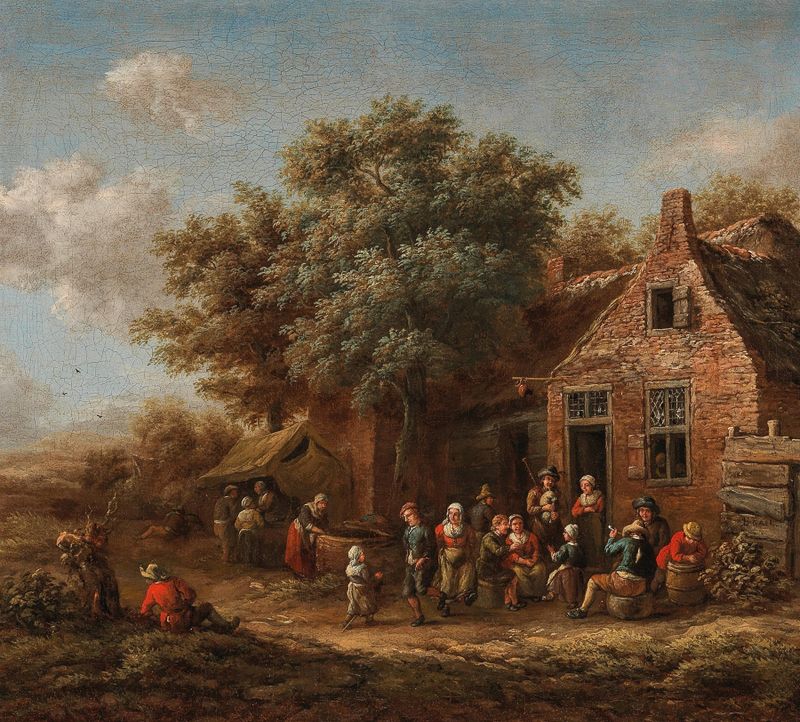
A merry company in front of a village inn
Barent Gael
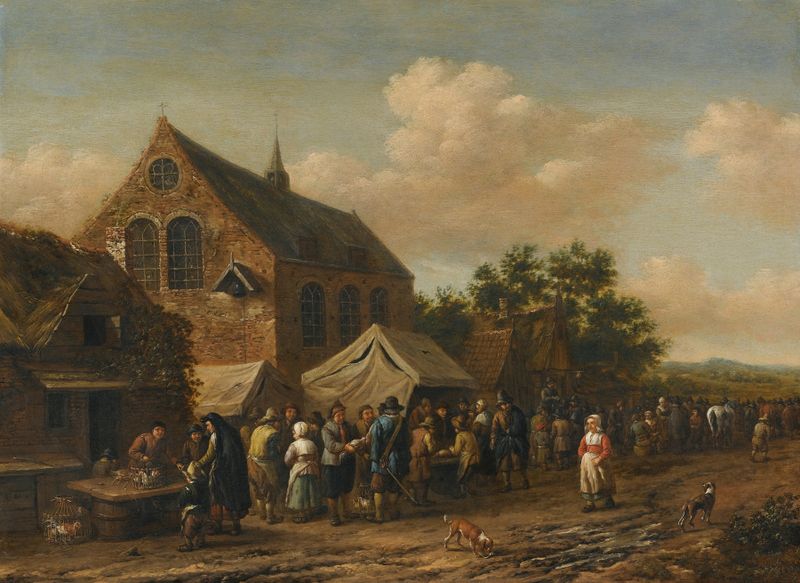
A Village Market Beside A Church
Barent Gael
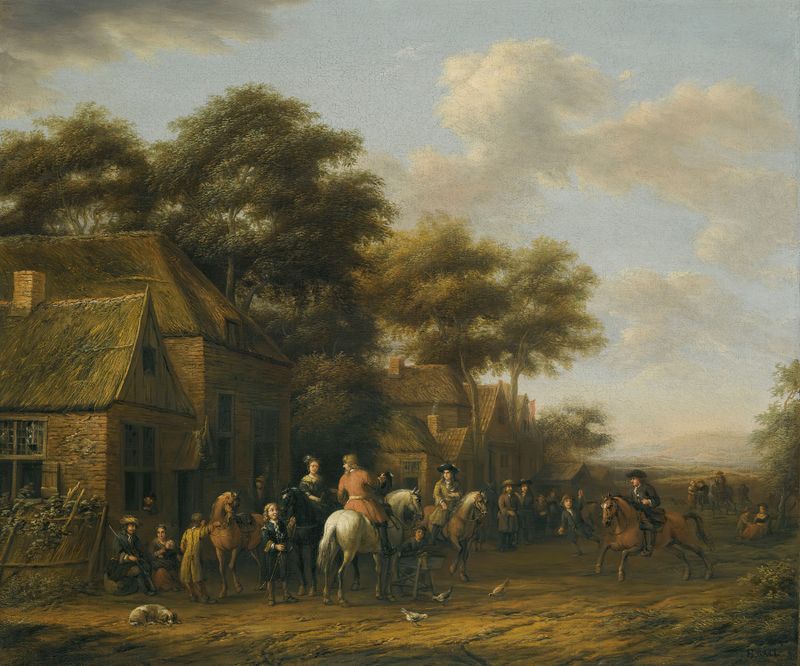
Village Scene With Numerous Figures, Horses And Chickens
Barent Gael
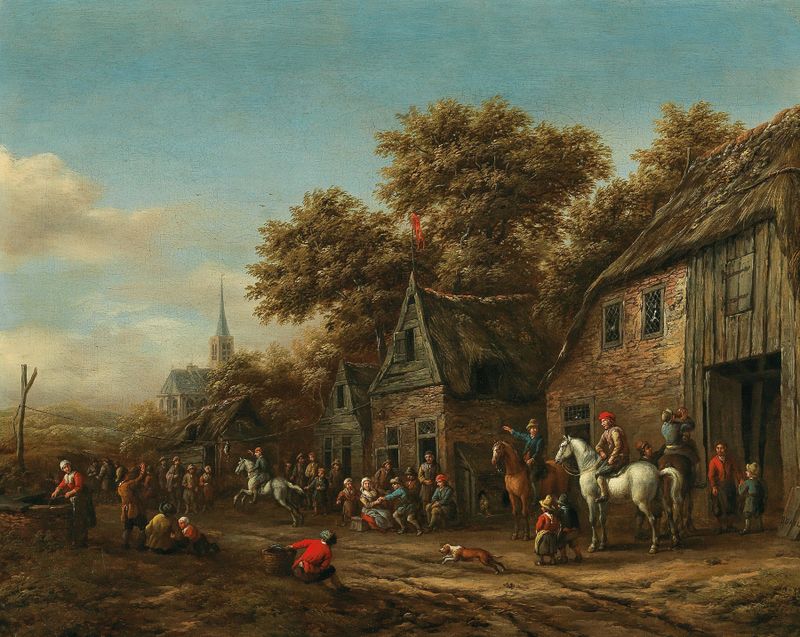
Figures on a road on the outskirts of a town
Barent Gael
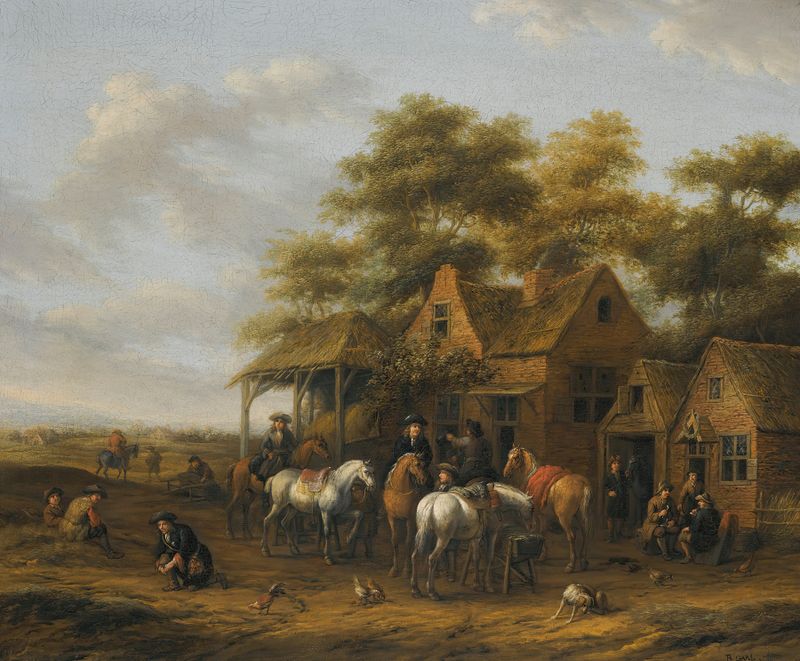
Village Scene With Numerous Figures, Horses And Chickens
Barent Gael
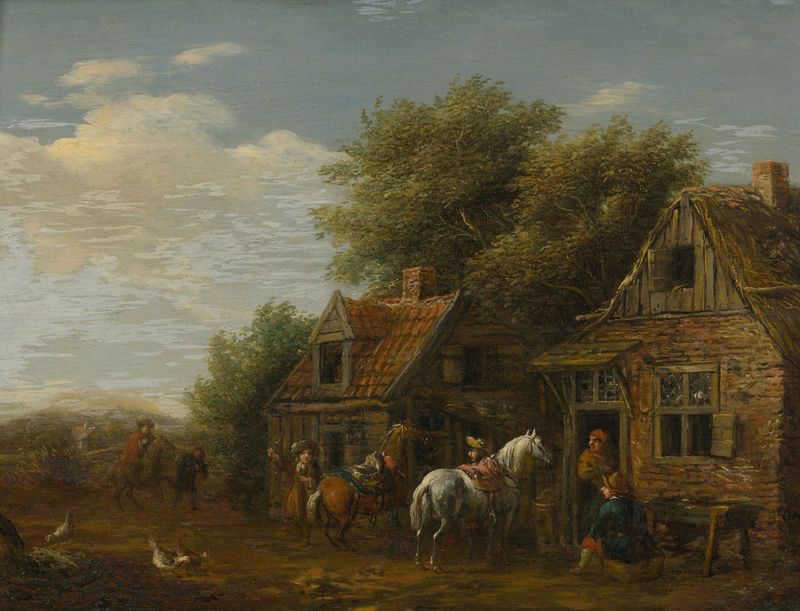
Riders In A Village
Barent Gael





