
A Village Street- Dardagny — History & Facts
In the stillness of memory, unspoken moments linger, evoking a profound sense of nostalgia and serenity. Look to the left, where a quaint pathway beckons the viewer into the heart of the village, lined with delicate trees that sway gently in the breeze. The soft palette of greens and browns invites a sense of tranquility, while the dappled light filters through the foliage, casting playful shadows on the cobblestone street. The loose brushstrokes create a fluidity that mirrors the essence of a memory, where edges blur and the scene breathes with life, drawing you deeper into its embrace. In this tranquil village, a tension exists between the simplicity of daily life and the weight of unexpressed stories.
The figures, though small and seemingly insignificant, symbolize fleeting moments, embodying connections that go beyond mere existence. Each element in the composition works harmoniously, revealing nature's power to hold the past while suggesting an ever-evolving present. Jean-Baptiste-Camille Corot painted this piece in 1852, during a period of artistic exploration and transition. Living in France, he was influenced by the burgeoning Barbizon School, emphasizing the beauty of nature and everyday life.
As the art world was shifting towards realism, Corot’s work reflected both the romantic idealism of the past and the emerging impressionist techniques, capturing the essence of rural life in a poignant and evocative manner.
More Artworks by Jean-Baptiste-Camille Corot
Browse all →
View of Genoa
Jean-Baptiste-Camille Corot
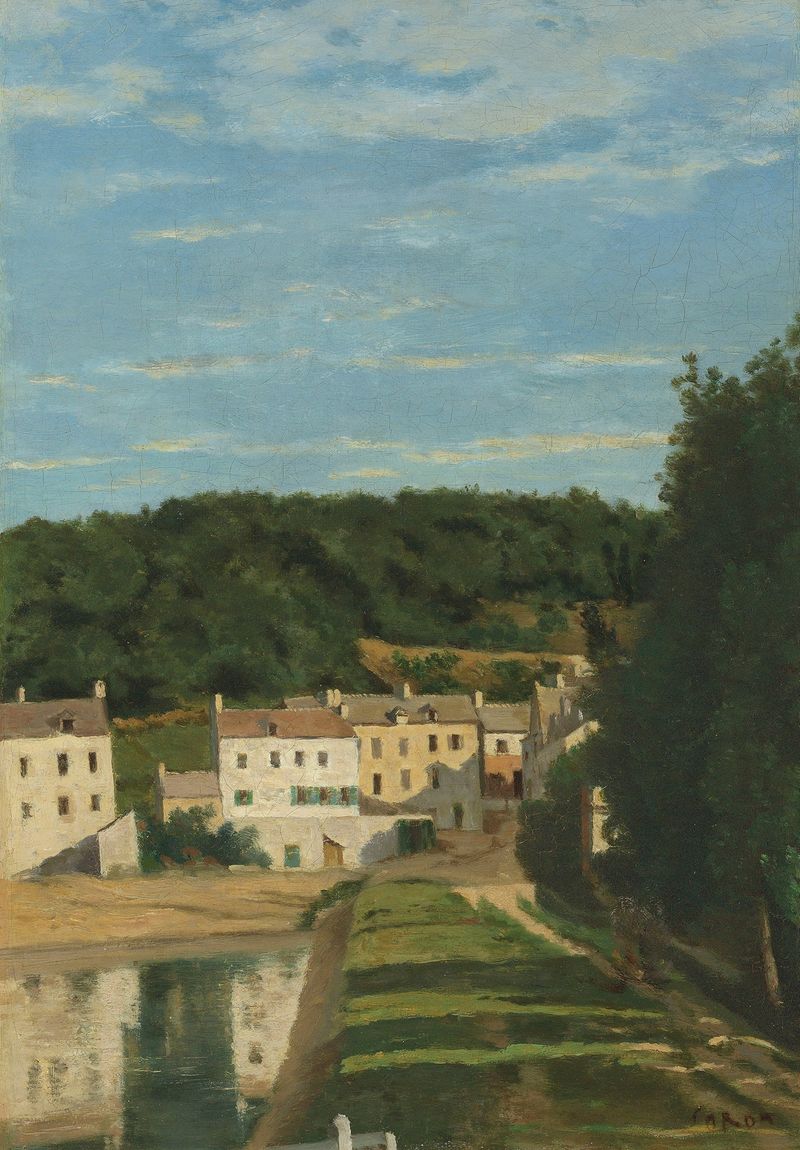
Les Maisons Cabassud À Ville D’avray
Jean-Baptiste-Camille Corot

La solitude. Souvenir de Vigen (Limousin)
Jean-Baptiste-Camille Corot
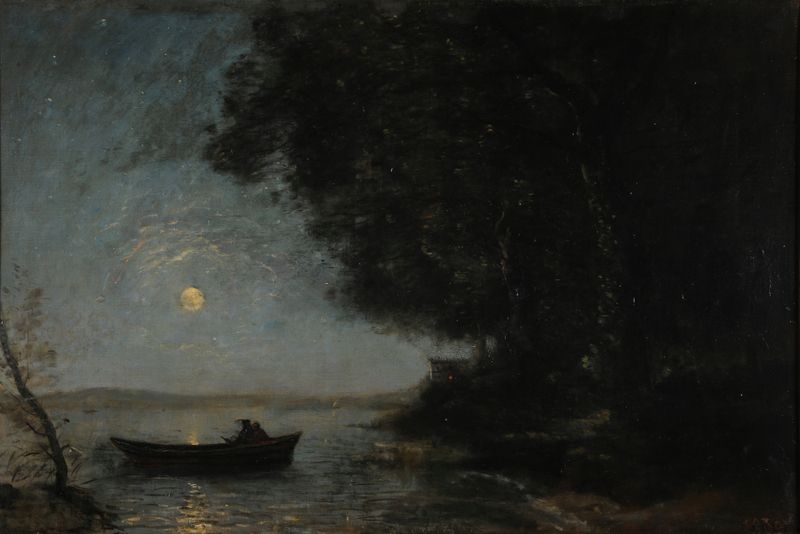
Le lac ; effet de nuit
Jean-Baptiste-Camille Corot
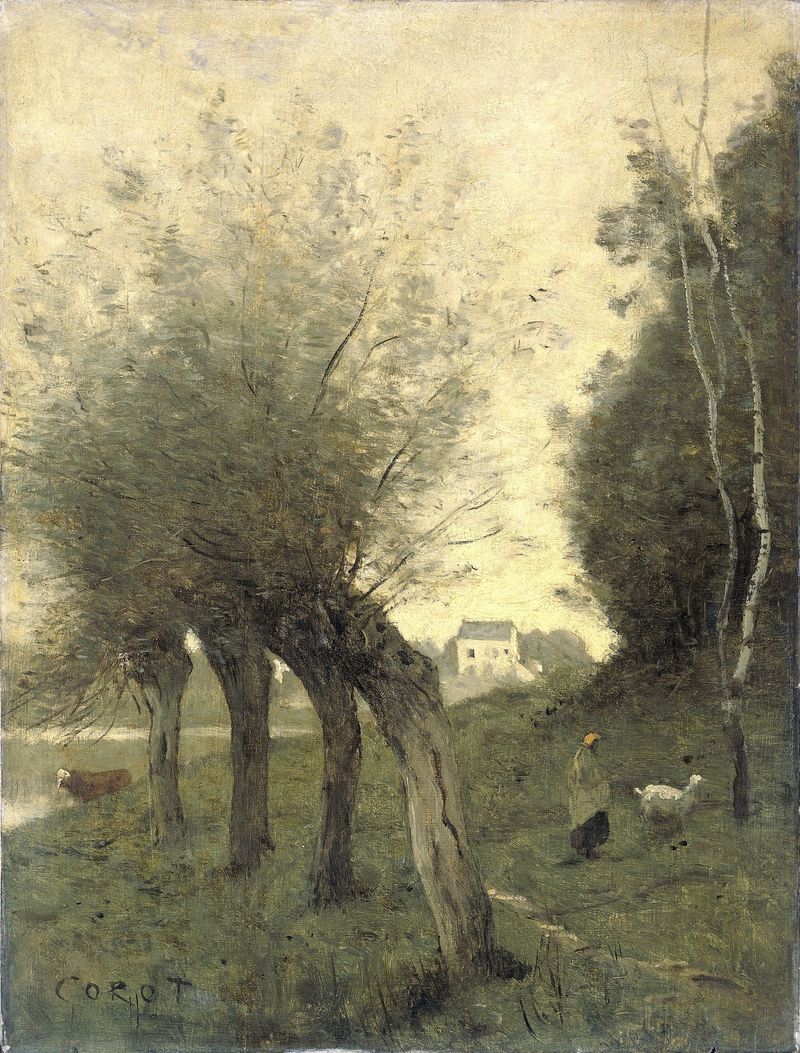
Landscape with Pollard Willows
Jean-Baptiste-Camille Corot
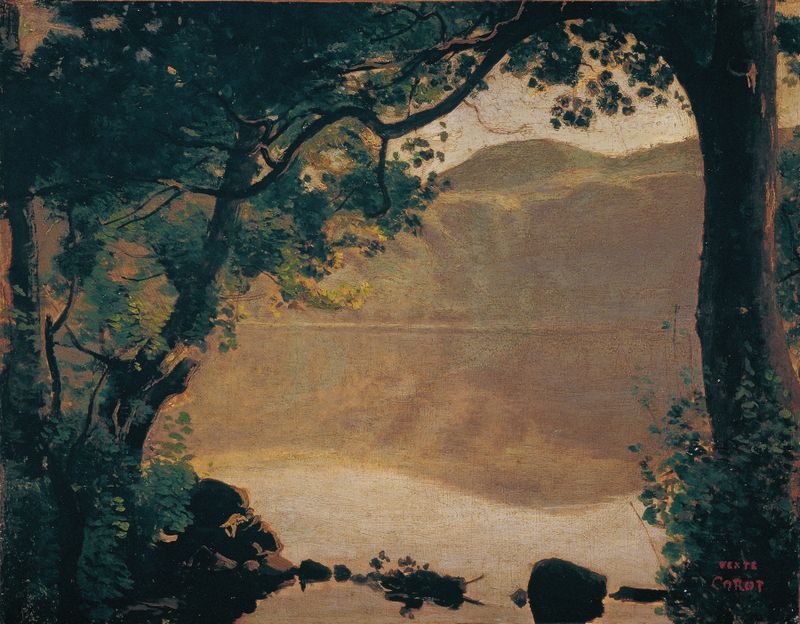
Der Nemisee
Jean-Baptiste-Camille Corot
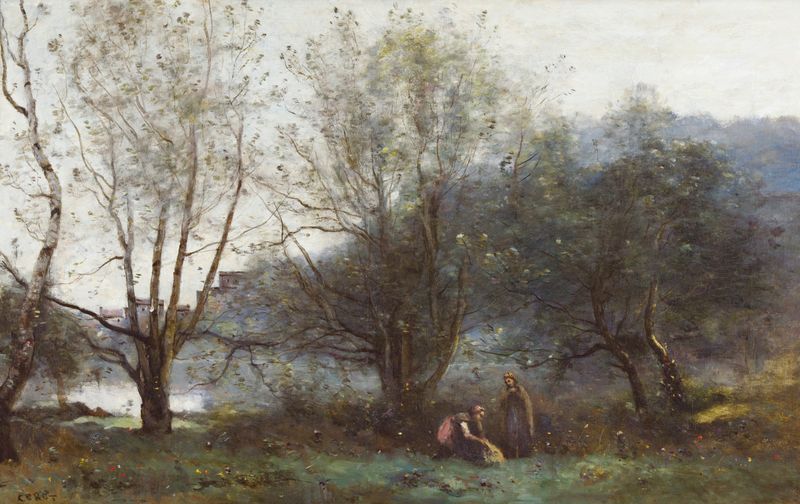
Les Étangs De Ville D’avray
Jean-Baptiste-Camille Corot
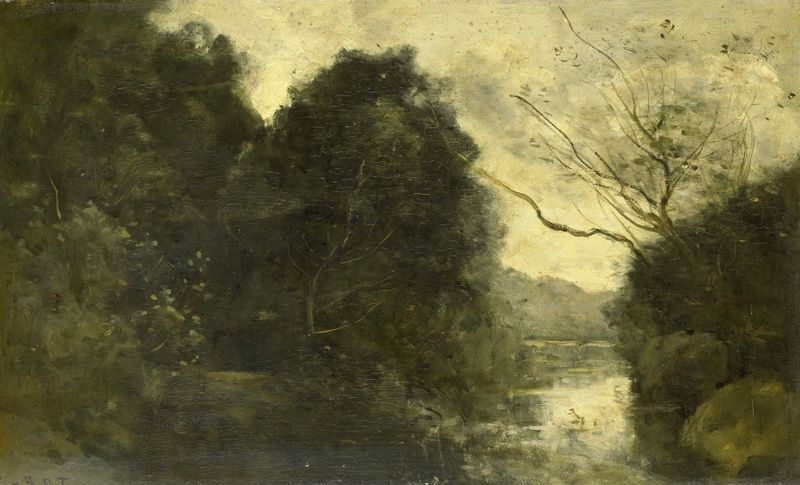
Pond in the Woods
Jean-Baptiste-Camille Corot
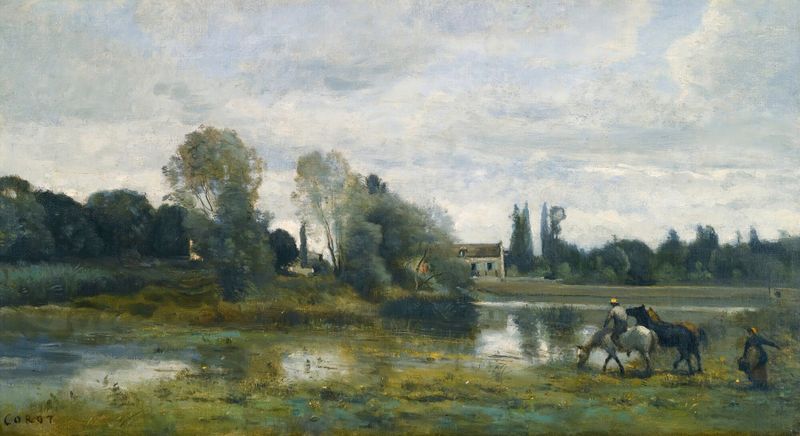
Ville D’avray; L’abreuvoir Des Chevaux
Jean-Baptiste-Camille Corot
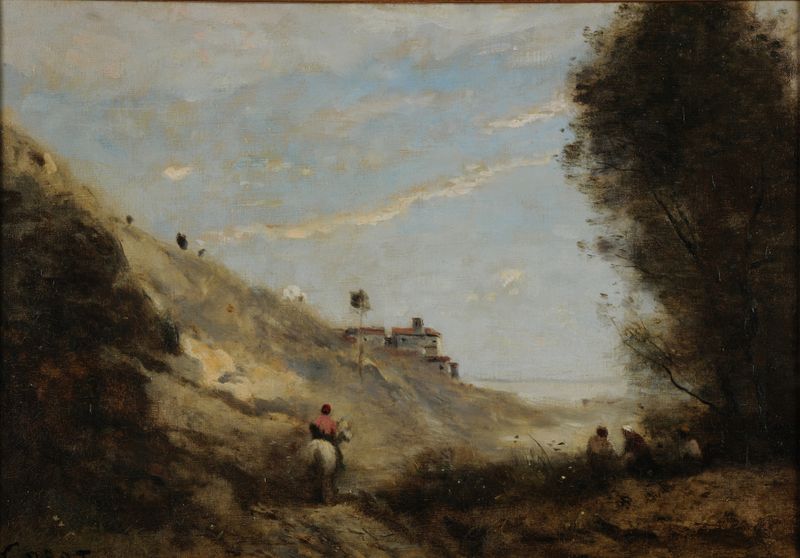
Le vallon au cavalier
Jean-Baptiste-Camille Corot





