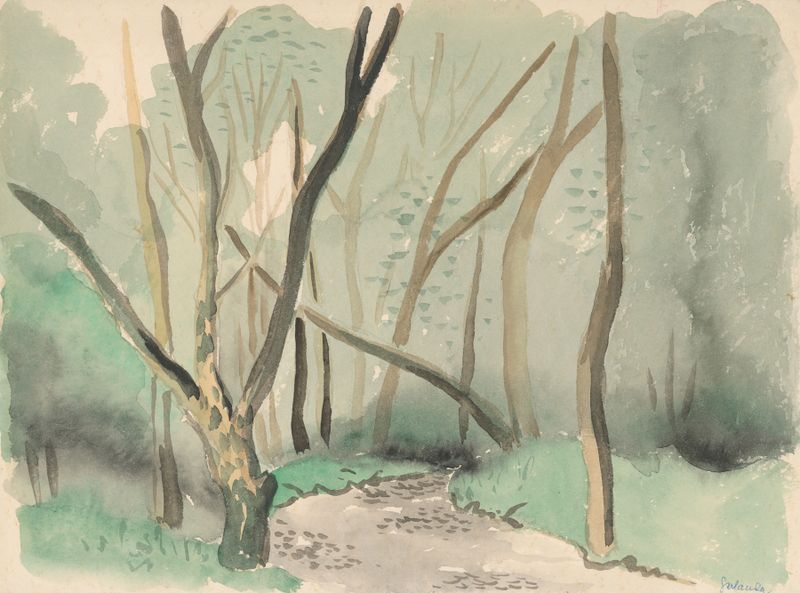
A Villager — History & Facts
In A Villager, the canvas resonates with a profound melancholy that invites deep reflection on the human experience. Focus on the central figure, a solitary villager, whose weathered face tells stories of toil and resilience. The muted earth tones envelop him, accentuating the contrast between his life and the surrounding landscape. Notice how the artist's delicate strokes create texture in his clothing, capturing weariness yet hinting at dignity.
The light gently caresses his features, casting soft shadows that evoke a sense of both vulnerability and strength. The village background, blurred yet present, emphasizes the isolation of the individual. Each detail—the creased brow, the downturned mouth—whispers of dreams deferred and the weight of existence. This visual narrative speaks of rural life during tumultuous times, where hope intertwines with despair.
The colors, predominantly browns and grays, resonate like a muted melody, blending the beauty of resilience with an undertone of sadness. Mikuláš Galanda painted this work in the late 1930s, amidst socio-political upheaval in Europe. Living in Slovakia, he grappled with the rise of nationalism and its impact on the daily lives of villagers. This period marked a significant shift in his artistic style, as he sought to convey the human condition with empathy, bridging his immediate surroundings with broader existential themes.