Rúbanisko — History & Facts
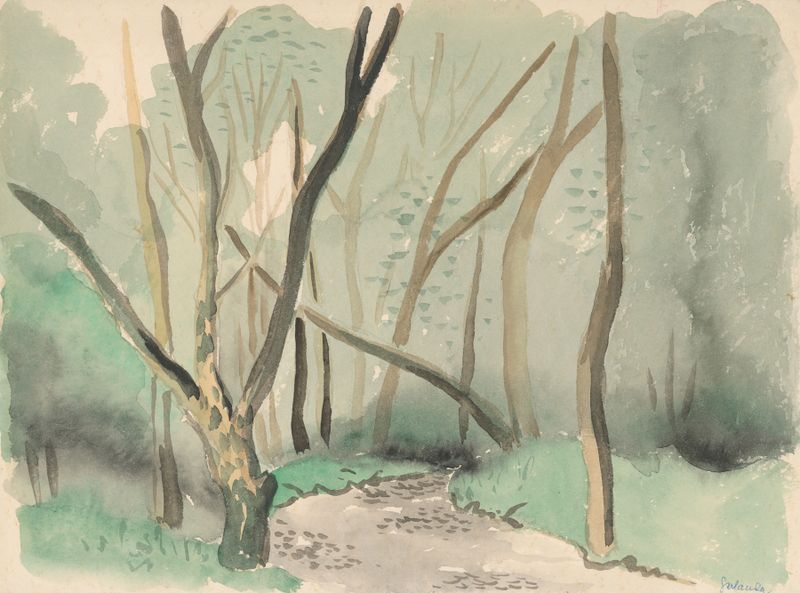
Could beauty survive in a century of chaos? In the depths of silence, Rúbanisko emerges, inviting contemplation on the delicate balance between the tumult of existence and the serenity found in art. Look to the center of the canvas, where a striking contrast of earth tones meets the vibrant hues of the landscape. The textured brushstrokes evoke a sense of movement, as if the very ground breathes beneath a gentle wind. The raw, organic forms capture the viewer's eye, gradually drawing them into the surrounding details, where the subtle interplay of light and shadow reveals a landscape both inviting and foreboding. Delve deeper into the work, and you’ll find a tension between chaos and tranquility.
The rugged terrain, both inviting and harsh, symbolizes the dual nature of life—a place where beauty blossoms yet bears the scars of struggle. The silence that reigns in this scene becomes a powerful voice, echoing the resilience of nature amid uncertainty. Each element tells a story of survival, where hope and despair coexist, hauntingly intertwined. Mikuláš Galanda painted Rúbanisko between 1920 and 1930, during a time of significant change in Europe.
Emerging from the aftermath of World War I, artists sought new ways to express the complexities of the human experience. In this period of artistic exploration, Galanda's work reflects not only his personal vision but also the broader quest for meaning amid a world grappling with upheaval and transformation.