Landscape from Autumn Park — History & Facts
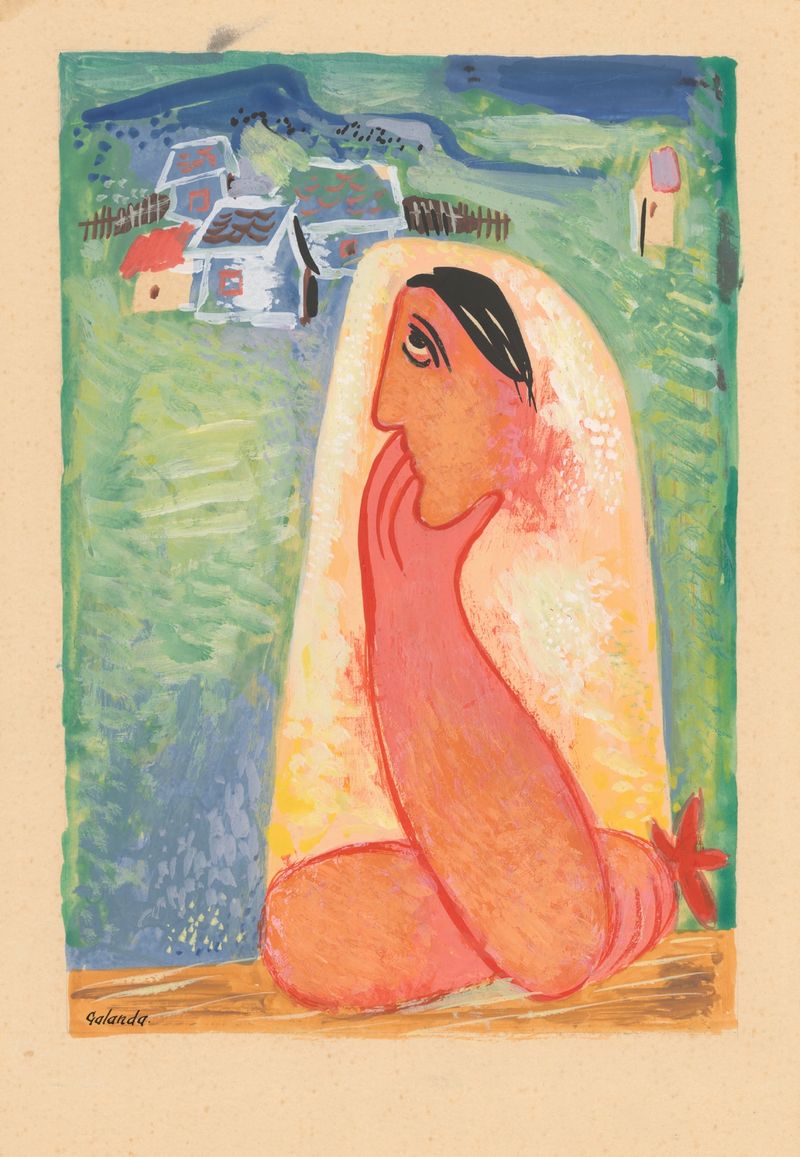
Could a single brushstroke hold eternity? In Landscape from Autumn Park, the answer lingers in the vibrant interplay of color and form, evoking the awe found in nature's embrace. Look to the foreground, where the soft hues of amber and gold collide in expressive strokes, suggesting the rustle of fallen leaves. The trees, rendered in a harmonious blend of earthy tones, seem to dance gently in the autumn breeze. Notice how the light filters through the branches, casting delicate shadows that create a rhythm of depth and motion across the canvas.
The artist's choice of palette invites you to breathe in the crisp air of the season. Within this landscape, contrasts abound. The warm colors of the foliage starkly oppose the cool, tranquil blues of the distant horizon, suggesting a fleeting transition between warmth and chill, life and decay. Each brushstroke carries the weight of time, mirroring the cycle of nature itself—a reminder of both beauty and impermanence.
The subtle textures evoke a tactile sense of the world, as if you could step into the scene and feel the cool earth beneath your feet. In the years 1925 to 1926, Mikuláš Galanda painted this piece amid a growing appreciation for modernist expression in Slovakia. Influenced by the post-Impressionist movement, he sought to capture the essence of his surroundings while reflecting the emotional undercurrents of his time. The world was embracing new artistic languages, and Galanda, at the forefront of this shift, merged tradition with innovation, marking a significant moment in the evolution of Slovakian art.