Early Evening — History & Facts
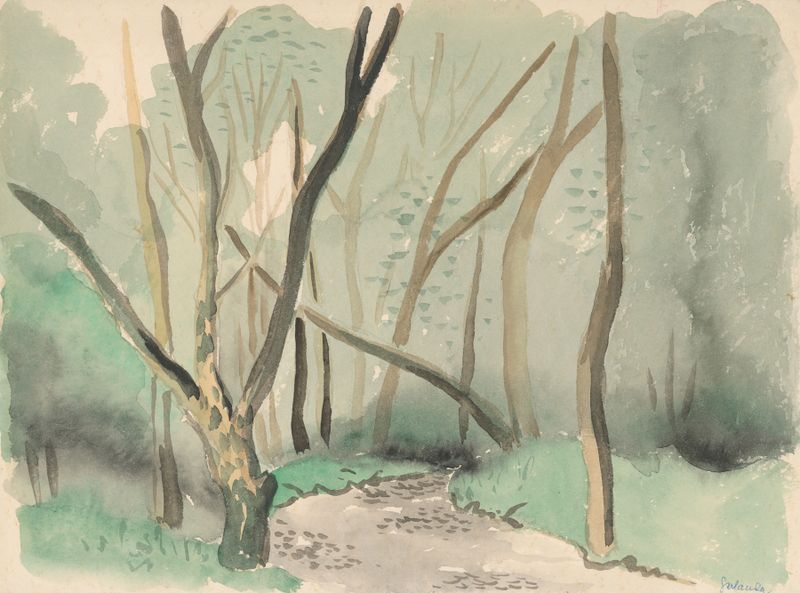
When did color learn to lie? In Early Evening, hues weave a narrative of nostalgia, inviting the viewer into a moment suspended between memory and reality. Look closely at the soft blend of twilight shades—deep blues and muted oranges—intertwining across the canvas. Your eye is drawn first to the horizon, where the sun dips below, casting a warm glow that seems to breathe life into the scene. The brushstrokes create a gentle haze, melding the features of the landscape, as if the artist wished to capture not just the sight but the essence of an unforgettable dusk.
Each stroke carries the weight of fleeting time, a reminder of ephemeral beauty. Beneath this serene facade lies a tension between the simplicity of the scene and the complexities of recollection. The indistinct shapes of trees appear almost spectral, suggesting that the world often holds shadows of our past selves. The muted palette hints at melancholy, as though memory itself colors our perceptions, leaving some moments bright and others dark.
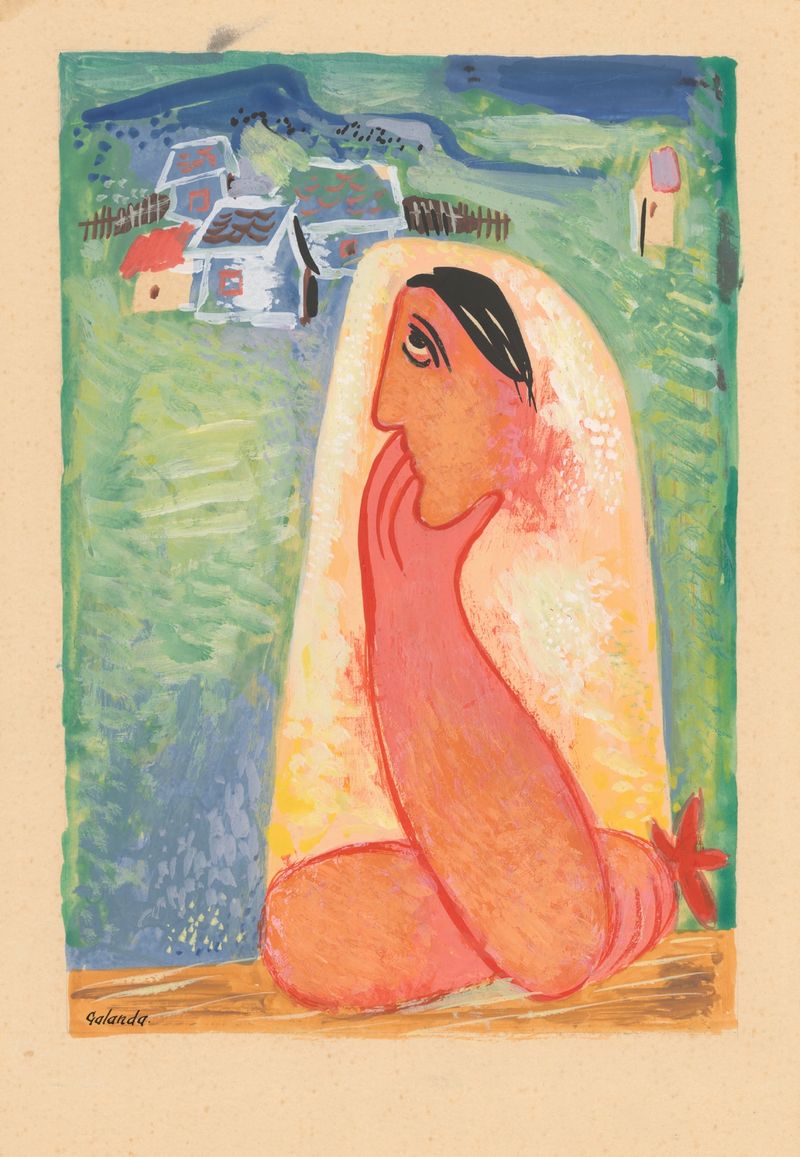
Here, the artist plays with the duality of recollection: it can both comfort and haunt, urging us to question what is truly remembered and what is a mere fabrication of desire. Mikuláš Galanda created this work during a transformative period in Central Europe, between 1932 and 1933, when he was grappling with his identity as a Slovak painter. This era was marked by political upheaval and personal introspection, as he sought to balance modernist tendencies with regional themes. In an art world that teetered between tradition and innovation, Galanda’s brush captured the delicate interplay of light and memory, reflecting not only his inner thoughts but also the changing tides of his surroundings.