
A Waterfall — History & Facts
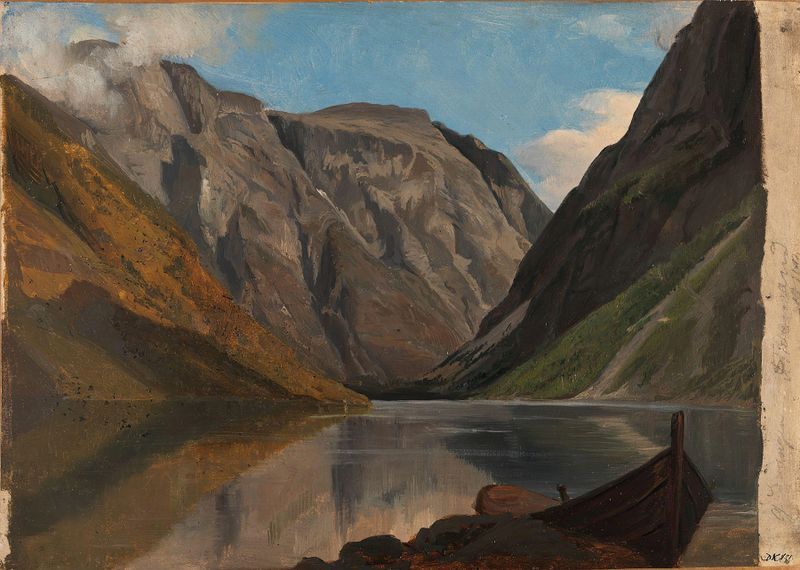
When did color learn to lie? In the vibrant greens and blues of the natural world, a hidden truth waits to be unveiled, offering a revelation as profound as it is beautiful. Look to the left, where the luminous waterfall cascades down jagged rocks, shimmering like liquid glass in the gentle light. Notice how the artist employs a rich palette, blending emerald hues with cobalt shades, creating a tension that dances between tranquility and chaos. The flowing water, depicted in dynamic brushstrokes, captures movement, drawing the viewer’s eye through the composition with an effortless rhythm. The subtle interplay between light and shadow reveals emotional depths, suggesting a world both serene and tumultuous.
The surrounding foliage, lush yet dense, offers a contrast to the clarity of the waterfall, echoing the complexities of nature itself. This hidden harmony invites contemplation, urging us to consider both the beauty and the turbulence present in our own lives. Adolph Tidemand painted this work during the mid-19th century, a time when the Romantic movement flourished, emphasizing emotion and the sublime power of nature. Living and working in Norway, Tidemand was deeply influenced by his surroundings, capturing the essence of the Nordic landscape.
The natural world, with its majestic forms and vivid colors, reflected the broader pursuit of artistic expression during an era that sought to evoke profound connections between humanity and nature.
More Artworks by Adolph Tidemand
Browse all →
Bridal Procession on the Hardangerfjord
Adolph Tidemand

Fra Haugsbygd
Adolph Tidemand

Domkirkeruinen, Hamar
Adolph Tidemand
View of Gudvangen
Adolph Tidemand

Hagestad prestegård, Ulvik i Hardanger
Adolph Tidemand

View from Gudvangen
Adolph Tidemand

Fra Gulsvik
Adolph Tidemand

From Kullen in Sweden
Adolph Tidemand

Country Road
Adolph Tidemand

Untitled
Adolph Tidemand





