
A Windmill against a Cloudy Sky — History & Facts
Could beauty survive in a century of chaos? The essence of this question resonates deeply within the canvas, reflecting not only the artist's vision but a poignant sense of solitude. Look to the horizon, where the windmill stands resolute against the brooding clouds. Notice how muted grays and blues envelop the sky, while the structure itself is painted in warm earthy tones, a deliberate juxtaposition that emphasizes its isolation. The swirling forms of the clouds seem to echo the tumult of emotions, beckoning the viewer to contemplate the interplay between nature and human creation, as if nature itself is both a canvas and a co-artist. Upon closer inspection, the scene reveals deeper layers of emotional tension.
The windmill, once a symbol of industriousness and communal spirit, stands alone, hinting at the loneliness that permeates the landscape. The darkening sky looms overhead, suggesting an impending storm, a metaphor for the struggles emerging in life and art during this period. This conflict between stability and chaos invites reflection on the fleeting nature of beauty amidst societal upheaval. Constant Troyon painted this piece between 1845 and 1850 during a transformative era in France, as Romanticism began to weave itself into the fabric of artistic expression.
As industrialization swept across the nation, artists like Troyon sought solace in landscapes, capturing both their beauty and their sense of melancholy. His portrayal of solitude in A Windmill against a Cloudy Sky underscores the tensions of an ever-changing world, reminding us of the enduring power of nature and art in the face of turmoil.
More Artworks by Constant Troyon
Browse all →
Landscape with Painter at Easel
Constant Troyon

The Marsh
Constant Troyon
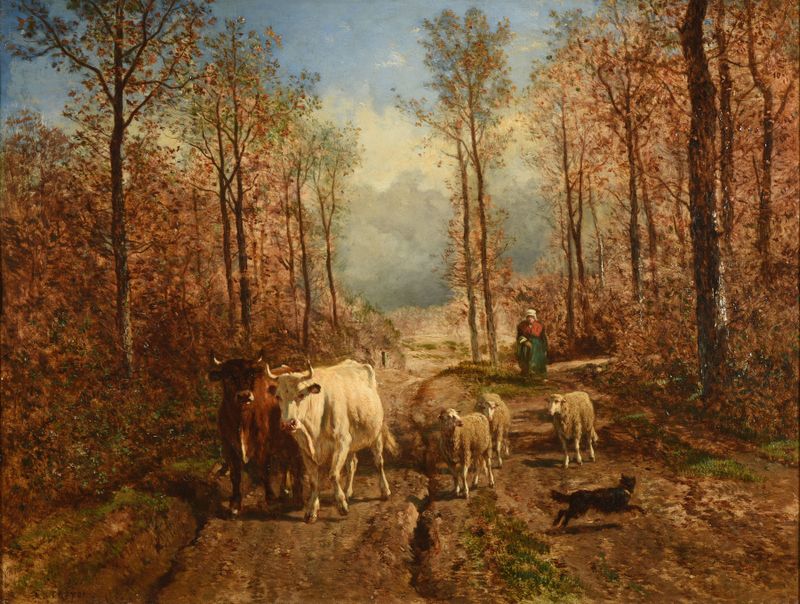
Rentrée de troupeau
Constant Troyon

Vaches sous bois
Constant Troyon

La gardeuse d’oies
Constant Troyon

Mill Stream with Fishermen
Constant Troyon
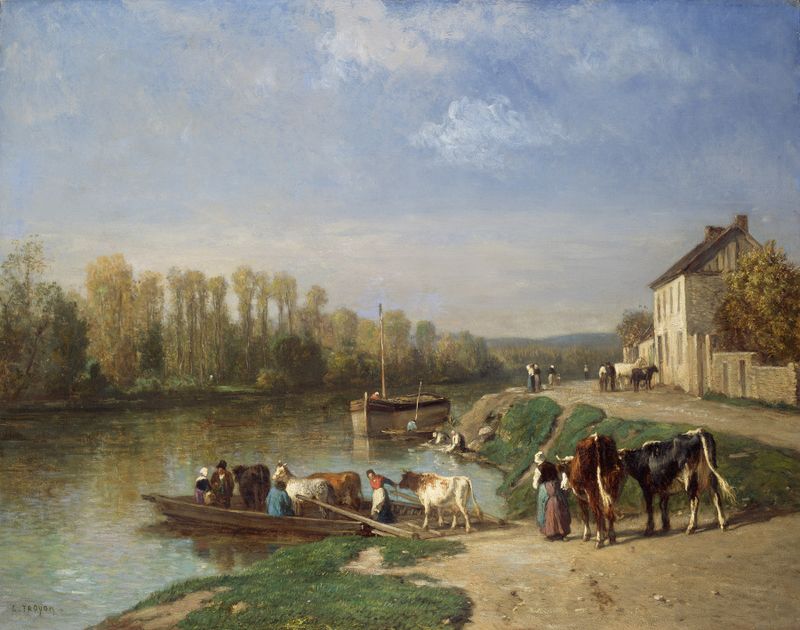
The Ferry Crossing
Constant Troyon

Landscape
Constant Troyon

Pasture in Normandy
Constant Troyon

Paysage
Constant Troyon





