
La gardeuse d’oies — History & Facts
What if silence could speak through light? In La gardeuse d’oies, tranquility is woven into the fabric of the scene, inviting viewers to contemplate the delicate interplay between nature and human solitude. Focus on the gentle curve of the girl’s figure as she stands amidst the softly grazing geese. Notice how the light falls upon her straw hat and the delicate folds of her dress, creating a warm halo that seems to breathe life into her stillness. The artist's use of muted earth tones complements the serene atmosphere, while the touches of white in the feathers hint at innocence and purity.
This stark contrast between the vibrant life of the geese and the girl's composed demeanor evokes a sense of harmony within the natural world. The interplay of light and shadow is where deeper meanings emerge. The girl’s serene expression, juxtaposed with the lively presence of the geese, suggests an illusion of companionship in solitude. It captures the essence of rural life — a moment suspended in time, where the energy of nature collides with introspective silence.
The viewer is left pondering the unspoken bond between the caretaker and her flock, reflecting on their coexistence that transcends mere observation. In the 19th century, Constant Troyon painted this work during a period marked by the rise of Realism, which sought to depict everyday life with authenticity. At this time, he was immersed in the Barbizon school of painters, focusing on landscapes and scenes of rural life. His commitment to capturing the essence of nature and its inhabitants led to a significant departure from the romanticized styles of previous generations, emphasizing the beauty found in ordinary moments.
More Artworks by Constant Troyon
Browse all →
Landscape with Painter at Easel
Constant Troyon

The Marsh
Constant Troyon
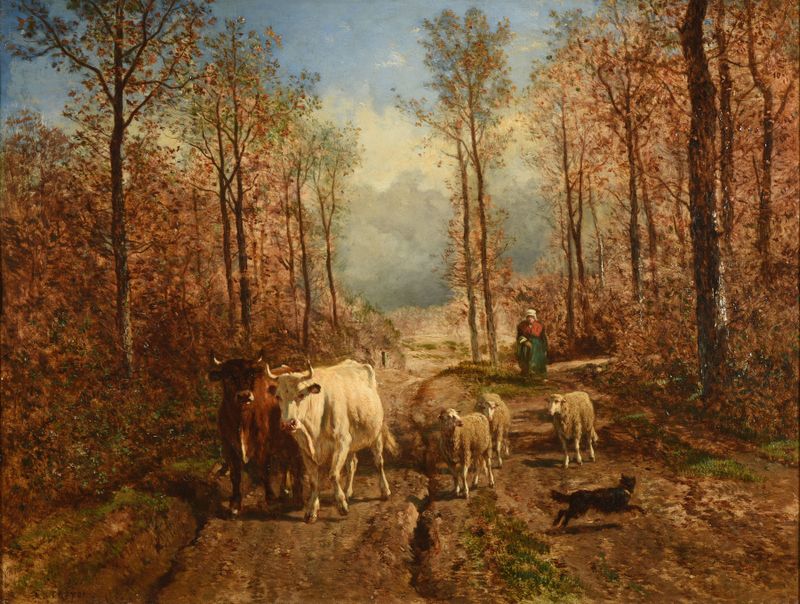
Rentrée de troupeau
Constant Troyon

Vaches sous bois
Constant Troyon

Mill Stream with Fishermen
Constant Troyon
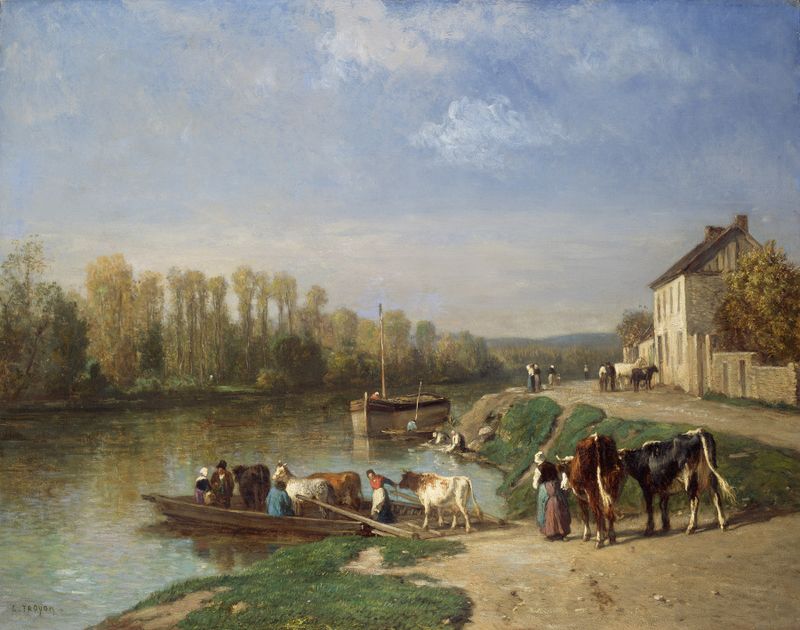
The Ferry Crossing
Constant Troyon

Landscape
Constant Troyon

Pasture in Normandy
Constant Troyon

Paysage
Constant Troyon

The Road to Market
Constant Troyon





